
Ph.D. Alum Wins Grawemeyer Award for Research on Climate Change and Security
Josh Busby (G’02, G’04), an alumnus of the Department of Government in the College of Arts & Sciences, has received the 2026 Grawemeyer Award for Ideas Improving World Order for his work on the security impacts of climate change.
The prestigious award is given annually by the University of Louisville to those “who have taken on issues of world importance and presented viewpoints that could lead to a more just and peaceful world,” according to the awards organization. Busby, a professor of public affairs at the University of Texas at Austin, started his research on the links between climate and security as a Ph.D. student at Georgetown and has received a prize of $100,000 with the award.
“It’s a gratifying recognition of about 20 years of work in this space,” he said.
Busby’s findings on why climate change leads to negative security consequences in some countries but not others is presented in his book, States and Nature: The Effects of Climate Change on Security, published in 2022.
“The Grawemeyer Award is one of the most significant awards that a scholar of international relations can receive,” said David Edelstein, the dean of the College of Arts & Sciences. “Josh Busby’s pathbreaking book on the relationship between climate change and conflict is a deserving recipient. Professor Busby is one of our many doctoral alumni whose work is having a transformational impact on how we think about important issues confronting society today. We couldn’t be prouder.”
Managing with Thoughtful Policy
The central question that animated Busby’s book is why climate change affects some places but not others with severe negative security outcomes. He looked into case studies for answers, pairing countries with similar exposure to environmental changes.
“I use paired cases of why Somalia had a famine after being exposed to drought, but neighboring Ethiopia did not,” Busby said. “Why did Syria have a civil war after a drought, but neighboring Lebanon did not? Why did Myanmar experience such wide-scale loss of life after exposure to a severe cyclone, but neighboring India and Bangladesh did not?”
The differences, Busby said, had to do with a combination of state capacity, political inclusion and foreign assistance. The countries that did the best to prepare for climate impacts were those that had the state capacity to anticipate and prepare for them and those that were more politically inclusive to ensure that all interest groups were represented in society and government, he said.
“I think the answers that I came up with provide us with some hope that the negative consequences of climate change can be managed and are not inevitable,” Busby said. “Now, that’s not to say that we don’t need to address climate change. We absolutely do in terms of reducing emissions, but the impacts themselves, on some level, can be managed with thoughtful policy.”
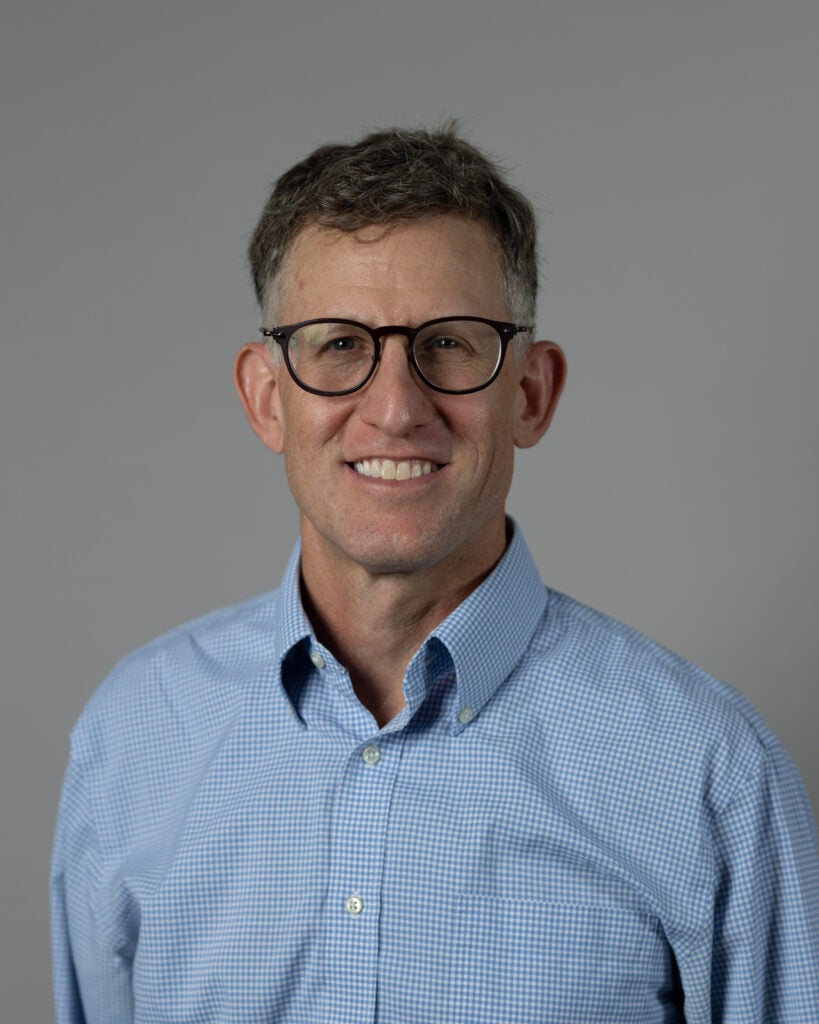
Josh Busby (G’02, G’04) is a professor of public affairs at the University of Texas at Austin. As a Georgetown student, he was a teaching and research assistant for the Department of Government.
Busby’s dissertation work at Georgetown focused on social movements and why some social movements succeeded in getting their issues taken up by governments and others failed. One of the issues he studied was climate change advocacy movements.
While working on his dissertation, he received a fellowship at the Brookings Institution, a think tank based in DC, where he co-authored a paper titled, “The Security Implications of Climate Change for the UN System” for then-Secretary-General of the United Nations, Kofi Annan.
A year later, Busby accepted a postdoctoral fellowship to Harvard University’s Belfer Center for Science and International Affairs, where he explored the links between climate change and U.S. national security. From then on, he built upon his work in the security space.
“It all started at Georgetown with the accidental circumstances of me being asked to write a paper as a pre-doctoral fellow at the Brookings Institution,” Busby said.
‘A Treasured Life Experience’
Busby saw DC and Georgetown University as the perfect places to pursue his combined interests in academia and political science when he applied for graduate school after serving as an agricultural volunteer with the Peace Corps in Ecuador.
“There were fabulous professors in the government department,” he said. “And the intellectual environment there from ‘99 to 2004 was just super interesting. We had a community of people who were all interested in questions about the future of the international system. There were terrific people in a great learning environment, and it was a treasured life experience.”
Busby was a teaching and research assistant for the Department of Government and a teaching assistant for the School of Foreign Service during his time on the Hilltop. He considers current and former Georgetown professors, including Andrew Bennett, G. John Ikenberry and the late Joseph S. Lepgold, as influences who helped shape his worldview.
I have the fondest memories of my time at Georgetown.
Josh Busby (G’02, G’04), an M.A. and Ph.D. in government alum from the College of Arts & Sciences
From 2021 to 2023, he served as a senior advisor for climate at the Department of Defense, and he has contributed to the long-running international relations blog, The Duck of Minerva.
Busby’s current research includes clean energy technologies, and he is a fellow at the Penn Project on the Future of U.S.-China Relations.
“There are opportunities for us to ensure that the negative effects of climate change are not inevitable, that we have human agency to shape the world,” Busby said. “The more we do to both transition to cleaner energy and prepare for climate impacts, the better off we’ll be.”