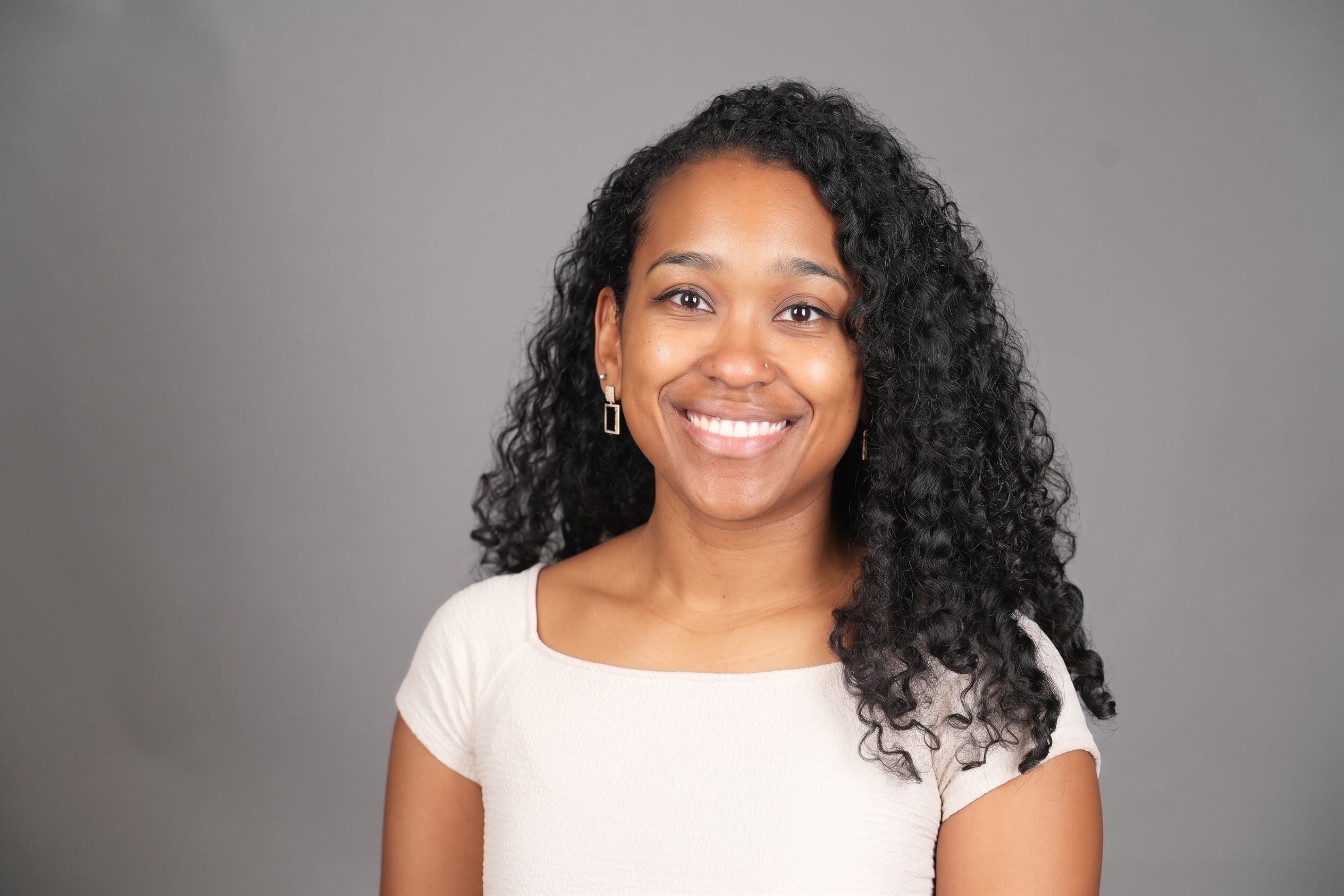
Sociology Professor Alyssa Newman Receives Fellowship for Research on Mixed-Race Identity
Alyssa Newman, an assistant professor in the Department of Sociology, has been named a recipient of a Career Enhancement Fellowship, funded by the Mellon Foundation and administered by the Institute for Citizens & Scholars, for the 2026-2027 academic year.
The program, which provides fellows with stipends supporting research, travel and publication, in addition to mentorship and professional development opportunities, will advance Newman’s scholarship at the intersection of sociology, ethics and medicine. There are 29 Career Enhancement Fellows in this year’s cohort spanning from institutions all across the country.
“As an interdisciplinary scholar bridging sociology and bioethics, this dedicated support is invaluable for building a scholarly trajectory that strengthens bonds between these two fields,” Newman said.
As the first sociologist to serve as a research fellow at the Kennedy Institute of Ethics at Georgetown, Newman is particularly interested in empirical bioethics, which leverages real-world scientific data to assess ethical problems and shape healthcare policy and medical practice. She has also served as a panel moderator for the annual G+JI Research Colloquium, which convenes scholars from beyond Georgetown’s borders on issues of gender, racial and economic justice.
“Professor Newman’s research is asking powerful questions about thorny issues of race and identity politics,” said Karolyn Tyson, a professor and chair of the Department of Sociology. “Having the kind of focused time that the C&S Fellowship allows to devote to thinking, analysis and writing is invaluable at any stage of a scholar’s career, but such fellowships can be especially career-defining for early-career scholars.”
Sharing space with scholars from different humanities and social sciences backgrounds is increasingly important in the context of shrinking opportunities for external funding in higher education, Newman said. To her, the Career Enhancement Fellowship is a reassurance that the values undergirding the program — critical thinking, innovation and civic engagement — remain stable.
Newman will spend the fall semester working on a book manuscript tentatively titled, Born a Symbol: Mixed Race Myths, Identity Struggle, and the Quest for Civil Rights. The project began as her senior undergraduate thesis, which later became her materials for graduate study. Now it constitutes the nexus of her interdisciplinary scholarship.
“This is me returning to my earlier roots and interests [in mixed-race collective identity],” Newman said, while expanding on them to encompass science, bioethics and technology.
Newman’s manuscript is concerned with mixed-race exceptionalism in the broader arc of history, from former President Obama’s re-election campaign to the current moment, where race-conscious programs meant to address racial disparities are shrinking.
Ten years out from her initial data collection, these topics look a lot different. Interacting with the Career Enhancement Fellows’ work is helping Newman strategize around social change and rethink her communication to different audiences.
“Not everyone in this room is a sociologist, so how do I talk about this without that jargon?” she said.
Offshoots of this work inform Newman’s other projects. Being in D.C. has been especially beneficial for her investigation of reproductive decision-making and representations of race and identity in reproductive technology. One local site of interest is Reproductive Village Cryobank, the first Black-owned sperm bank in the United States, which seeks to expand family-building options and equitable access for Black, queer and underrepresented communities.
Going forward, Newman hopes to introduce a mixed-race identity course in the sociology department that builds off her long-term research.
“This is not a topic that goes away,” she said. “We have to engage with the current moment and revisit where we’ve been.”