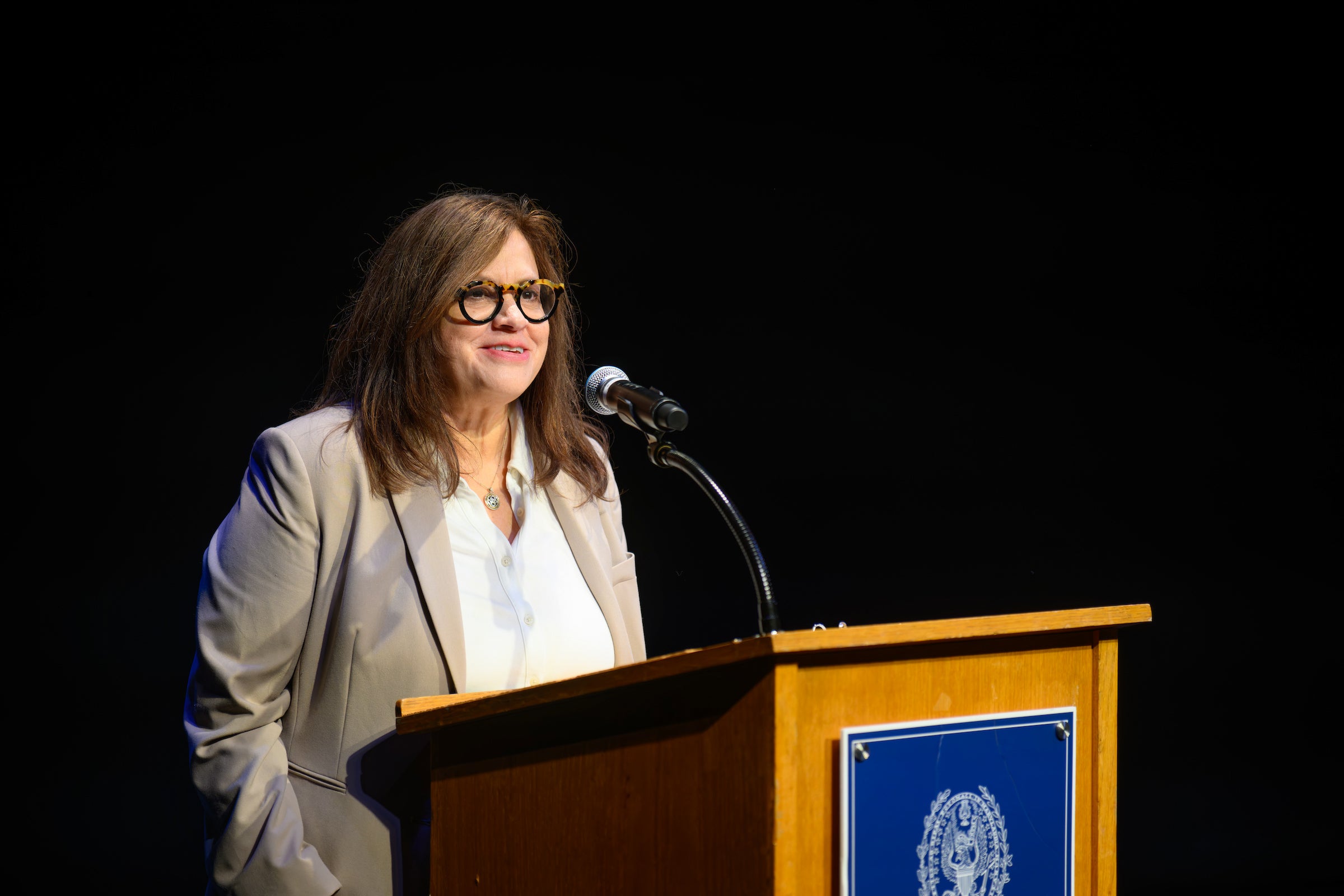
Vice Dean for Faculty Affairs Elena Silva Will Return to Teaching and Researching Biology
Elena Silva had, in her mind, the ideal set up.
She was working in her own lab on the seventh floor of the Reiss Science Building. Her office was in the back of the lab, and Silva mostly kept to herself and focused on her work with the Silva Neurodevelopment Lab and as a professor in the Department of Biology.
“I’m a pretty introverted person,” she said. “I was happy being isolated up there.”
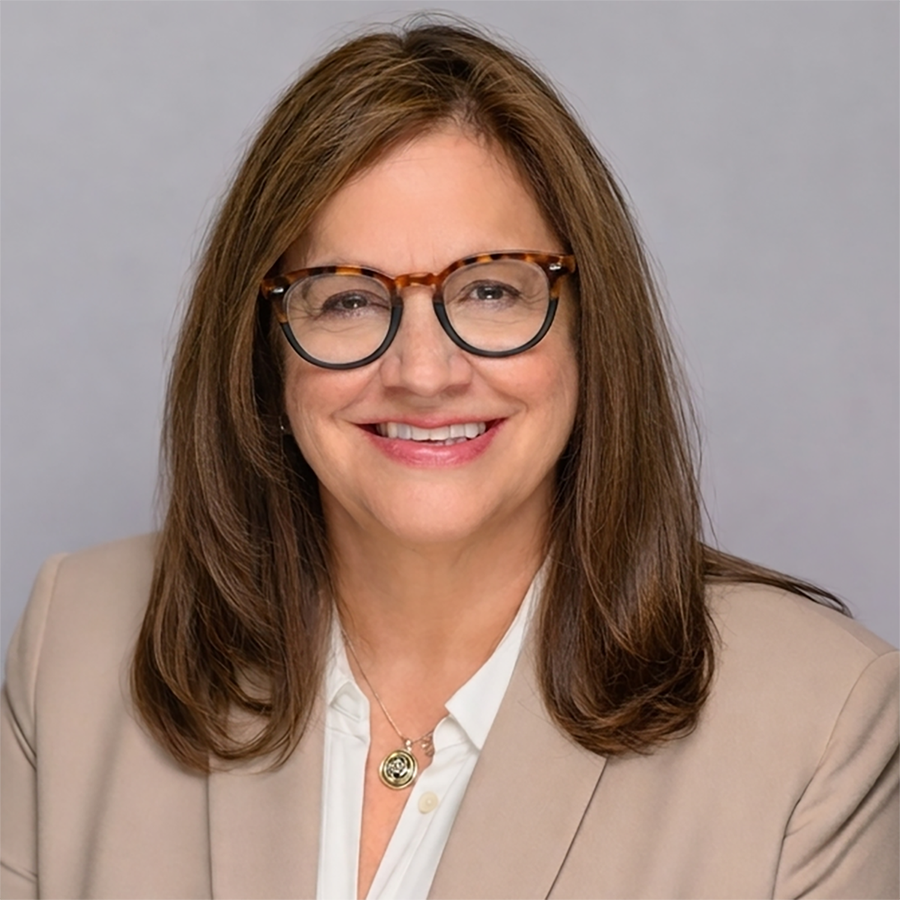
Elena Silva joined the Department of Biology in the College of Arts & Sciences in 2002.
Becoming a vice dean for faculty affairs in the College of Arts & Sciences was not something that Silva expected, but when she was asked to join the Dean’s Office in the fall of 2017, she ended up staying in the role for nearly 10 years. Silva will step down as vice dean for faculty affairs at the end of the fall semester and return to research and teaching as a professor in the biology department.
“I learned so much about all the other disciplines, how they taught, how they did research, how they ran, and so I think for me, that was fascinating,” Silva said of her time as vice dean. “What I’ll miss the most is just keeping my finger on the pulse of what else is happening at the university.”
Silva recently received a $585,000 grant from the National Institute of Neurological Disorders and Stroke (NINDS) to study the formation of neurons at the earliest stage of development. She will also spend time as director of the Regents STEM Scholars Program (RSSP), which provides support for first-generation students pursuing degrees in STEM fields.
“We are grateful for Elena’s leadership over the years on a wide variety of issues in the College,” said David Edelstein, the dean of the College of Arts & Sciences. “She has been a fervent advocate for our faculty and for always doing the right, not necessarily the most expedient, thing. We wish her the best as she returns to her research and teaching as a professor in the Department of Biology.”
The Science of Problem Solving
Science has been a part of Silva’s life from a young age. She remembers her parents buying her different science experiment kits in elementary school.
“You could test the water and the soil,” Silva said of the environmental testing kits she received. “I used to draw these diagrams of rain to plants — water uptake, the carbon and oxygen cycle and silly things like that.”
Some, like the chemistry kit she played with, even had an element of danger.
“They’d had all these chemicals,” Silva said. “You open it up, and there are all these little bottles of things and some tubes. …I don’t think they make them anymore. I think it probably was pretty dangerous. You could make a stink bomb, if you wanted.”
As a student growing up in San Antonio, Silva also excelled at math, and figured she would go into biomedical engineering at Stanford University. But she quickly realized engineering wasn’t for her and decided to stick with biology.
For a work-study job, she conducted research on corn. That’s when she discovered that doing research in a lab suited her personality and the way she approached her work.
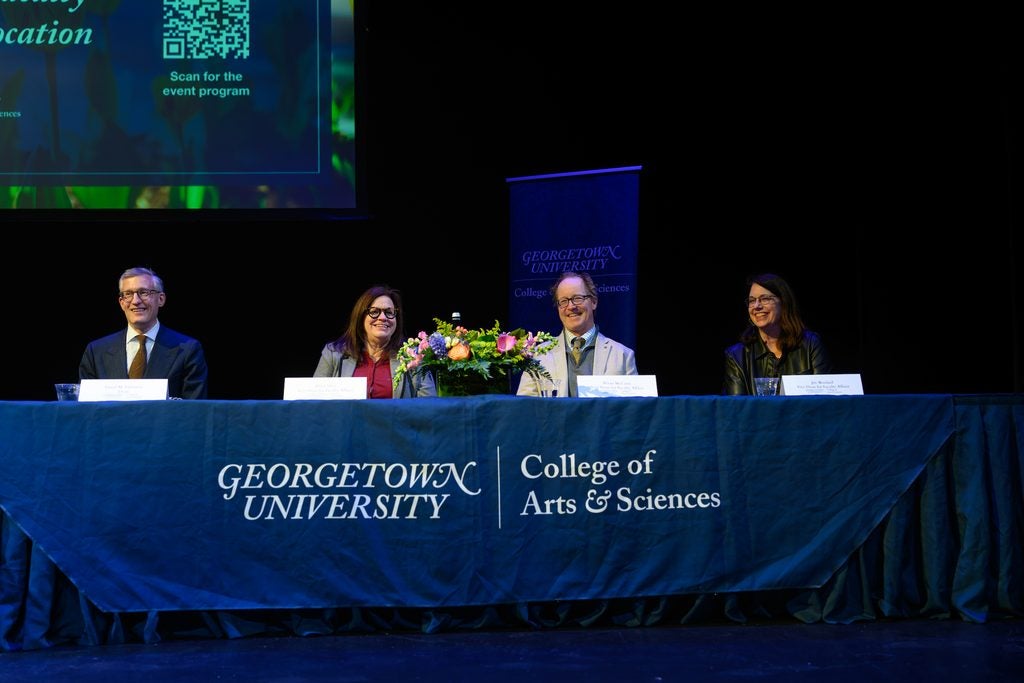
Silva, second from left, has served as vice dean for faculty affairs at the College of Arts & Sciences since 2017. She’s pictured here, from left to right, with Dean David Edelstein and fellow vice deans, Bryan McCann and Jennifer Woolard. (Rafael Suanes)
“I liked problem solving and realizing that I could take my time to solve the problem,” Silva said. “I was pretty good at just continually thinking about it. I could do this, and I could do that, and not feel like I had to come to an answer really quickly or under any kind of time pressure.”
But a career as a biology professor or researcher was not yet on her mind. Silva applied to the Peace Corps her senior year and was assigned to work in Botswana. The political turmoil in South Africa at the time convinced her to change course, and over the next three years, Silva found work in three different research jobs at biotechnology firms in the Bay Area, instead.
“I did a lot of work with DNA manipulation, and I really liked it,” she said.
Working With Students
Her experiences working as a researcher reinforced her aptitude and interest in research biology and Silva went back to Stanford to pursue a Ph.D in biology.
She did her graduate research at the Carnegie Institution on campus studying the response of blue-green algae to different colors of light. Midway through the program, however, Silva hit a slump and struggled with her motivation. Working with students as a teaching assistant turned things around.
“I liked helping students understand, because these were pretty fast-paced, stressful courses,” she said. “I think I had a good eye for seeing what was important and telling them what to focus on. I just enjoyed helping the students.”
Around the same time, Silva was also attending seminars on embryo development at the medical school and realized she had finally found two things that she loved and would go on to influence her career decisions: teaching and embryo development.
“I was at these seminars and told myself, ‘This is the science I want to pursue,’” Silva said.
In her final year of graduate school, Silva chose to pursue a post-doctoral fellowship studying embryo development at the National Institute for Medical Research in London. She received a fellowship from the Wellcome Trust, which provided funding for research in London and then back in the United States, where Silva worked in biologist Richard Harland’s lab at the University of California, Berkeley.
Silva moved across the country and joined the Department of Biology at Georgetown in 2002.
The thing about Georgetown that attracted me was this emphasis on undergraduate education and teaching, but also saying, ‘We want you to do research, too. We want you to be able to do good research.’
Elena Silva
She served as the director of graduate studies and chair of the biology department before her role as vice dean for faculty affairs. As vice dean, Silva has been responsible for matters related to faculty in the College, working on issues ranging from the hiring of faculty to tenure and promotion and leaves and sabbaticals.
“Elena has played a vital role in helping the College develop better policies to support the ambitions of our faculty and departments,” Edelstein said. “Her contributions in supporting junior faculty are particularly noteworthy.”
How Neurons Develop
With this new grant, Silva’s lab is using frog embryos to uncover how neurons first develop. By increasing or decreasing the levels of specific proteins in the embryos, researchers can identify which proteins are essential for neuron formation and how they control when and where neurons develop.
The main purpose of the study, Silva said, is figuring out how cells in an embryo are first designated to become stem cells and how a subset of them are directed to form neurons. This particular grant is dealing with how the degradation of proteins is necessary for the cell to go from one stage to the next in order to form a neuron, according to Silva.
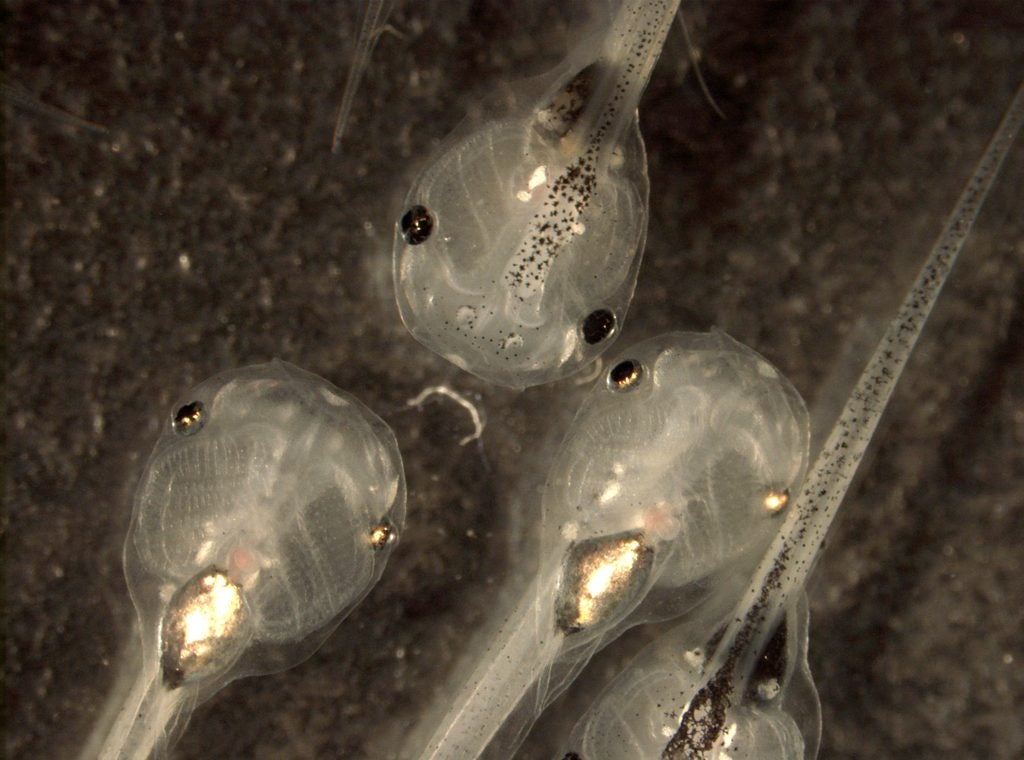
A microscopic view of African clawed frog tadpoles. Silva’s research uses frog embryos to study the formation of neurons at the earliest stage of development. (Courtesy of Elena Silva)
“We’re really interested in what controls that switch, and once they do that switch and they start to become neurons, what’s required along the way?,” she said. “What proteins have to be made and degraded?”
In the field of stem cell biology, researchers are working on figuring out the different steps. The more people know about that process, the better, Silva said. The work her team is doing with frog embryos could lead to a deeper understanding of the development of a human embryo.
“I think the more we understand what’s required and how a mutation in a specific gene can lead to any kind of neurodevelopmental defect, the better we’ll be able to understand how things go wrong and if there are ways we can prevent those errors,” Silva said.
The grant is for three years and she expects to have four undergraduate students, one graduate student and a research professor as part of the Silva Neurodevelopment Lab.
As for teaching, Silva said she has been teaching one class, Developmental Neurobiology, for 10 years, and that it would be fun to try something new.
“Maybe a class in evolutionary development or ecological development,” she said. “I am thinking of a science-for-all class about the evolution and genetics of the domestic dog.”
Top photo of Elena Silva by Rafael Suanes.