The Power of History: Book Recommendations With History Professor Adam Rothman
Rothman, who studies 19th-century U.S. history with a focus on the history of slavery and emancipation, shares the books that have shaped his understanding of the past and why they matter today.
Adam Rothman is a professor in the Department of History and the founding director of Georgetown’s Center for the Study of Slavery and Its Legacies. He studies 19th-century U.S. history with a focus on the history of slavery and emancipation.
Rothman is the author of Slave Country: American Expansion and the Origins of the Deep South and Beyond Freedom’s Reach: A Kidnapping in the Twilight of Slavery, which won the American Civil War Museum’s book prize in 2015.
Here, he shares the books that have shaped his understanding of the past and why they matter today.
What is a book that everyone should read?
Everyone — or at least everyone in the Georgetown community — should read The 272: The Families Who Were Enslaved and Sold to Build the American Catholic Church by Rachel L. Swarns.
Swarns is the New York Times journalist who covered Georgetown’s Slavery, Memory, and Reconciliation Initiative ten years ago and traced the emergence of the GU272 descendant community and their developing relationship with the university and the Jesuits. In 2024, she published a book that explores the long, tangled history of the Jesuits, Georgetown and the enslaved families owned and sold by the Maryland Jesuits in 1838. As a historian of slavery at Georgetown, I’d be remiss not to recommend it.
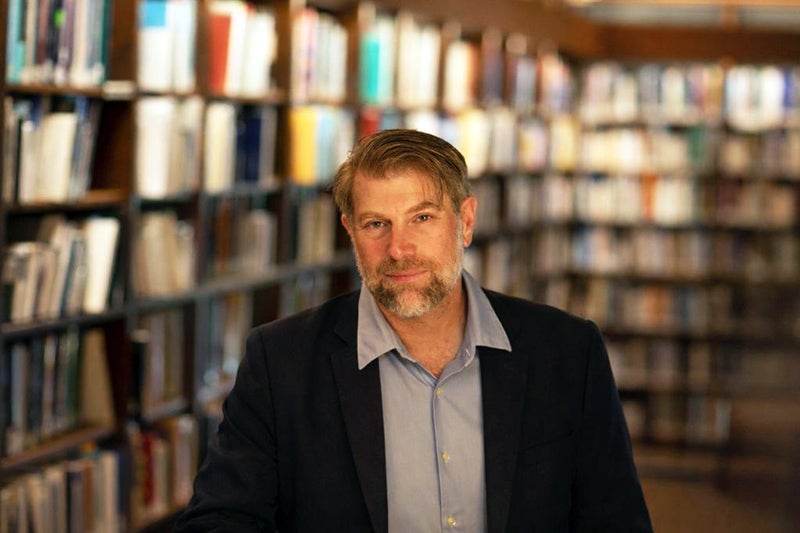
Rothman studies 19th-century U.S. history with a focus on the history of slavery and emancipation. (Oxana Ware Photography)
What is a book that you revisit every year?
Silencing The Past: Power and the Production of History by the Haitian anthropologist Michel-Rolph Trouillot is a perennial in my classes.
I assign it to everyone from first-year undergraduates to doctoral students. Trouillot opens our eyes to how the stories we tell about history come to be, and what gets lost, neglected, omitted and suppressed in the process. It’s especially timely now for obvious reasons. At John Carroll Weekend in Philadelphia in 2025, Professor Anthony Arend and I led a walking tour of Independence National Historical Park that ended at an outdoor exhibit about slavery at the President’s House. The current administration has since ordered the National Park Service to remove the displays on the site, and the exhibit remains subject to an ongoing legal dispute between city and federal officials. Talk about silencing the past.
What is a book that inspired your academic journey?
That’s a tough one because there are so many but I will say Richard Hofstadter’s The American Political Tradition: And the Men Who Made It, even though its subtitle is a little cringey today. The book was published in 1948, and I first read it in high school in the 1980s. Hofstadter was a brilliant historian and an elegant writer. His profiles of the leading political figures in American history are complex, ironic and counterintuitive. He made me want to study — I mean really study — history.
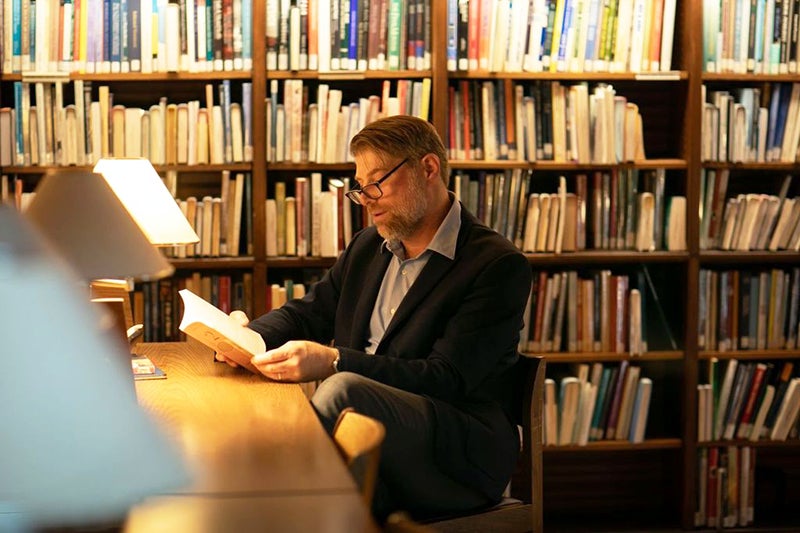
Rothman is the author of Slave Country: American Expansion and the Origins of the Deep South and Beyond Freedom’s Reach: A Kidnapping in the Twilight of Slavery, which won the American Civil War Museum’s book prize in 2015. (Oxana Ware Photography)
What is the best new book that you’ve read in the past year?
Probably the novel Prophet Song by Paul Lynch, which actually came out in 2023. It tells the story of a family trying to get by in a country that is descending into authoritarianism, with people being kidnapped and disappeared off the street by the government. Like I said, it’s fiction.
What is the perfect book for the beach (or curled up in front of a fire, or down time, or…)?
Moby Dick, of course!
Related Stories
CAS Magazine: Faculty
Recently Published by Faculty