The Humanities: Your Portable, Future-Proof Toolkit
Nicoletta Pireddu, director of the Georgetown Humanities Initiative, provides insights on how to think of the humanities as a vital component of our intellectual and ethical grounding.
What happens to a society when it becomes more driven by data than by understanding? What if we can optimize everything but no longer grasp what we’re optimizing for? How do we preserve depth in a world addicted to immediacy, speed and efficiency?
The humanities ask what our systems quietly leave unexamined. As algorithms make decisions, technology reshapes communication and global challenges grow more complex, the central questions of the humanities — about meaning, identity, language, ethics and power — are no longer abstract. They become urgent.
Therefore, whether you are skeptical about the value of the humanities in your curriculum or already drawn to them but unsure about their relevance, here are some points to rethink them not as an impractical domain but as a vital component of our intellectual and ethical grounding.
Fluency in Ambiguity
The humanities push us beyond ideological simplifications to interrogate the complexities beneath seemingly straightforward facts.
While some technical fields justifiably prioritize predictability and short-term, quantifiable outcomes within the constraints of time, measurement or implementation, the humanities teach you to grapple with thorny problems that resist closure and require you to hold competing perspectives simultaneously.
That habit of mind — linking ideas across differences while working through contradiction and uncertainty — is powerful training in mental agility and intellectual resilience. The job market itself is a moving target. You will likely have multiple careers in your life, many of which do not yet exist. A vocational degree may carry you into your first role. A humanities formation equips you to learn, unlearn and relearn –– to reorient yourself and keep going when the map runs out.
Thinking in Context
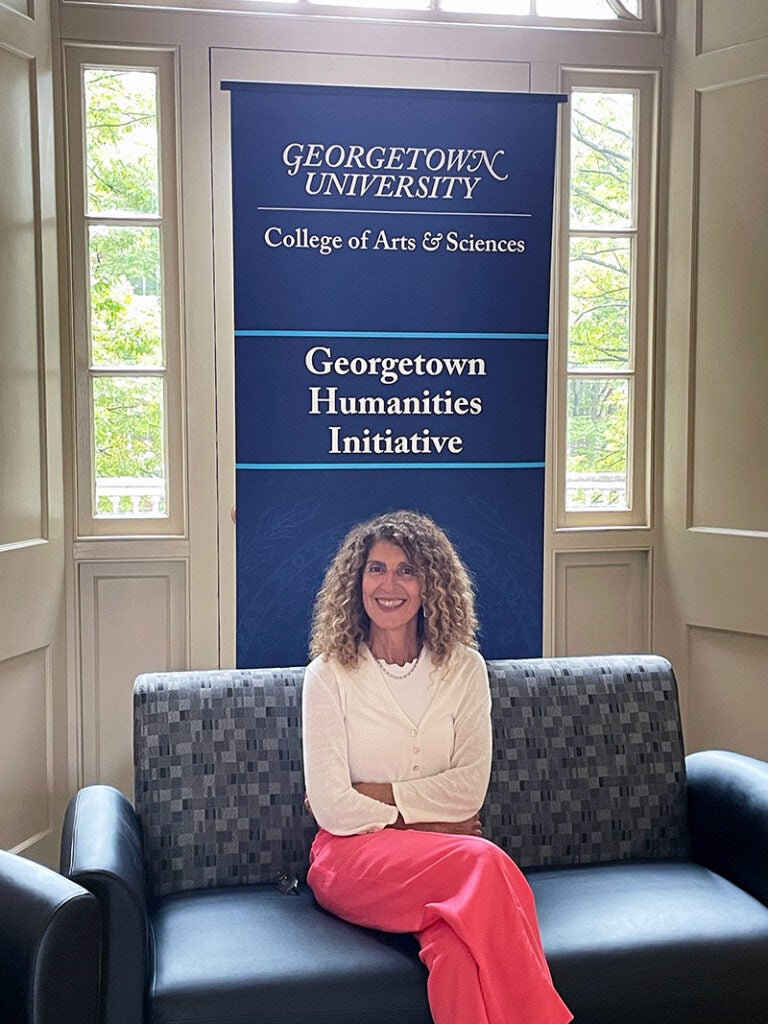
Nicoletta Pireddu is the inaugural director of the Georgetown Humanities Initiative.
Delving into literature, visual arts, history and philosophy trains you to read and look at the world with the attention and depth required for critical interpretation, recognizing that meaning is never fixed. It shifts across cultures, historical moments and social conditions.
When you think in context, you ask not only what something is, but where it comes from, how it came to be and what assumptions it carries. Behind a data point, historians see the decades and even centuries of cultural tensions and transformations that led to it. Literary scholars’ way of reading a text uncovers layers of messages, voices and situations that reconfigure how that text speaks through space and time.
This humanistic capacity to identify and problematize the “why” behind the “what” distinguishes the thoughtful exercise of judgment from mere task execution.
The Power of Stories
Employers tend to respond more to narratives of intellectual development than to degrees alone. A humanities formation helps you tell your own compelling story.
We make sense of the world through stories by transforming lived experience into shared meaning. Thanks to the humanities, we realize how profoundly these narrative structures inform thinking. We also recognize that stories are never neutral, and no single story ever captures the whole truth.
The narrative imagination does not stop at detecting patterns and correlations. As it organizes scattered events and memories, it animates them. It ascribes intention, emotional depth and moral weight. It speculates, reframes and even questions reality, opening space for alternative possibilities.
The ability to cultivate imagination as a generative force is a highly valued asset in any field, especially in the age of AI. As machines increasingly output text, images and analysis, what remains most distinctly human is not the mere production of content, but the creative thinking that can give it direction and value and determine which stories deserve to be told.
An Ethical Compass
As repositories of how humans have wrestled with vulnerability, purpose and hope across times and cultures, the humanities invite us to reflect on what kind of life and of society are worth building.
Our increasingly polarized world intensifies divisions and deepens isolation, often relocating human interaction to virtual domains of simulation and abstraction. The humanities counter this trend by foregrounding the interpersonal and the collective. They remind us that we are constitutively relational: meaning, identities, rights and duties are co-created with others.
When we step into the fictional world of a novel or the defamiliarizing world of a foreign language, we learn to inhabit perspectives that expand and challenge our own. We become part of a dialogue with otherness and grow into more engaged listeners –– prerequisites for empathy and emotional intelligence.
With automation fast taking over evaluative processes and aspects of human agency, this recognition of our interconnectedness and shared responsibility stands out as critical. The humanities return the ethical compass to our hands for the choices that shape human lives.
Why All This Matters
Far from entrenching ourselves in tradition, to study the humanities today means drawing on centuries of ideas, experiences and cultural expressions to develop the intellectual and emotional toolkit needed for present and future challenges.
When you look at the underlying demands of leadership, policy-making and innovation, you find the skills nurtured by a humanities education already in action. In other words, studying the humanities does not remove you from the world of work. It prepares you to enter it with cultural awareness, insight and creativity. These forms of nuanced, contextual and reflective understanding are among the qualities that technology can least easily reproduce or replace.
So, if you still ask “What can I do with the humanities?,” my answer is “Anything!”
Yet, ultimately, the humanities transcend career pursuits. They engage you in an open-ended exploration of the human condition: how societies organize themselves, how ideas are born and evolve, how emotions influence perception, relationships and action, and how we confront our fragility and finitude.
Perhaps, then, a more compelling question might be “What can I become through the humanities?,” to which I’d readily reply, “Someone who, besides filling a professional role, is also an inquisitive, inventive and caring participant in the world.”
Nicoletta Pireddu is the director of the Georgetown Humanities Initiative and a professor in the Department of Italian Studies and the Global and Comparative Literature Program.