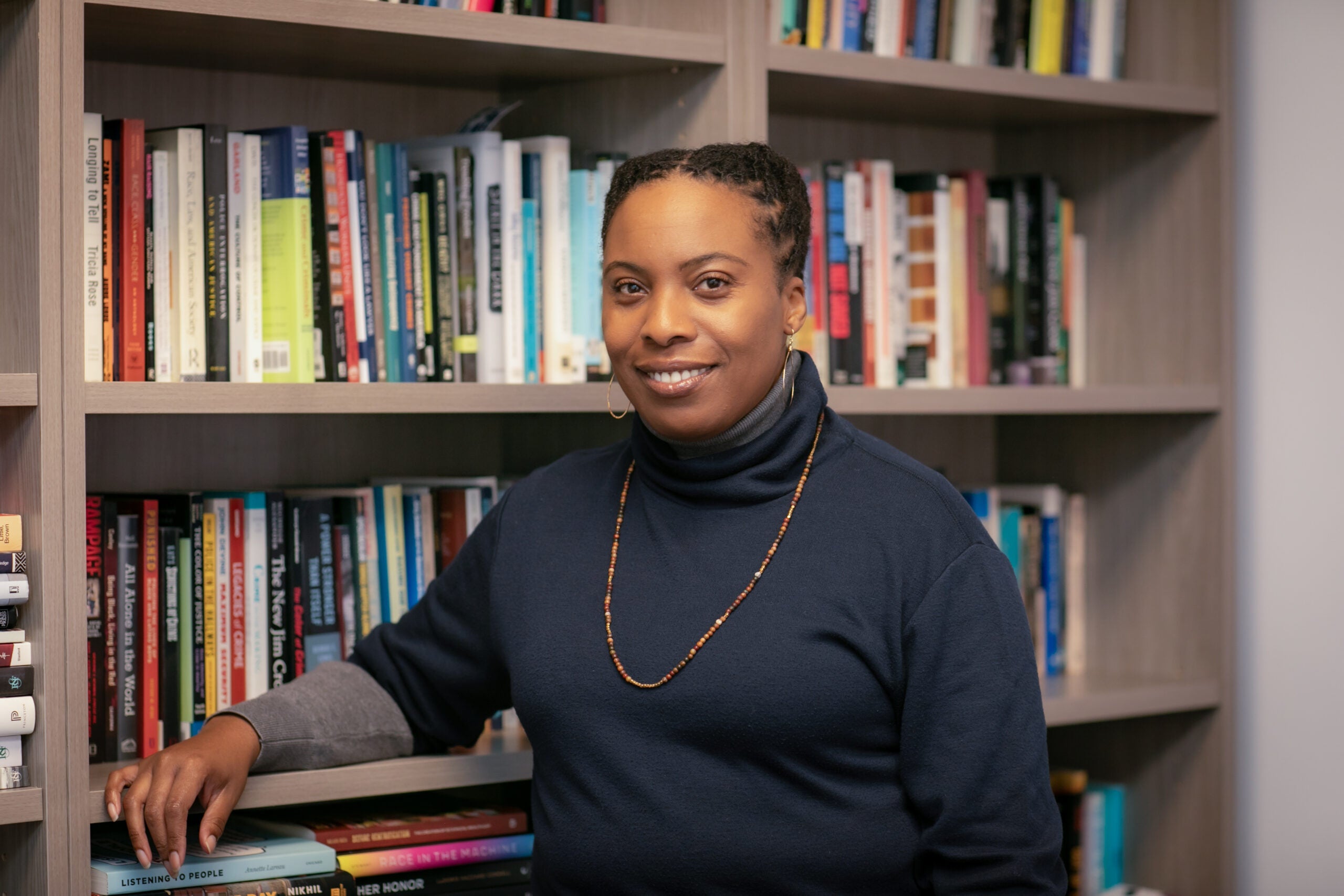
Sociological Imagination: Book Recommendations With Carla Shedd
Carla Shedd is an associate professor of sociology in the College of Arts & Sciences whose research and teaching focus on race and ethnicity, criminalization and criminal justice, education, law, social inequality and urban policy.
Her award-winning book, Unequal City: Race, Schools, and Perceptions of Injustice, examines how racial identity, neighborhood and school environments can shape young people’s understanding of themselves and their place in society.
Shedd shares the books that have influenced her teaching and continue to inspire her.
What is a book that everyone should read?
Black Feminist Thought: Knowledge, Consciousness, and the Politics of Empowerment by Patricia Hill Collins (1990)
This book is a North Star for those seeking a model of how to use their unique biographies to generate and test foundational theoretical perspectives — “intersectionality” is Collins’ concept — and it is a perfect example of the “sociological imagination” we seek to ignite in our sociology students. Similar to the literary strategy of another shero of mine, Toni Morrison, Collins moves an often marginalized group, Black women, to the center of rigorous theoretical and empirical analysis. Everyone could benefit from the insights and analyses she offers in this work.
What is a book that you revisit every year?
The Supreme Court, Race, and Civil Rights by Abraham L. Davis and Barbara Luck Graham (1995)
This book has been with me for over twenty-five years, usually on my shelf at home. As an undergrad, I was a junior year domestic exchange student at Spelman College, and we were allowed to take classes at other schools in the Atlanta University Center Consortium. I was one of only two female students in Davis’ Race and Law class at Morehouse College, and this course changed my academic trajectory.
Davis, who retired after 40 years on the faculty of that all-male institution, would call on me first every class session in his booming baritone: “Miss Smith College, give me the facts of [insert Supreme Court case here]!” He gave me a taste of the pressures and rewards that I now know first-year law students feel while taking Constitutional Law, and it might’ve been a big reason why I decided to pursue a doctorate in sociology instead. I now teach Law and Society here at Georgetown (sans the Socratic Method); this book’s coverage of landmark Supreme Court Civil Rights Cases is both informative and inspirational in our enduring struggle for equality in this country.
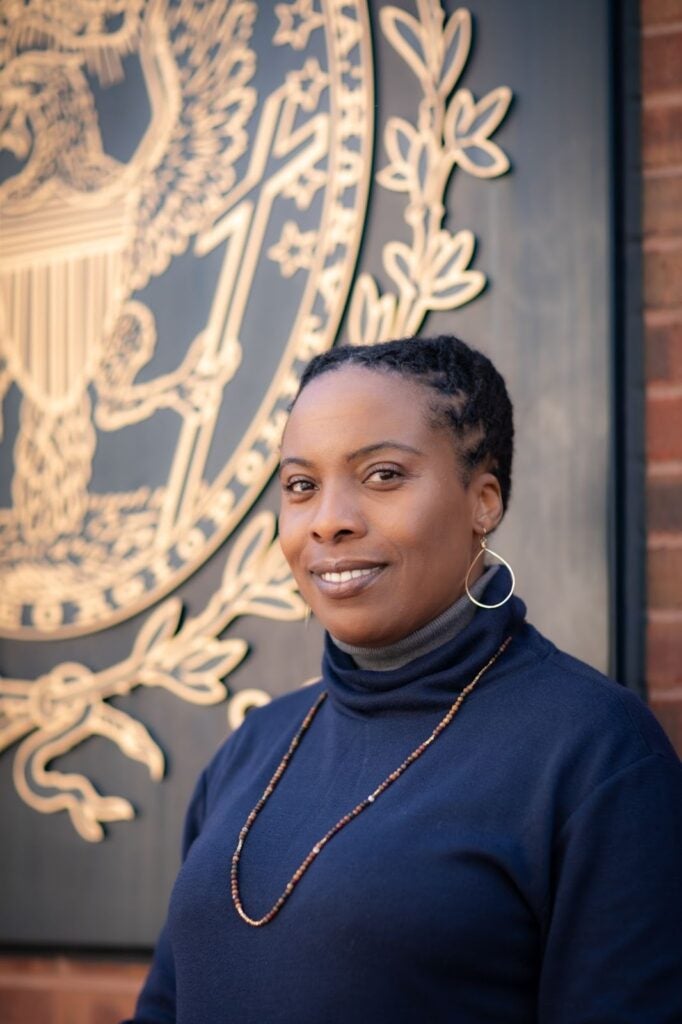
Shedd is an associate professor of sociology and author of Unequal City: Race, Schools, and Perceptions of Injustice. (Oxana Ware Photography)
What is a book that inspired your academic journey?
The Philadelphia Negro by W.E.B. Du Bois (1899)
This is the book I was assigned my first year of graduate school that modeled how I could merge narratives, statistics and maps to present a fuller picture of sociological phenomena (e.g., my focus on adolescents’ educational experiences and contact with the criminal legal system). Although Du Bois has been installed to his proper place in the sociological canon in recent years, he researched and wrote this book while simultaneously navigating: 1.) immense disrespect in academia as the first African-American to earn a doctorate from Harvard University who wasn’t given a real professorship until he went to Atlanta University; 2.) scrutiny and skepticism from the Black residents of Philadelphia’s sixth ward whose lives he sought to examine empirically; and 3.) the resultant hesitation from his benefactors to accept Du Bois’ explanations of the challenges faced by this population because he connected them to an inequitable environment instead of the respondents’ personal failings.
What is the best new book that you’ve read in the past year?
The Love Songs of W.E.B. Du Bois by Honorée Fannone Jeffers (2021)
I finally read the book this past year. It is a monumental debut work of fiction — it runs around 800 pages — by a poet who deftly weaves the life and words of Du Bois into the history, culture and experiences of one American family across centuries. Jeffers said that she initially planned for this work to be short beach-read, but the stories just kept coming to her. I see this novel as a beautiful parallel to the non-fiction work I describe above, which is the closest I can get to a beach-read, without guilt. It centers on the central protagonist, Ailey Pearl Garfield, who is educated at a fictionalized HBCU similar to Spelman College and learns about her family and American society in her quest to become a historian.
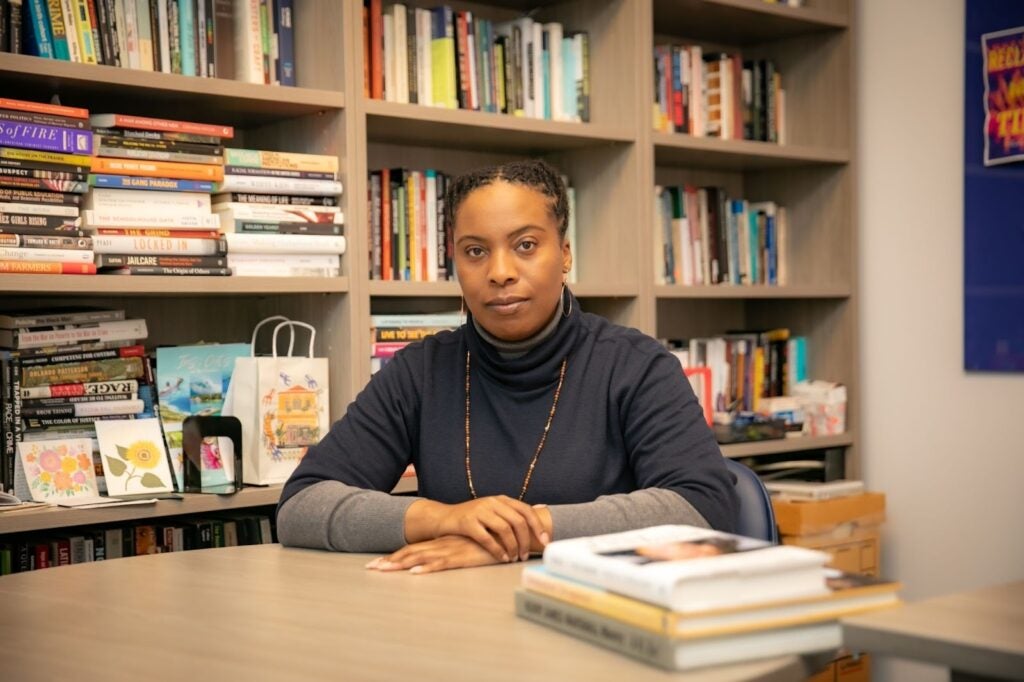
Shedd teaches Law and Society and Urban Inequality at the College of Arts & Sciences. (Oxana Ware Photography)
What books are you looking forward to reading?
Gardens of Hope: Cultivating Food and the Future in a Post-Disaster by Yuki Kato (2025) and The Undesirable Many: Black Women and Their Struggles against Displacement and Housing Insecurity in the Nation’s Capital by Rosemary Ndubuizu (2025)
I am super excited about new books by two of my colleagues in the College of Arts & Sciences. Gardens of Hope is the final book we’ll read in my Urban Inequality seminar this fall, and I can’t wait to discuss it with my students. It’s an account that centers the agency and collective efficacy shown by New Orleans residents in the wake of Hurricane Katrina. This narrative of hope and resilience is just the tone I need for closing out a semester of intense focus on unequal cities.
The second book, The Undesirable Many, examines Black women’s tenant activism in DC via a Black feminist materialism framework that I have a feeling will reveal itself as the next iteration of scholarship that furthers the intellectual work of our academic forebears — Collins and Du Bois — mentioned above. It just all comes together.
(All photos by Oxana Ware Photography)