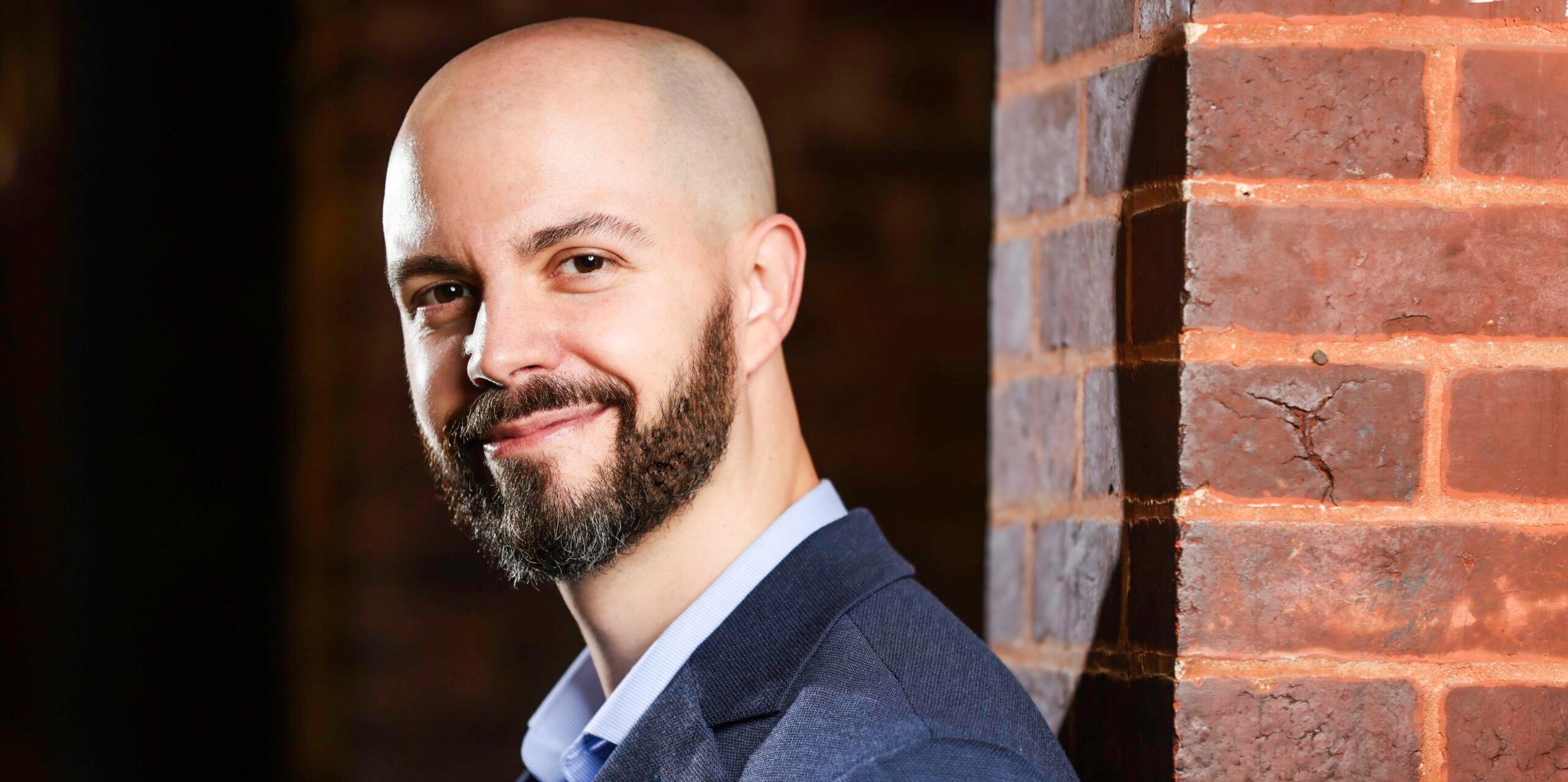
Dagomar Degroot Receives 2026 Dan David Prize for Research on Climate History
Dagomar Degroot, an associate professor of environmental history in the College of Arts & Sciences, has won the 2026 Dan David Prize, which recognizes outstanding contributions to the study of the human past.
The prestigious award is considered the world’s largest history prize, and winners receive $300,000 each to support their future endeavors. This year, Degroot is one of nine recipients of the award who are all in early and mid-stages of their careers.
In announcing the winners, the selection committee praised Degroot for his “innovative and timely research on climate history, that provides a novel emphasis on societal adaptation and survival under extreme conditions and successfully integrates insights from the humanities and the sciences, as well as by his commitment to conveying this work to the broader public.”
Degroot describes himself as an environmental historian who cares as much about the future as the past. His expertise includes climate change, space exploration and existential risk, and his research bridges the sciences and humanities to write histories that guide responses to today’s urgent challenges.
“The College of Arts & Sciences couldn’t be prouder of this recognition of Professor Dagomar Degroot’s scholarship,” said David Edelstein, the dean of the College. “Professor Degroot’s work reflects the very best of the College: cutting-edge, interdisciplinary research that speaks to real world challenges. By doing so, Professor Degroot inspires our entire community — students, faculty and staff.”
Unconventional Decisions
Degroot called the prize a “wonderful award to win” because it validates two unconventional decisions he’s taken in his work and made as part of the environmental history community at Georgetown.
First, he said, is that he’s decided to work closely with scientists and scientific data and methods. “It’s allowed me to ask questions about the past that haven’t been asked — or answered — before,” Degroot said. “To that end, I’ve learned from my colleagues John McNeill, Timothy Newfield and Kathryn de Luna, who are just as interdisciplinary as I am. Together, we’ve created a unique and, I think, world-leading concentration of historians who do science.”
Second, Degroot said, is that he’s chosen to publish his work in scientific journals, policy papers, newspapers, magazines, websites and podcasts in addition to history books and journals. Degroot created “The Climate Chronicles,” a multimedia project on the history and future of climate change that uses audio, video, text, maps and infographics and is available free online.
“The prize goes a long way towards affirming my sometimes unconventional publishing strategies,” he said.
Degroot’s approach can be expensive, and so he plans to use the prize money to fund his projects. Creating high-quality audio files or videos for his website stories and podcasts episodes can be costly, he said, as well as publishing articles in open source journals.
“This prize couldn’t have come at a better time,” he said.
Bridging History and Science
This year, Degroot is focusing on three new projects.
An author of two books, he is working on his third non-fiction book, Breach: Microbes, Moon Landings, and the Hidden Biosecurity Crisis of the Space Age.
The book, Degroot said, reimagines the first three decades of the Space Age as an early encounter with existential risk — a risk that threatens humanity as a whole. Breach follows efforts in the United States and the Soviet Union to prevent the contamination of other worlds with microbes from Earth, and of the Earth with microbes from the moon.
Degroot argues in the book that these efforts would have failed to protect Earth, had lunar microbes existed, and might have failed to protect the potential biospheres of Mars and Venus. He uses these failures to propose a set of policies that might help minimize existential risks today. That includes the risks associated with the rapid development of AI systems, Degroot said.
He also plans on completing “The Climate Chronicles.” So far, Degroot has published 16 episodes, each with about 5,000 words of text that introduce audiences to the history of climate change, ranging from about 50 millions years ago to the emergence of the first complex societies that took place about 4,500 years ago. Degroot’s goal is to publish 42 episodes in total.
For another project, Degroot is working with McNeill, a professor in the School of Foreign Service and the Department of History, and Geoffrey Wallace, a cartographer, to create a global atlas of environmental history. The guide, Degroot said, will introduce about 75 environmental changes that have had profound influence on human history.
“I like to write big histories that trace global changes across thousands and even millions of years,” he said. “But I’m also passionate about microhistories that tell sweeping stories through the experiences of individuals in a very particular time and place.”