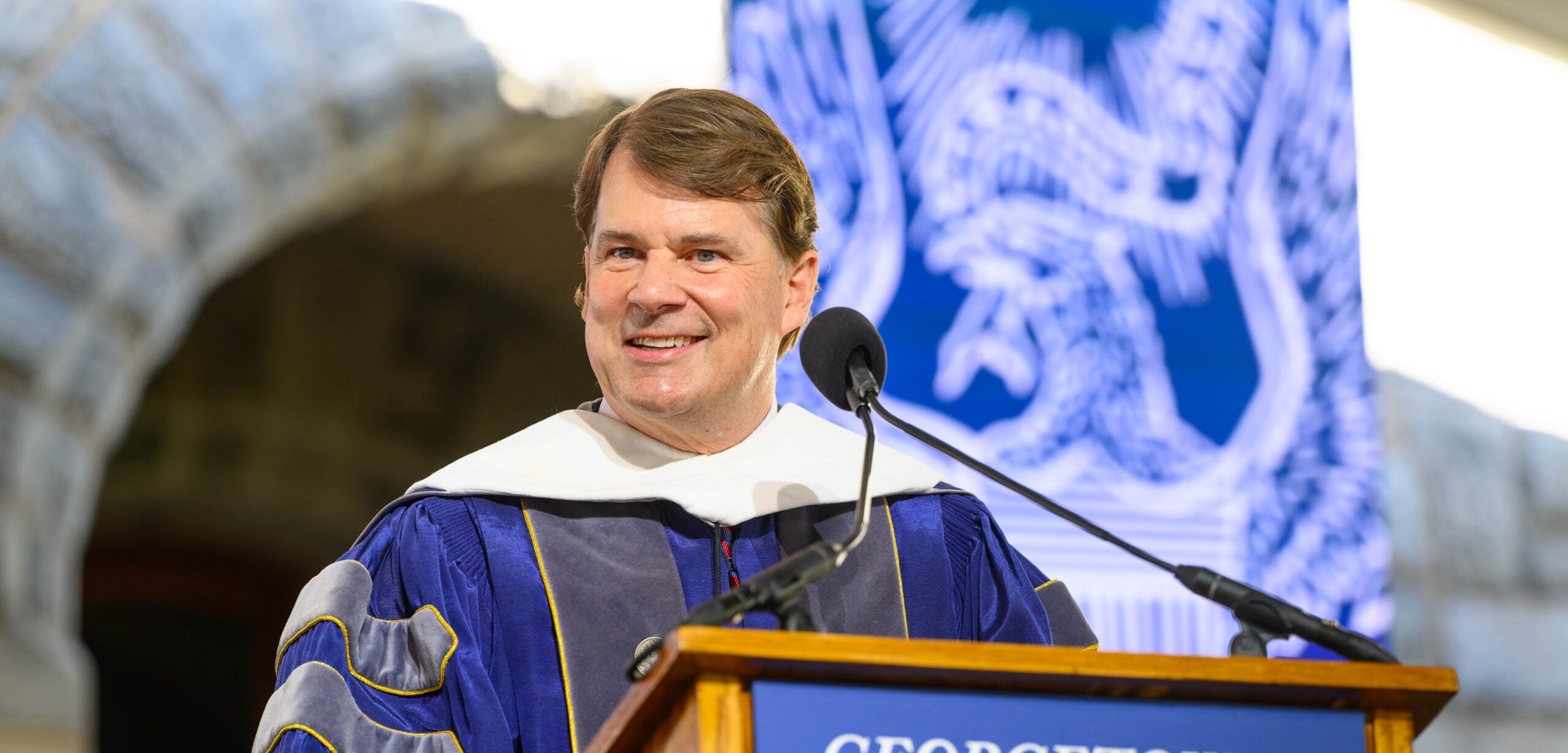
Ford CEO Jim Farley Urges Class of 2026 Graduates to Love Solving Problems
In an emotional and heartfelt speech at the 2026 College of Arts & Sciences Commencement ceremony, Ford president and CEO James “Jim” D. Farley, Jr. (C’85) urged the Class of 2026 graduates to learn to love problem solving.
“Seize the opportunity to fall in love with it — the fulfillment it will give you and how it will enable you to serve the people around you,” he said to the crowd of approximately 800 graduating seniors gathered in front of Healy Hall on a comfortably warm and sunny morning.
Farley’s personal connections with the Hilltop run deep.
He majored in economics and met his wife, Cornelia “Lia” Connor-Farley (C’87), at Georgetown. His father, James D. Farley (SFS’50) earned a degree from the School of Foreign Service in 1950. And he still regularly keeps in touch with his cherished group of friends from Georgetown, which he affectionately calls “my crew.” Last year, they celebrated their 40th reunion together.
“I”m about as Hoya as anyone you’d meet,” Farley said.
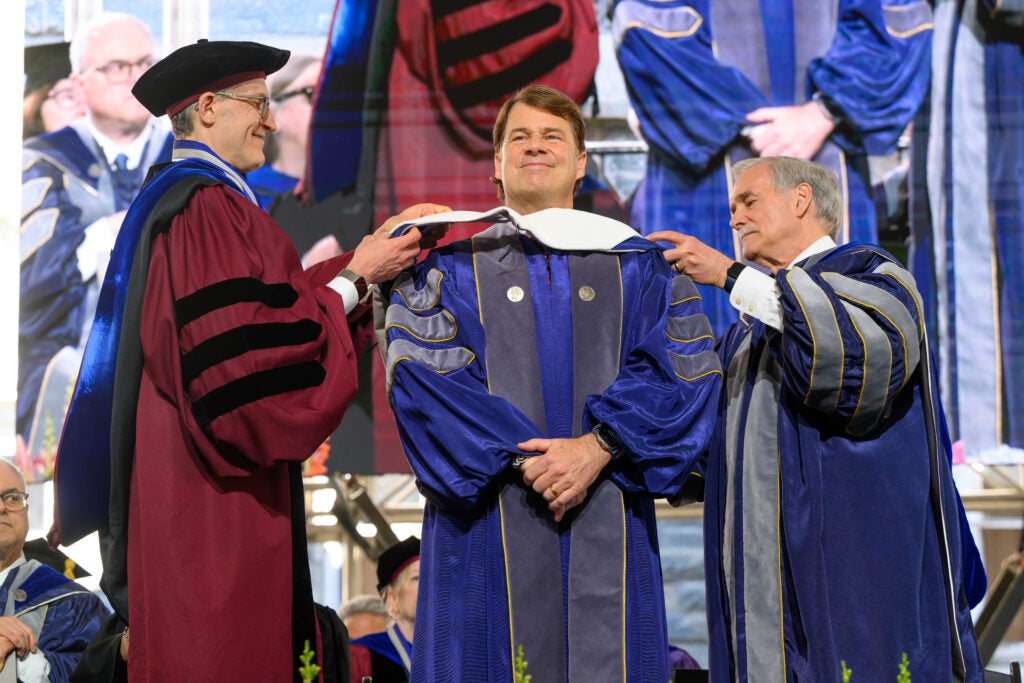
Jim Farley (C’85), center, smiles as College of Arts & Sciences Dean David Edelstein, left, and Georgetown University Interim President Robert M. Groves, place an honorary degree hood on him during the College of Arts & Sciences Commencement ceremony.
During the ceremony, he received an honorary Doctorate of Humane Letters degree. Sherry Linkon, a professor in the Department of English, read a citation for the honorary degree that highlighted Farley’s contributions to the auto industry and support for people experiencing homelessness.
“Today, Georgetown University honors a man whose life and work embody the hopes we hold for our graduates on this commencement morning,” Linkon said. “He lives with purpose, turning a love for cars into a vocation. He embraces lifelong learning to engage globally and adapt to a changing world.”
Farley started his career at Toyota, serving in various executive roles and helping launch the company’s Lexus group and Scion brand. He joined Ford in 2007 and has led the iconic American company since 2020. Farley’s grandfather, Emmet E. Tracy, was a Ford factory worker who started in 1913.
“I have his badge and a picture of him on my desk,” Farley said. “He was employee No. 389.”
Farley developed his love of problem solving at Georgetown by learning from scholars like Jan Karski, a Polish World War II hero who served in the underground Polish resistance against Nazi Germany and provided early reports of Nazi atrocities to the Western Allies. Karski, who died in 2000 and was posthumously awarded the Presidential Medal of Freedom in 2012, taught international relations at Georgetown for more than 40 years.
“Professor Karski embodied the long inheritance of courage and problem solving that is at the heart of Georgetown,” Farley said. “I would never claim to have faced down the problems that Jan Karski did. But I learned a great deal from him about how to approach life.”
When faced with challenges, Farley turns to the St. Ignatius framework for solving problems that focuses on discernment and reflection.
“Understand the problem at the root cause,” he said. “Reflect on the problem. Enjoy understanding the problem. And pray for guidance and consider the solutions. And then commit. Make a decision.”
Farley recommends seeing problems as opportunities rather than obstacles. He encouraged the graduates to ask themselves: What problems are you going to solve? How are you going to face your most difficult times? What is the problem-solving framework that works for you?
“In the end, it’s the tough and the hairy problems of substance that present the greatest gift to all of you, and it’s a privilege to humbly serve other people,” Farley said.
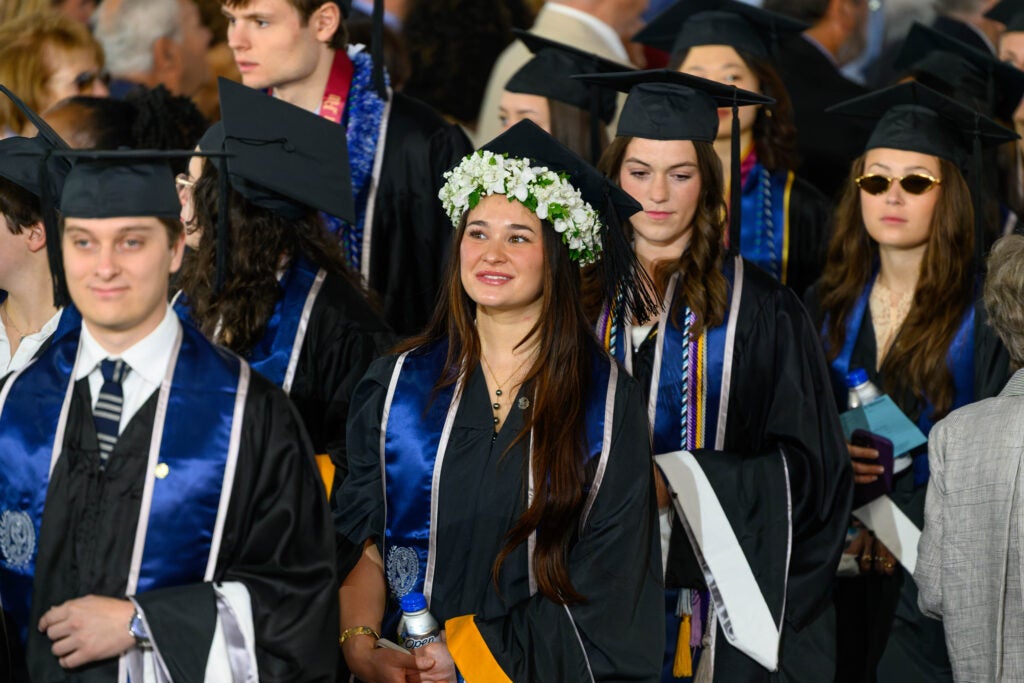
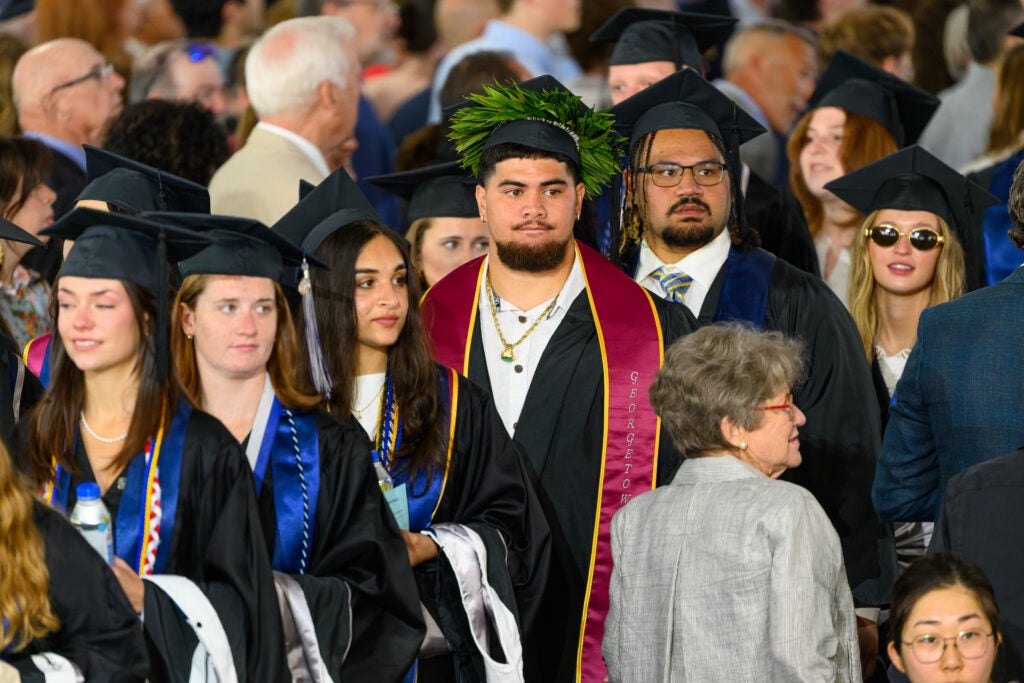
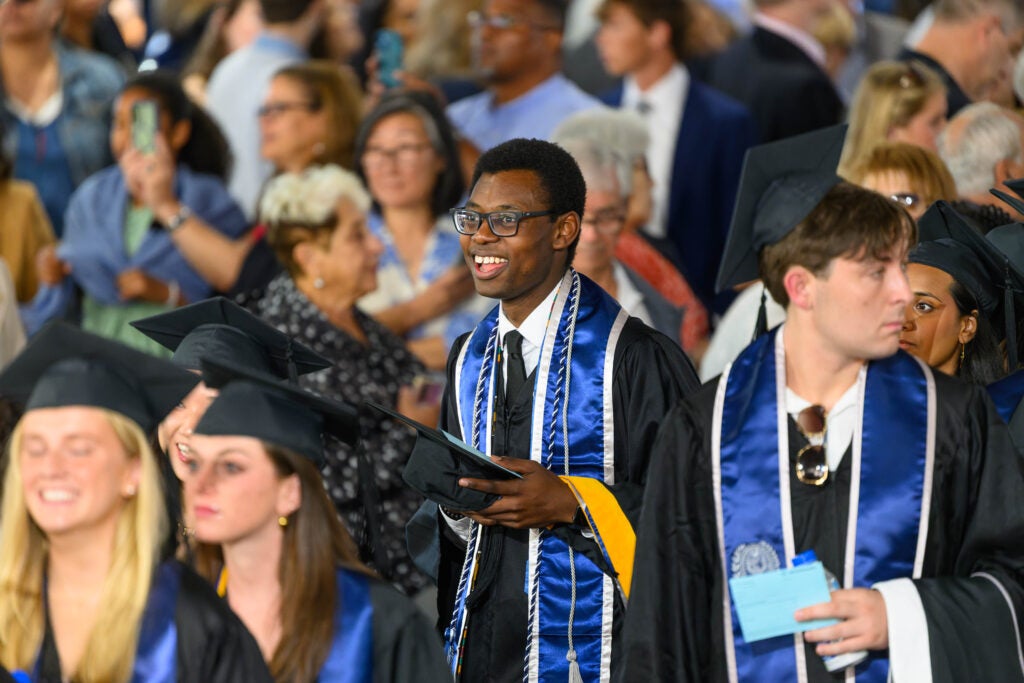
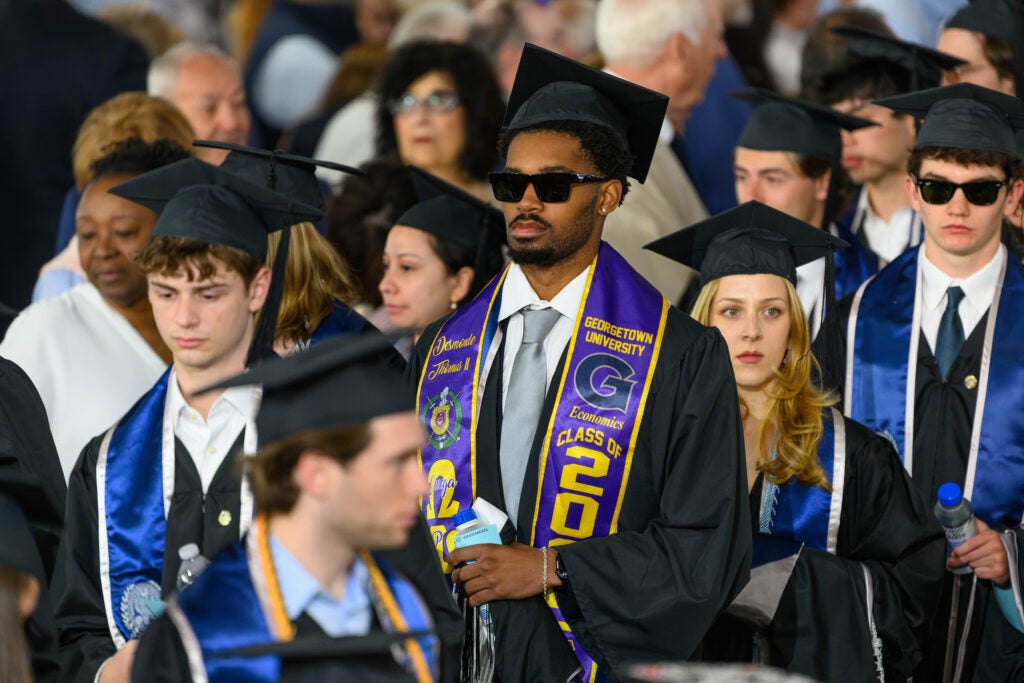

Hannah O’Grady (C’26), who majored in biology and minored in theology and religious studies, said the commencement ceremony was a “very meaningful way to end my four years here.” She called Farley’s speech, “awesome and inspiring.”
“I knew he was a Hoya alum, but I didn’t realize he was going to speak about so much of his experiences here in his speech,” O’Grady said. “It felt very personalized to our class and to our experiences. …The fact that he’s an alum and loves this school as much as we do was really special.”
Cecelia Peacock (C’26), a psychology major, was also in the audience and said she found Farley’s commencement address to be “really genuine.” His message about problem solving resonated with her.
“I think that’s something I learned at Georgetown,” Peacock said. “It’s really education for the whole person here. I learned a lot about problem solving and about how to grow as an individual and a student.”
Like Farley, Peacock was, in many ways, born to be a Hoya. Her mother, father, brother, sister and sister-in-law are all Georgetown alumni and were all on campus to support her. Peacock was the last of her generation to become a Hoya alum.
“I loved it here,” she said. “It lived up to the hype.”