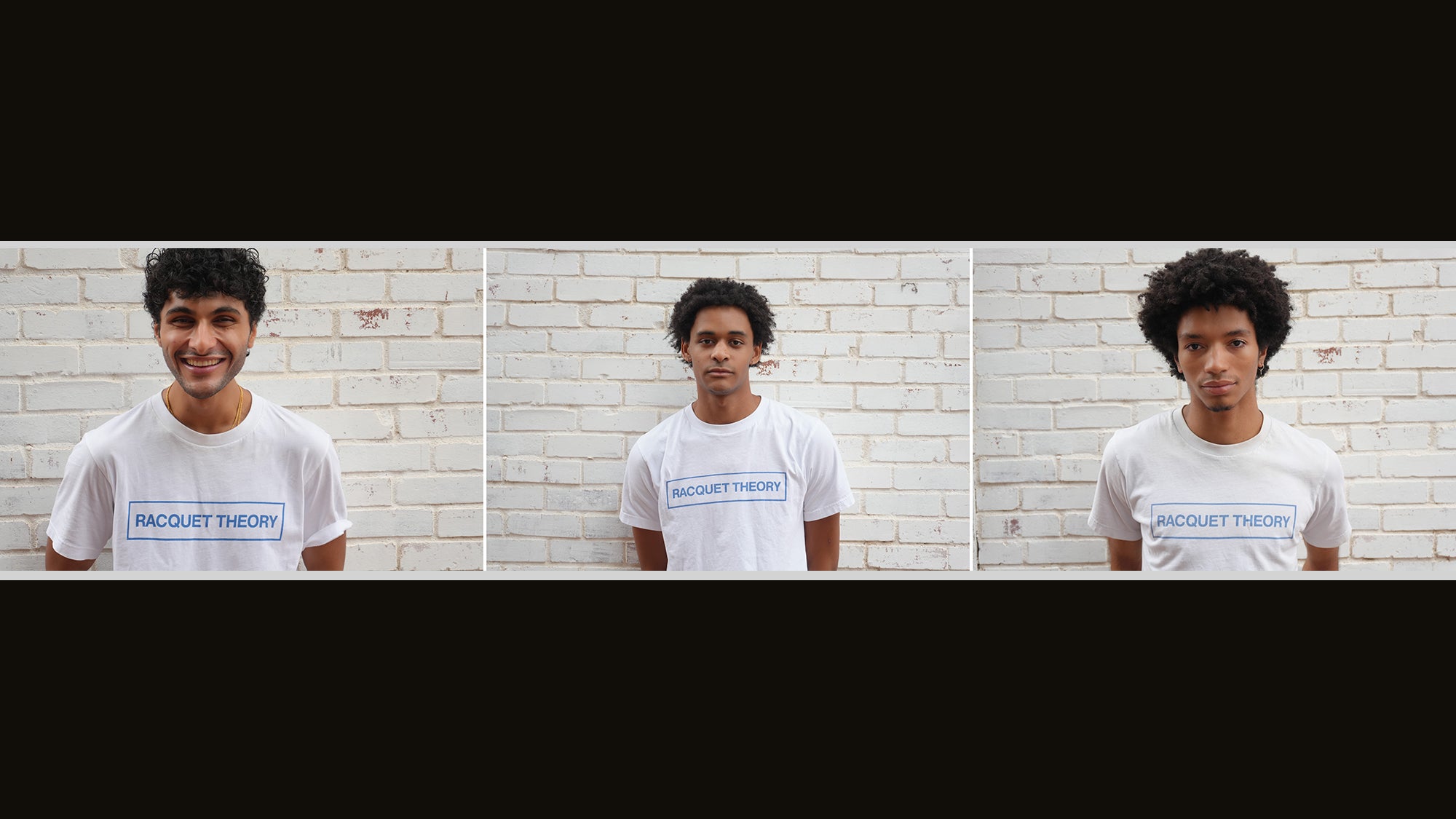
Racquet Theory Has Its Sights on Becoming the Future of Tennis Media
Evan Cole (C’26) was sitting on his hotel room bed in New York City on a warm July afternoon, thinking about the previous day he spent on Mulberry Street. Every time he visits the city, he takes a stroll through the historic street in Lower Manhattan for inspiration.
“You will see some of the most interesting people there,” Cole said. “You will hear the best music coming from the speakers. There’s the best food across the street.”
The Wimbledon Championships tennis tournament was playing on the TV in the background of his hotel room when he picked up the phone to call his friend and fellow Hoya, Leighton Farrel (SFS’26). Cole wanted to tell him that he had decided that afternoon to go all in on a project he co-founded with Neel Sadda (C’26) and Noah Young (C’27) in July 2025 as students in the College of Arts & Sciences.
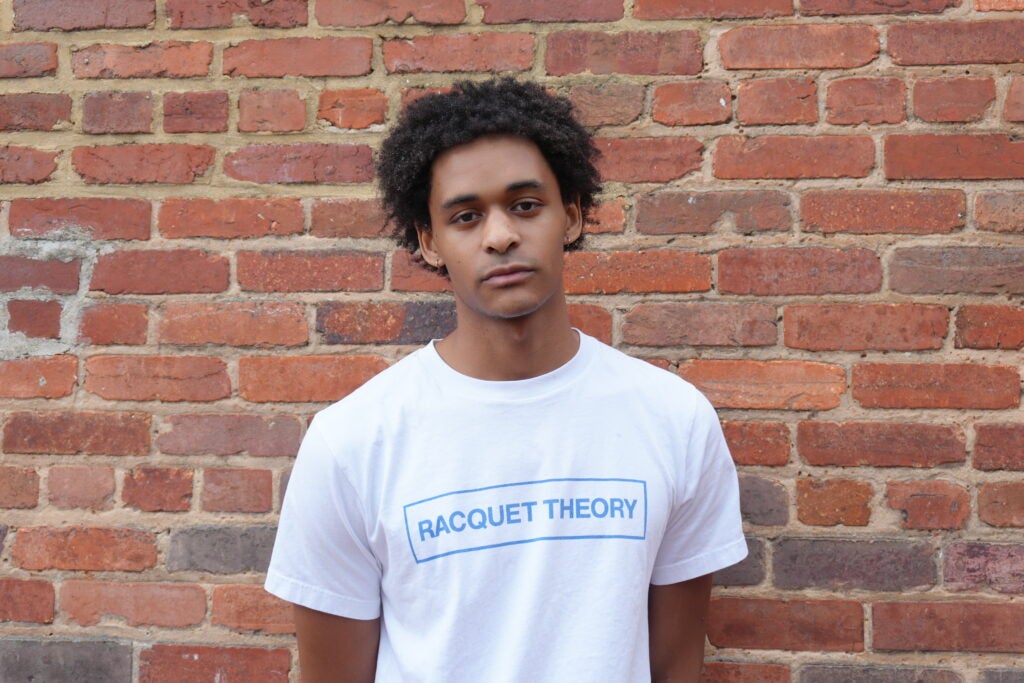
Evan Cole (C’26) wants to make Racquet Theory a way for “people to immerse themselves in tennis.” (Courtesy of Racquet Theory)
Leading Racquet Theory, an independent tennis publication that aims to expand how people engage with tennis, would be Cole’s full-time job.
As the U.S. Open tennis championships’ main draw gets underway in Queens, New York, tennis fans can expect videos, photos, essays and other content that capture tennis — the sport and the fashion, art, money, music and trends that surround it — in an immersive way for a young, digital audience from Racquet Theory.
“If you’ve ever had anything that you just wanted to do, the first step is immersion,” said Cole, who moved to Brooklyn this summer. “What we’re doing is providing different avenues for people to immerse themselves in tennis. …We want to create a space for everyone.”
Sparking Curiosity
The simple pitch deck description of Racquet Theory is “a multimedia platform for the next generation of tennis fans,” Sadda said.
But the company’s ambitions are bolder and deeper than that.
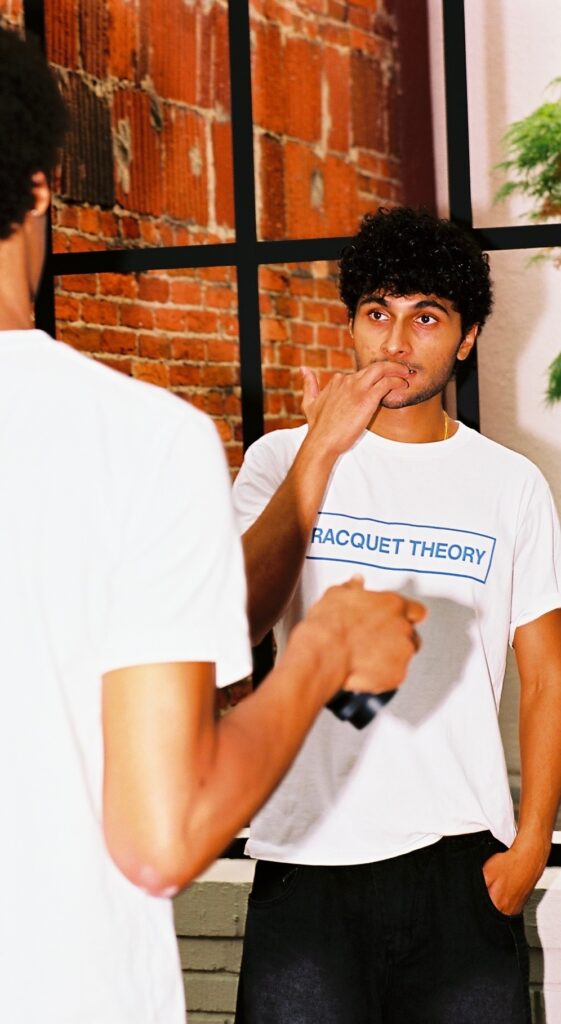
Neel Sadda (C’26), right, started playing tennis at age 3 after being inspired by his grandfather, a college player in India, and went on to compete throughout high school. (Courtesy of Racquet Theory)
The co-founders want Racquet Theory to be a place where tennis fans curious about the culture, fashion and style around the game can see themselves. They have already partnered with companies and organizations like Lacoste and the U.S. Tennis Association, and created content for Converse, a footwear and lifestyle company; Luxilon, a manufacturer of performance strings for racket sports; and Oyster Tennis Club, a fashion brand that aims to introduce tennis to a new community of fans.
“I want us to be the tastemaker of this market that we occupy,” said Cole, who majored in government at Georgetown.
Racquet Theory was born out of a frustration that Cole, Sadda and Young, self-described “tennis obsessives” and “cultural critics in training,” felt when they couldn’t find the type of tennis coverage that reflected their interests and curiosities. They wanted, as stated on their website, “something slower, stranger and more immersive.”
The publication’s first post, titled “What is Racquet Theory?,” was a Substack essay Cole published on July 20, 2025. In it, Cole quotes David Foster Wallace, the late writer and author of String Theory, a collection of essays about tennis.
“Racquet Theory … exists as an invitation,” Cole wrote. “A starting point. A bit of spectacle, not the clickbait kind, but the kind rooted in quality. In fashion, in photography, in design, in writing, in detail. Things that might catch your eye first, and if we’re lucky, spark something deeper. Just like Serena did. Or Roger. Or Rafa. Or Novak. You didn’t have to understand what they were doing technically to feel it. You just knew.”
In the week that followed, Cole and his co-founders printed out cards with a QR code to the Racquet Theory Instagram account and handed them out to fans at the 2025 Mubadala Citi DC Open tennis tournament. That November, Racquet Theory tied for third place at the Leonsis Family Entrepreneurship Prize “Bark Tank” pitch competition and received $15,000.
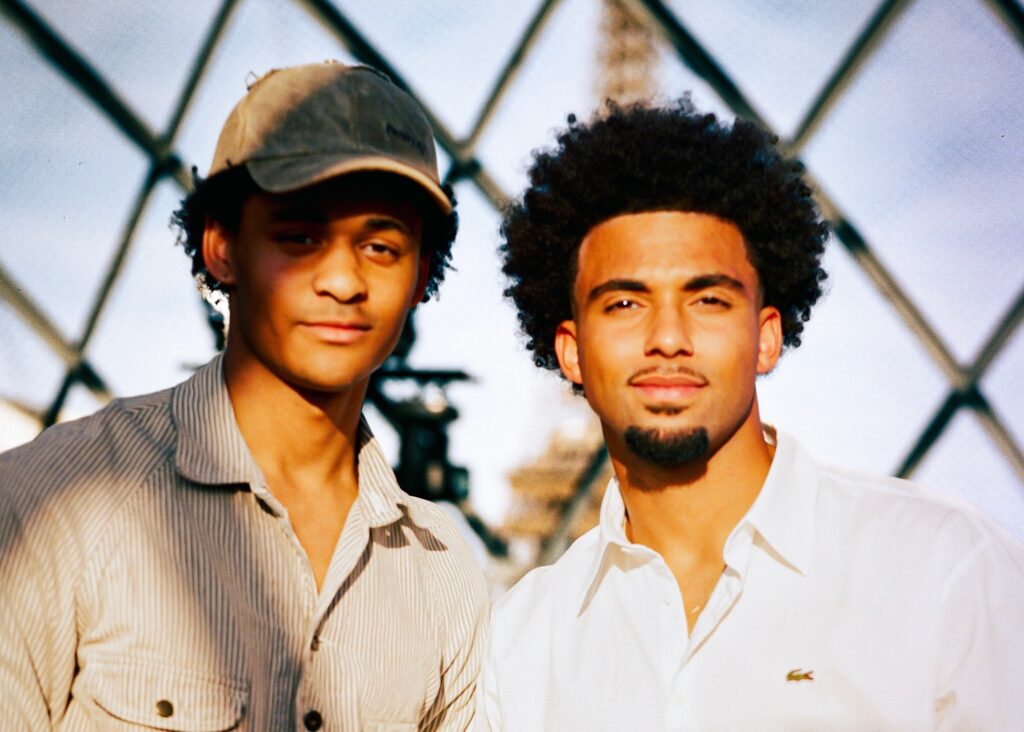
Cole, left, has connected with several professional tennis stars, including Arthur Fils of France, right. (Photo by Cole Gabriel Martinez)
The publication has quickly distinguished itself with its unique partnerships, focus on arts and culture and unfiltered commentary. On social media, tennis fans can find exclusive interviews with tennis superstar Naomi Osaka or a French art collector. Its Substack includes commentary on how Gen Z can’t afford to attend the U.S. Open and the pressures of being a Black player in a majority white sport. Racquet Theory has also served as the creative engine for other companies.
“I want to make this an Anthony Bourdain-type thing through the lens of tennis tours,” Cole said. “People care about the culture. They care about the different experiences that tennis will bring you.”
A Shared Passion
Each of the co-founders has a different tennis origin story.
Cole first got into the sport after watching Dustin Brown beat Rafael Nadal in the second round of the 2015 Wimbledon in a massive upset. Sadda started playing at age 3 after being inspired by his grandfather, a college player in India, and went on to compete throughout high school. Young played in middle school and was a U.S. Open ball boy in 2018 and 2019.
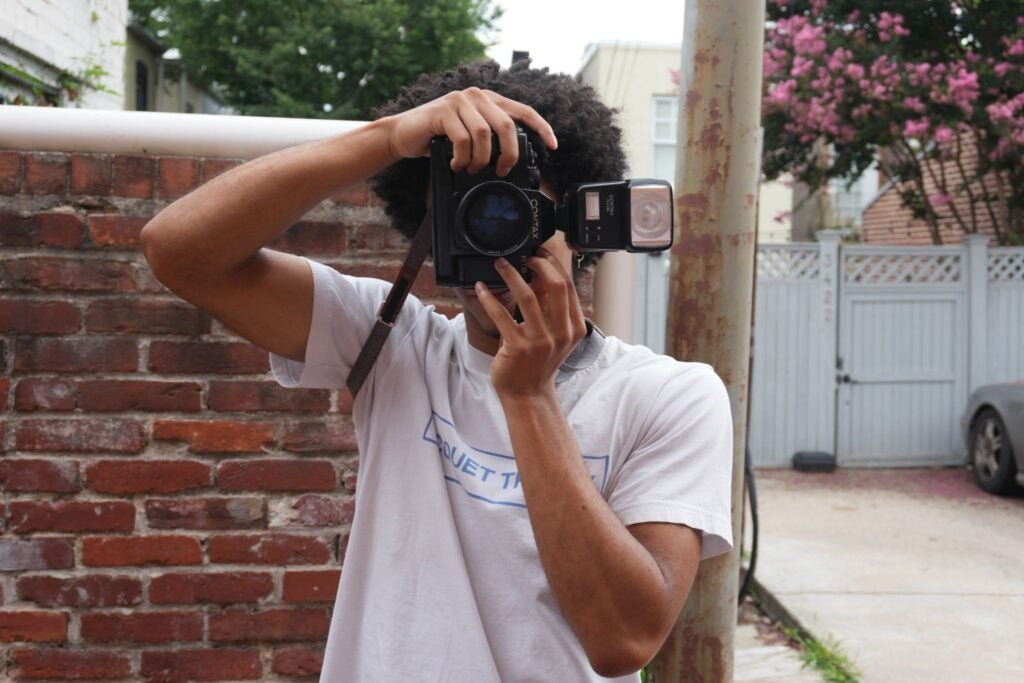
Noah Young (C’27) played tennis in middle school and was a U.S. Open ball boy in 2018 and 2019. (Courtesy of Racquet Theory)
Georgetown brought them together, and the three bonded over their shared passion for tennis.
“I think the power of Racquet Theory is that it was something we made for ourselves initially,” said Sadda, who graduated in December of 2025 with a double major in economics and government. “We were roommates and best friends who realized this could turn into something bigger that other people could also enjoy.”
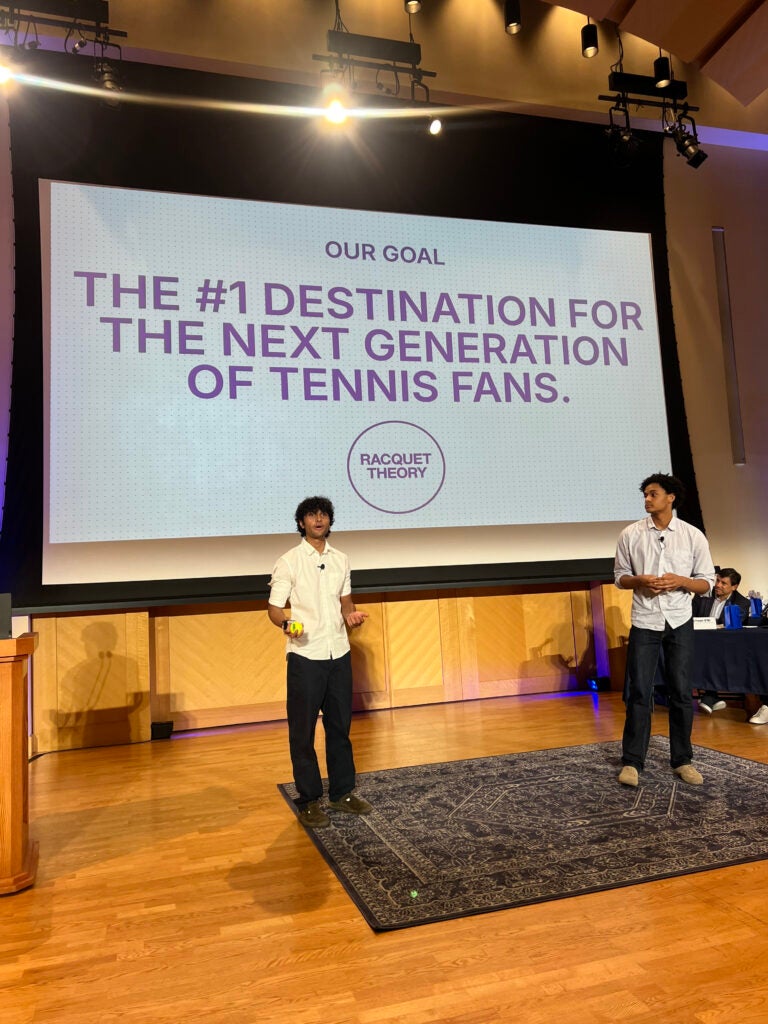
Sadda, left, and Cole, right, presented at the 2025 Leonsis Family Entrepreneurship Prize “Bark Tank” pitch competition. Racquet Theory tied for third place and received $15,000. (Courtesy of Neel Sadda)
All three bring something different to the team. Young, a senior majoring in government with minors in economics and philosophy, is a photographer and experiments creatively at Racquet Theory. Cole is a relationship builder and leads creative direction. And Sadda, who works at Deutsche Bank, has a background in business and a passion for videography.
“People are really, really drawn to the imagery that’s associated with tennis,” Young said. “I feel like that’s what we’re trying to latch on to and put out through whatever filter is created when all three of us talk together and produce something.”
The education they received at the College of Arts & Sciences emboldened their curiosity and creativity. Cole called his time on the Hilltop the “most transformative four years” of his life.
Georgetown “encourages you to think critically and get out of your comfort zone,” Sadda said. “The school challenges you to think differently about the world and pursue things that you never otherwise would have.”
Top photo features, from left to right, Neel Sadda, Evan Cole and Noah Young. Photo courtesy of Racquet Theory.