3 Distinguished Scholars Join the College as Davis Visiting Professors
Nearly 50 new full-time faculty members have joined the College of Arts & Sciences for the 2025-2026 academic year.
Among them are three new Royden B. Davis, S.J. visiting professors: James Gustafson in the Department of History, Danielle Purifoy in the Department of Black Studies and Mary Roberts in the Georgetown Humanities Initiative and the Department of Art and Art History. The positions are funded through an endowment named for Davis, a former dean of the College, and focus on enhancing undergraduate and graduate instruction and mentoring in the College.
Gustafson’s expertise is in Persian and Iranian history, Purifoy is teaching a course on Black geographies and Roberts, an art historian, is teaching a class on the exchange and cultural contact between Europe and the Ottoman world during the 19th century.
“We are thrilled to bring these distinguished visiting scholars to campus,” said Bryan McCann, the College’s vice dean for faculty affairs. “This will enrich offerings for our students and the intellectual life of campus, more generally. These are the kinds of interdisciplinary connections and opportunities we hope to encourage.”
Learn more about what inspired the professors to enter the world of academia and share their passion for the humanities.
James Gustafson, History
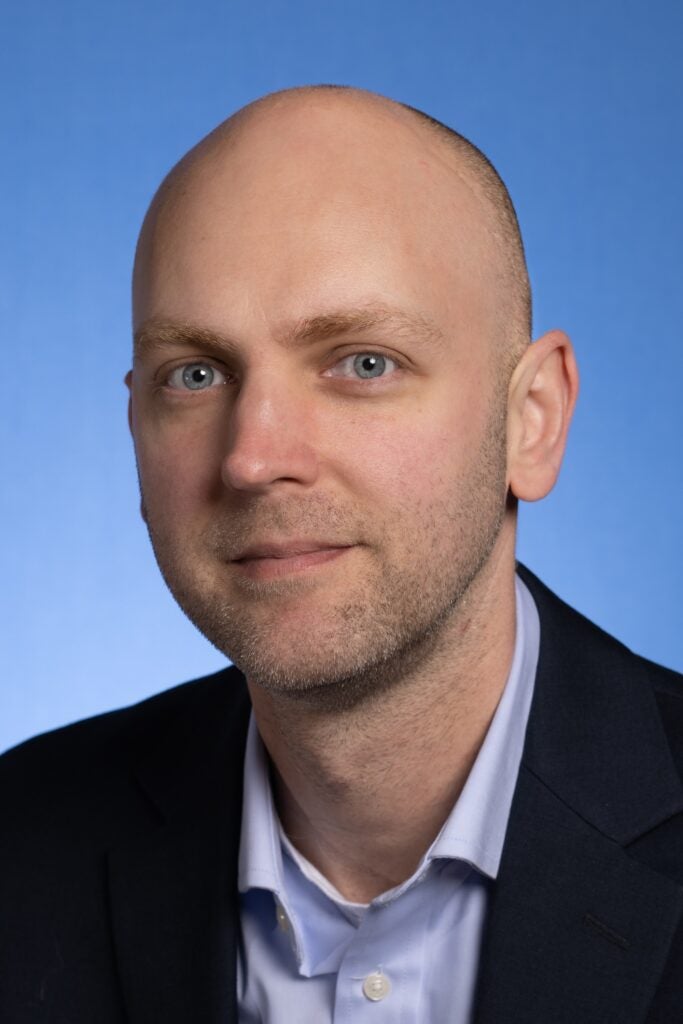
James Gustafson
Gustafson is teaching two courses this semester: History of Iran and Environmental History of Iran.
The first course covers Iran’s social and cultural history from the Persian Empires of antiquity to the modern Islamic Republic. The second is a seminar that explores how climate change and environmental hazards have shaped modern Iran’s history.
“It’s really exciting to have the opportunity to come in and help build some momentum for developing a really strong program in Iranian studies,” Gustafson said.
He hopes his courses will reveal to students the “remarkable similarities” between Americans and Iranians.
“I think the United States and Iran have had a very difficult relationship for a long time,” Gustafson said. “And I think the only way that you start to build bridges is through understanding. Having a depth of understanding of the rich history of Iran is a great starting point for building a little bit of empathy, a little bit of cross-cultural dialogue.”
Gustafson is visiting from Indiana State University, where he is a professor of history. He started learning Persian on his own as an undergraduate student at the University of Massachusetts. At the time, he was working at an evening pharmacy job, and his coworker, a woman who had fled Iran after the Iranian Revolution, taught him Persian.
“I just got hooked on it,” Gustafson said. “And then ended up getting deep into Persian language and literature and never really looked back.”
He would go to earn an M.A. in Middle Eastern studies at the University of Chicago and a Ph.D. in history at the University of Washington. Within six weeks of finishing his Ph.D. program, Gustafson received a visiting professorship position teaching Islamic studies at Western Washington University. He has been a professor of Middle East history at Indiana State University since 2012 and has served on the executive committee of the Association for Iranian Studies since 2019.
“I love when you can really see that you’ve introduced someone to a new idea that they hadn’t considered before,” Gustafson said of why he enjoys teaching. “Or a new perspective that they hadn’t taken in before.”
Danielle Purifoy, Black Studies
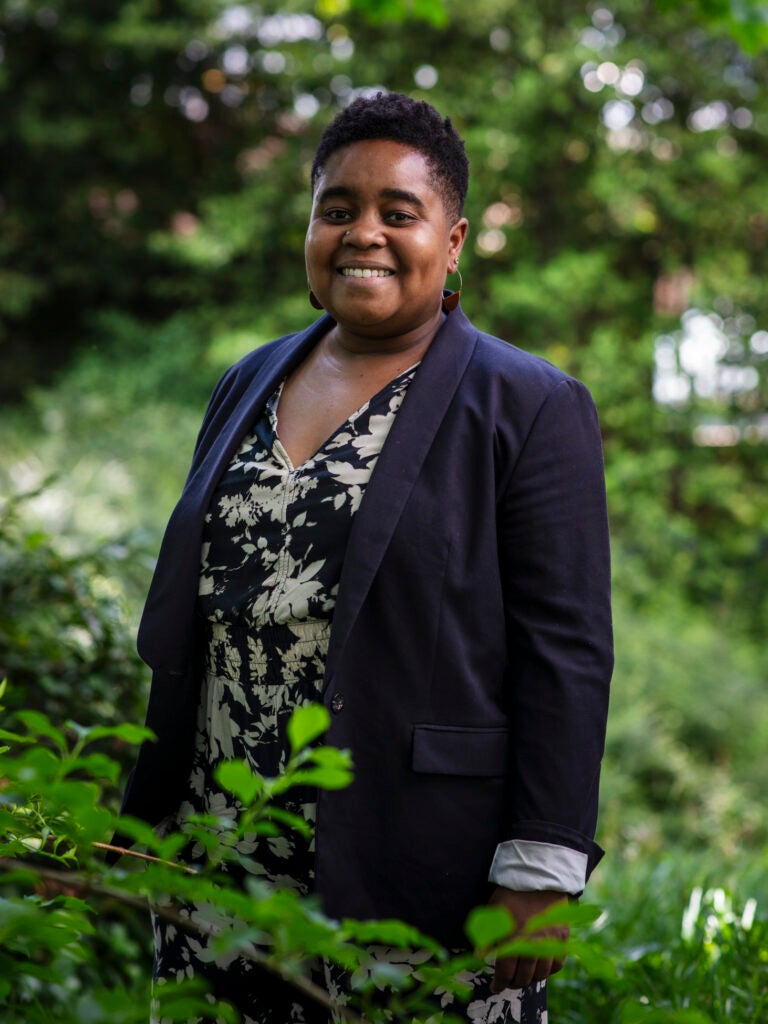
Danielle Purifoy (Photo by Sahar Coston-Hardy)
For Purifoy, who is teaching the seminar Black Geographies, the field of geography covers much more than maps.
“Maps are a very fascinating, very interesting element to the discipline, but the real scope of geography is pretty boundless,” they said. “You are always situated in a place, and there are so many different ways to think about how your life is shaped by place.”
Purifoy’s course examines how peoples of the African diaspora have shaped spaces in and around the West.
“The course is intended to give folks a very different perspective on how they might think about geography traditionally,” they said.
Purifoy’s origin story in academia began her senior year of college during Hurricane Katrina. She was a budding journalist interested in writing about race and politics but didn’t have a specific topic to think through that lens.
But working on hurricane recovery in Baton Rouge and New Orleans for three years inspired her interest in environmental justice. Purifoy eventually earned a J.D. from Harvard Law School and a Ph.D. in environmental policy from Duke University.
While at Duke, she collaborated with students from the University of North Carolina at Chapel Hill, who encouraged Purifoy to explore geography as a discipline. She has been an assistant professor of geography and environment at UNC-Chapel Hill since 2020.
Human society and geography help explain the world around us and highlight the importance of learning the humanities, Purifoy said.
“We absolutely need all of the ways to understand ourselves and our place in this world if we’re going to do anything to change it for the better,” they said.
Mary Roberts, Georgetown Humanities Initiative and Art and Art History
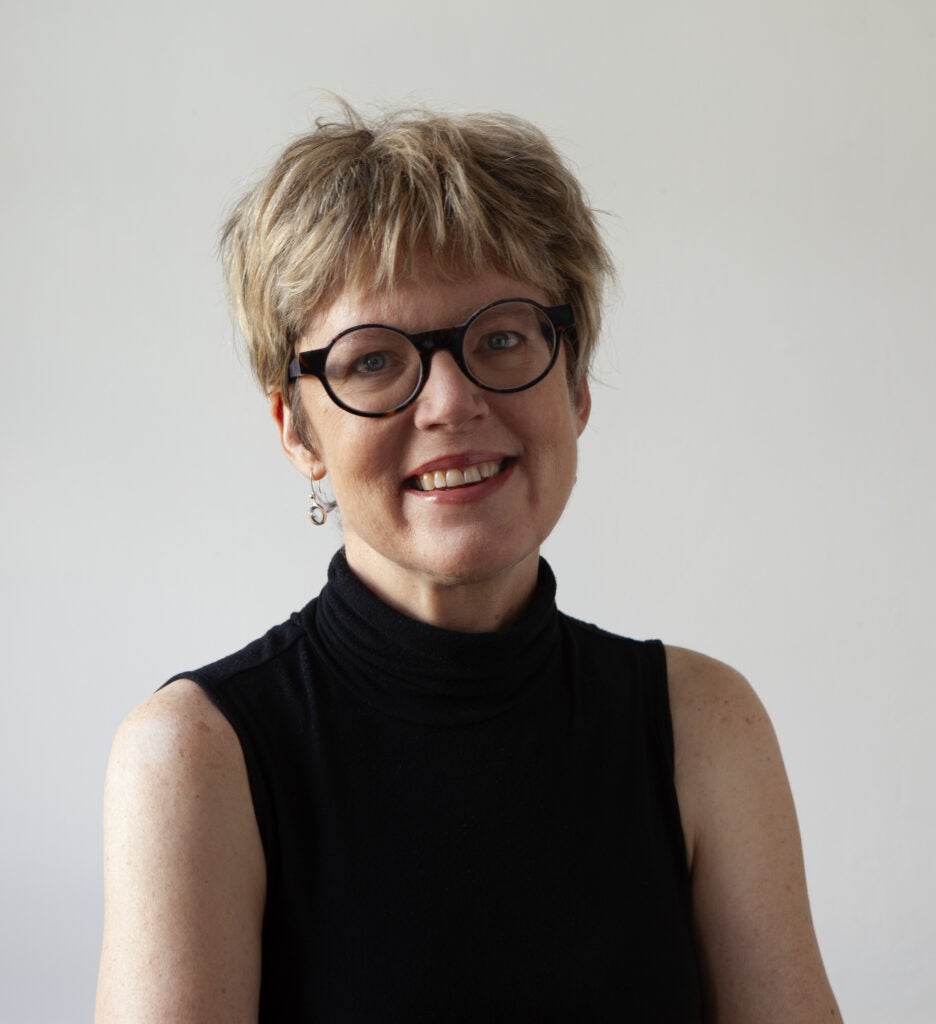
Mary Roberts
At Georgetown, Roberts is teaching Ottomans and Orientalists, a course that explores the role of visual culture in forms of exchange and cultural contact between Europe and the Ottoman world between 1798 and 1910.
The class, which includes master’s and undergraduate students, encompasses the study of diverse forms of visual culture — from architecture and city planning to illustrated news images, panoramas, caricature and high art, Roberts said.
“One of the many topics we are addressing is the history of exhibitions and the kinds of stories that can be told about cultural relations between Europe and the Islamic world through museum displays,” she said.
Roberts is a specialist in 19th-century modernism, orientalism and Ottoman art and has written several books examining those topics. Her appointment at Georgetown is between the Department of Art and Art History and the Georgetown Humanities Initiative.
“The research strengths in art history and in Ottoman and Turkish studies at the College of Arts & Sciences appealed to me,” said Roberts, who is a professor of art history and 19th-century studies at the University of Sydney. “What also appeals to me is the rich culture of free inquiry and open debate that is encouraged at Georgetown.”
Roberts grew up in Brisbane, Australia, and was always passionate about making art. In high school, her art history teacher opened up a new world to her, and she discovered that writing about art felt just as creative as making it.
“At the same time I was making art, I was actually seeing that one could be completely inspired by artworks from another time,” Roberts said.
When her parents took her to a local art museum, a curator there encouraged Roberts to study art history in Sydney or Melbourne. Roberts moved from Brisbane to Sydney and graduated with a double major in art history and political economy at the University of Sydney. She completed her Ph.D. in art history at the University of Melbourne.
“I was really interested in that crossover between the social and economic function of art within and between cultures,” Roberts said.