New Series Highlights the Value of an English Degree in a Changing World
When Nathan Hensley, a professor and director of undergraduate studies in the Department of English, tells students the common stock phrase, “English majors can do anything with their degrees,” they share a laugh about it.
“Because what it tends to suggest when someone says you can do anything with something is that it also means you can do nothing with it,” Hensley said.
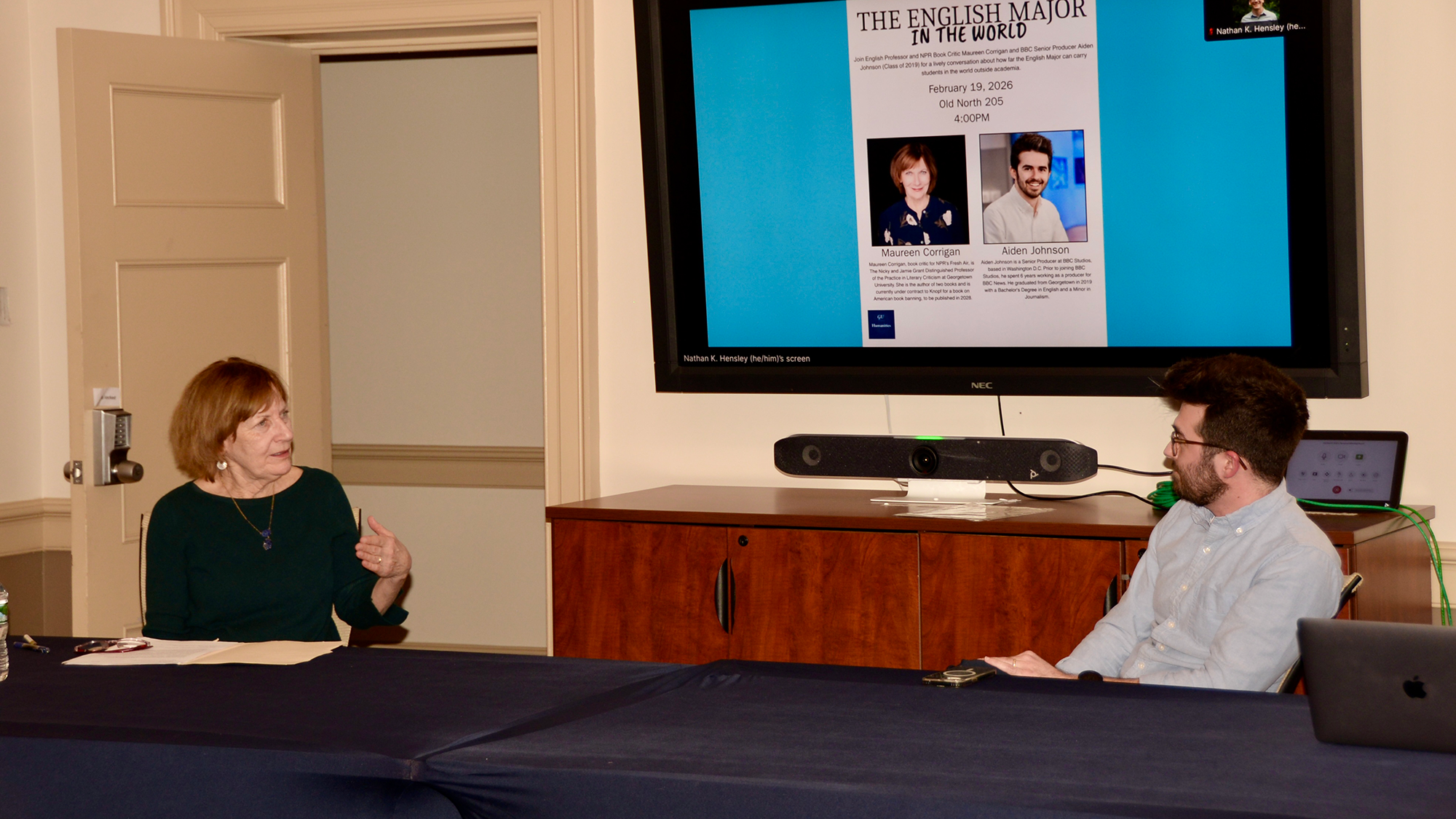
It helps to have concrete examples of what English majors are doing with their careers. That’s why the English department posts alumni spotlights and Q&As on its website and launched an events series last month called, “The English Major in the World.”
As the use of artificial intelligence rises, recent reports suggest that demand for humanities majors, like English, is increasing, as organizations look for graduates with creative and critical thinking skills. “The capacity for authentic thought is turning out to be an incredibly marketable skill,” Hensley said.
This new events series aims to lean into those strengths.
“Part of the purpose for this series is to give some concrete specificity to the kind of life plots that are available to people who come out of Georgetown with an English degree,” Hensley said. “And the truth of the matter is that those life plots are incredibly varied, all incredibly dynamic and they really range widely, but each one of them is very specific and real.”
A Diverse Range of Careers
The inaugural event in February featured a talk between Maureen Corrigan, the Nicky and Jamie Grant Distinguished Professor of the Practice in Literary Criticism, and Aiden Johnson (C’19), an English alum who works as a senior producer at BBC Studios.
The next event is scheduled for April 9 and will be a conversation with Corrigan; Kitty Eisele, a podcast producer and former longtime NPR journalist; and Kate Rosenberger, a senior talent recruiter and audible lead for The Great Courses. The plan is to host one to two “English Major in the World” events per semester, Hensley said.
“We hope this will become an ongoing series to really be able to start telling the story of the range and diversity of career outcomes that our students are able to have,” he said.
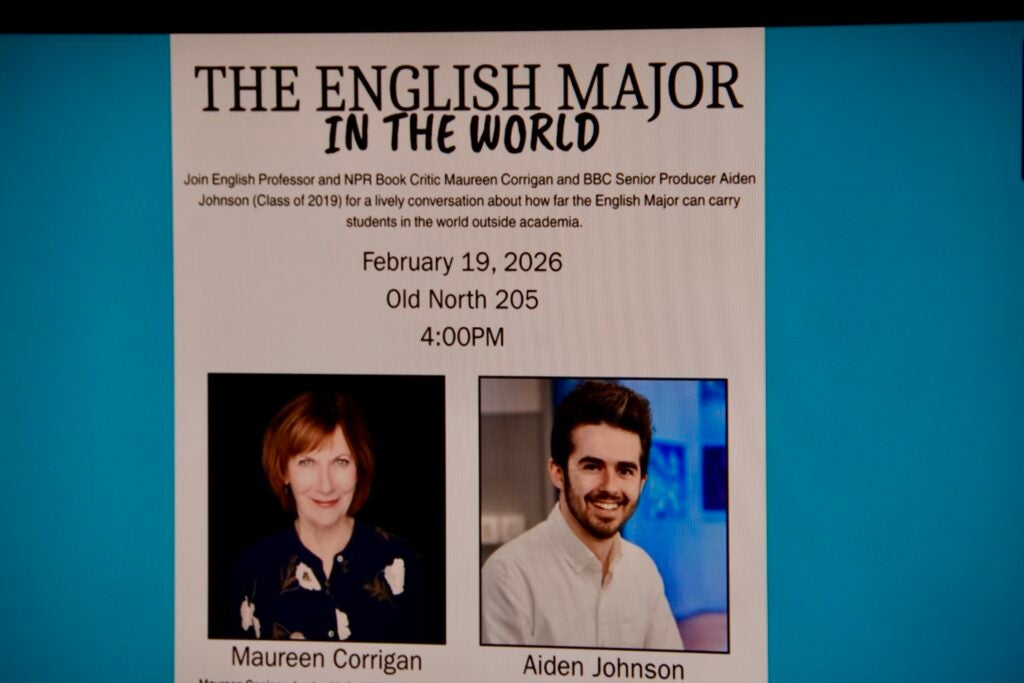
The inaugural event featured a conversation between English Professor Maureen Corrigan and her former student and English alum, Aiden Johnson (C’19), who works as a senior producer at BBC Studios. (Kelyn Soong)
This series was born out of conversations between Hensley, Corrigan, Patrick O’Malley, a professor and chair of the Department of English, and David Edelstein, the dean of the College of Arts & Sciences.
Studying the humanities has intrinsic value that, in my view, only continues to grow. This series will illuminate pathways forward for students who commit to a humanities education, and by doing so, I hope it will convince even more students to major in English and our other humanities programs.
David Edelstein, dean of the College of Arts & Sciences
Corrigan had already been moderating a public humanities events series with authors and thought about finding additional ways to help English students think about their career paths.
“I really do believe you can do anything with an English degree,” Corrigan said. “I really do believe that humanities degrees don’t age. You gain a wealth of knowledge from close reading and literary history and familiarity with some of the best that’s been known and thought in the world. That will take you places.”
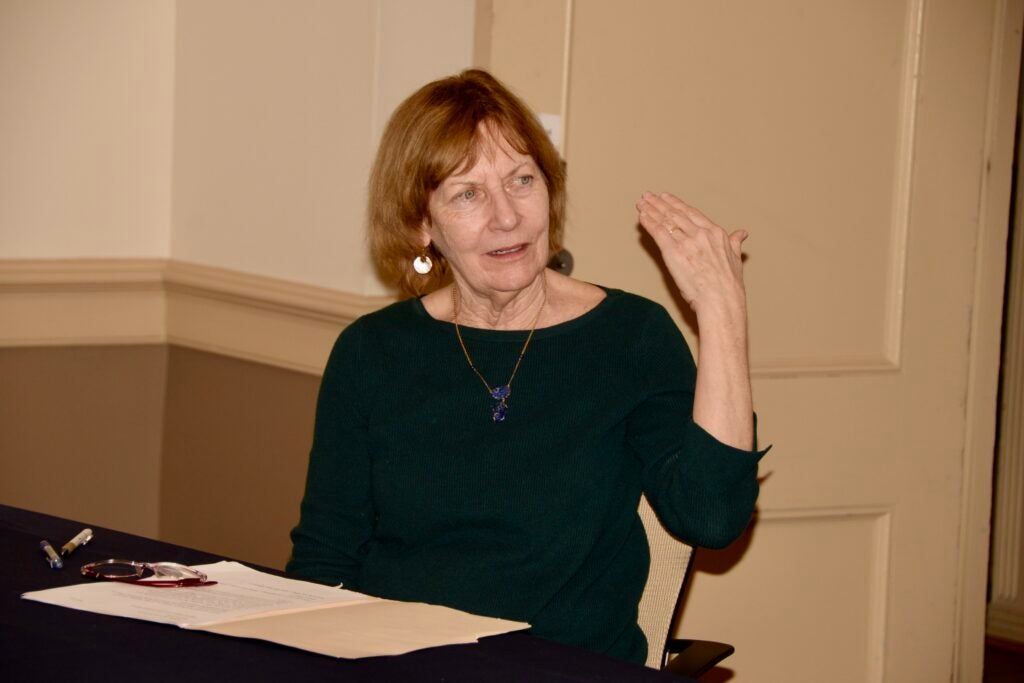
“I really do believe you can do anything with an English degree,” said Maureen Corrigan, the Nicky and Jamie Grant Distinguished Professor of the Practice in Literary Criticism. (Kelyn Soong)
Johnson, who majored in English and minored in journalism, took “five or six classes” with Corrigan and estimates that he spent roughly half of his English major with her. Corrigan’s courses, Johnson said, helped him learn to “think in a clear way that wasn’t necessarily limiting.”
“I always felt like her classes were built upon this social contract that if you are engaged and invested and curious and willing to participate, you won’t get penalized for trying something new and seeing if it works,” Johnson said.
In his senior producer role at BBC Studios, Johnson supports BBC’s talent strategy and content production in the United States. He also works closely with BBC broadcaster Katty Kay and helps produce her interviews, specials and reported features. That includes writing memos, briefs and scripts.
The main thing that his English degree has taught him, Johnson said, is how to “tell a good story, hear a good story and understand what a good story is.” That means being able to read and synthesize information and explain why it’s relevant and important to people, he said.
English Majors Are Everywhere
Corrigan wants students to know that in today’s unpredictable world and job market, it’s an advantage to have an English degree. She hopes this series empowers them.
“There’s no ‘X equals Y’ clear path, but I think that by giving our students kind of a menu of possibilities over the next few years and hearing how people got the positions that they’re in, that maybe it will help give them some practical ideas,” Corrigan said. “It will also help embolden them to believe in their degree and to believe in themselves.”
English majors are everywhere. Hensley said he has seen graduates go on to work in education, journalism and media, government, marketing and publication relations, the entertainment industry, law, finance, consulting and nongovernmental organizations, among other industries.
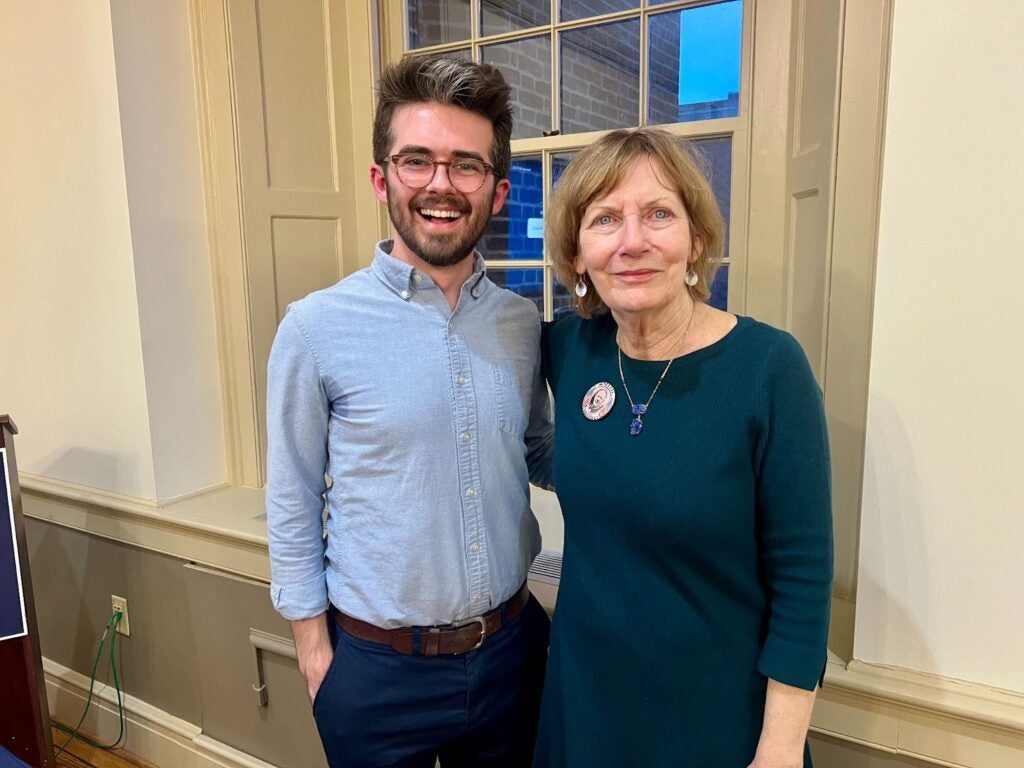
Aiden Johnson (C’19), left, said he took “five or six” of Maureen Corrigan’s classes during his time at Georgetown. He now works as a senior producer for BBC Studios. (Kelyn Soong)
Hensley said he has also observed that with the rise of algorithmic language engines, critical thinking skills and the ability to create authentic connections are increasingly more valuable.
“CEOs all over America are increasingly desperate to recruit and retain people who have done the work that enables them to be real thinkers,” he said.
For Corrigan, learning and teaching the humanities are essential to living; it’s like breathing. There’s a certain transcendence, she said, to “having so much great art in your head.”
“The humanities is life,” Corrigan said. “I feel like it’s my secular religion. I really do. I feel like I don’t think I could get through the day without the voices of amazing writers that I have in my head, who are constantly in my brain, commenting or helping me see things that I would otherwise not notice. I think that those writers give me a sense of possibility and communion beyond my day-to-day life.”