
Psychology Professor Abigail Marsh Featured in New Season of ‘Limitless’ With Chris Hemsworth
In February, psychology professor Abigail Marsh flew more than 4,000 miles from DC to Switzerland for an assignment. She was there in her role as a neuroscience expert to share insights on the science of risk and fear.
Her student for the week? Hollywood action star Chris Hemsworth.
Marsh had been invited to be on the show, Limitless: Live Better Now, which is the second season of the National Geographic docuseries starring Hemsworth, where he explores aging well through physical and mental challenges with help from scientific experts like Marsh.
It’s streaming now on Disney+ and Hulu, and Marsh appears in the third and final episode titled “Risk.” In the episode, Hemsworth, who stars as Thor in the Marvel superhero films, attempts to push his limits and rediscover the childlike joy of taking risks by climbing a 600-foot wall in the Swiss Alps.
Marsh, who is the author of the book, The Fear Factor: How One Emotion Connects Altruists, Psychopaths, and Everyone In-Between, helped Hemsworth get in the right mental state and educated him on the neuroscience behind different cognitive states associated with taking risks and how they can affect people’s experiences.
“We talked a lot about why challenging ourselves to do things that scare us – within reason – is so good for us,” Marsh said. “We talked about the neuroscience of various states that can change our experience of risk, including flow states, play and even anger.”
The following interview with Marsh has been lightly edited and condensed for clarity.
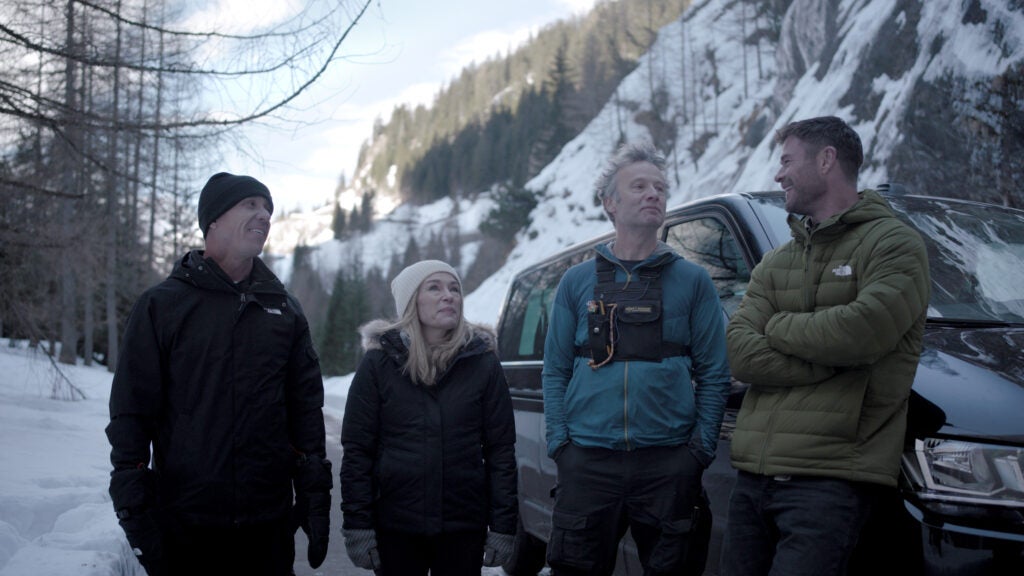
Chris Hemsworth, right, and his support team of (left to right) motocross stunt rider Robbie Maddison, Georgetown professor Abigail Marsh and climbing expert Percy Bishton discuss the climbing challenge. (National Geographic)
How did you apply your Georgetown research to the show?
I have been studying the neuroscience of fear and related processes for about 20 years, including at Georgetown. I am the author of the book The Fear Factor: How One Emotion Connects Altruists, Psychopaths, and Everyone In-Between.
My work at Georgetown has included studying individual differences in how people experience fear, including relevant differences in the structure and function of the brain. I also have studied processes that can reduce fear when we are doing something risky, such as focusing on the intrinsic value of the activity.
So, for example, at Georgetown I have studied extraordinary altruists who give kidneys to strangers. They are not temperamentally fearless people at all, but they often report not being at all afraid of surgery or of losing their kidney because they are so focused on the fact that the recipient’s life is on the line – they are usually really focused on doing what they can to make sure the transplant is a success because they know it’s life or death for the person on the receiving end. And focusing on the other person’s welfare really reduces how much they worry about themselves.
It’s a good example of the fact that how we approach and cognitively frame an experience can dramatically change our emotions and experiences.
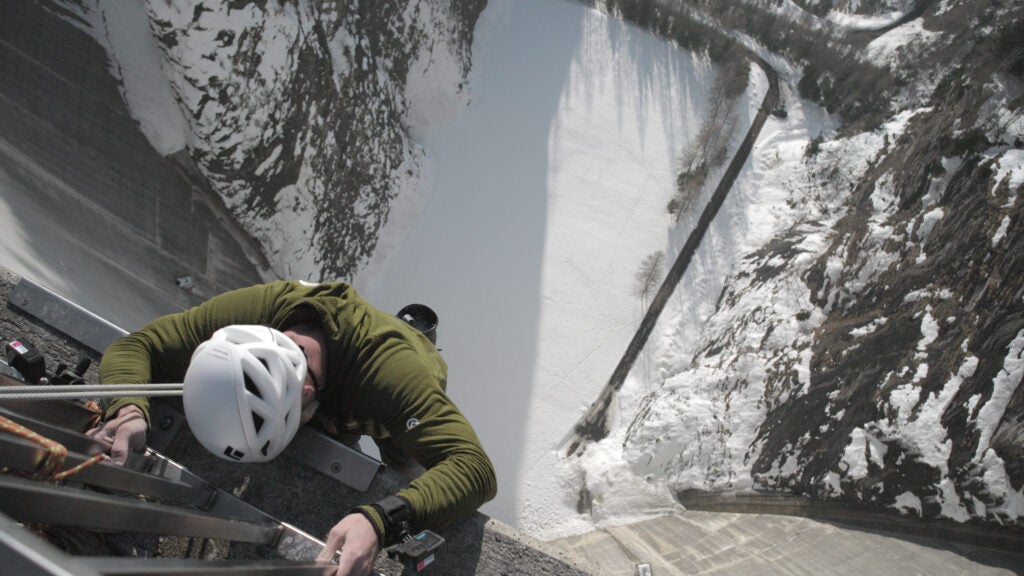
At nearly 600 feet, the Luzzone dam in Switzerland is one of the tallest artificial climbing walls in the world. (National Geographic)
What was it like working with Chris Hemsworth?
It was a huge pleasure working with Chris. He was incredibly nice and welcoming. I was impressed by how knowledgeable he is as well as how tough and determined he is – very few people I know would be willing to put themselves through even one of these challenges, never mind do it over and over again. I was inspired by his focus on pursuing growth and learning by pushing his limits.
In the episode, you talk to Chris about the concept of flow state and how it can help with his concentration. How would you define flow state?
A flow state is a state in which our skills are a very close match to a challenge we are confronting, which allows us to completely lose ourselves in working to meet that challenge. In a flow state, people lose self-awareness, their sense of time changes and it’s considered a very positive, even exhilarating state that people sometimes experience when they are immersed in working toward goals they value, including thrilling or challenging sports like climbing.
What were some of the most memorable moments working on the show?
Standing at the foot of the dam for the first time was incredibly memorable. First of all, it was freezing – we were in the Swiss Alps in February and I was full-body shivering by the end of shooting there despite being dressed head to toe for an arctic expedition. And also, the dam is so high and so forbidding. I was very glad it wasn’t me who would be climbing it in the freezing cold.
I also came away very impressed by the huge team of professionals and experts it takes to make beautiful documentaries like Limitless. I have done documentary films and some television news shows like 60 Minutes before, but I have never been part of a production of this scale – there must have been 20 or 30 cameramen, for example. It was a little intimidating, but I guess that’s appropriate given the nature of the show!
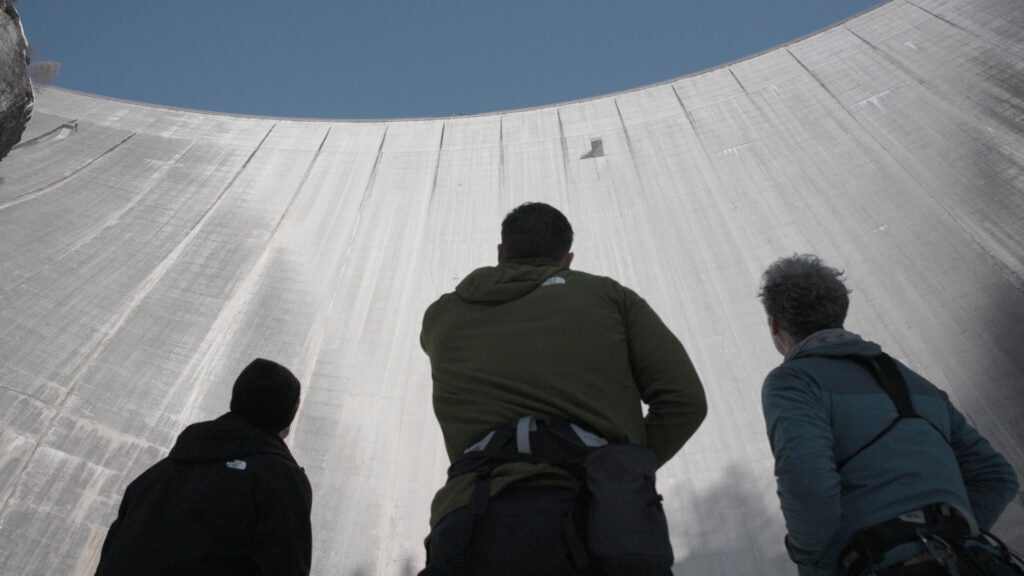
“Standing at the foot of the dam for the first time was incredibly memorable,” Marsh said. (National Geographic)
What do you think should be the main takeaways this season for viewers?
We are in a cultural moment where I think people sometimes incorrectly treat their emotions as great truth-tellers. But they are not. It’s a mistake to confuse our emotions with reality. We feel guilty when we didn’t do anything wrong. We feel angry when other people didn’t do anything wrong. We feel sad when things are going well if we think they should be going better.
And we often feel afraid of things that almost certainly won’t actually hurt us. Our fear tells us to avoid and escape those things, when the most psychologically healthy thing to do would be to just accept the feeling and do the thing we are scared of anyhow. Forcing ourselves to confront what scares us is the only known way to reduce fear and anxiety in the long term. Wisdom requires knowing when to listen to our emotions and when to tune them out, or at least just put them aside and move forward.
One of the strongest psychological predictors of health and longevity is subjective well-being, which is more than being “happy” – it reflects feeling satisfaction with your life and sense of meaning and purpose. Tackling goals and challenges that we find intrinsically valuable and that we know will be difficult or risky is one of the best ways to maintain a sense of meaning and purpose. I think the series does a great job of helping people think about ways they can continue challenging themselves to grow and learn and improve themselves psychologically in ways that will improve their sense of meaning and well-being.

“I was inspired by his focus on pursuing growth and learning by pushing his limits,” Marsh said of Hemsworth. (National Geographic/Ben McGeorge-Henderson)
- Tagged
- Faculty
- Psychology