Why the U.S. Senate’s Church Committee Report Still Matters 50 Years Later
Balancing liberty and security remains an enduring challenge in the United States today, just as it did 50 years ago, when a government investigation led by Sen. Frank Church revealed abuses by federal intelligence agencies.
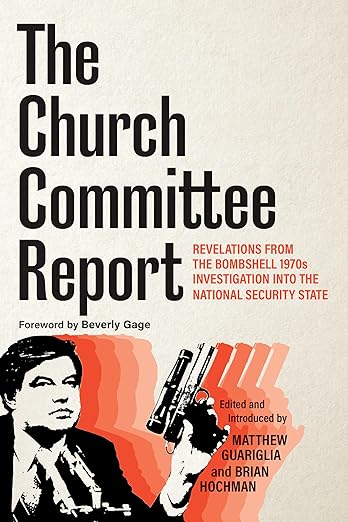
The Church Committee Report: Revelations from the Bombshell 1970s Investigation into the National Security State, published in January, presents the Church Committee report in a single, readable volume, and shines light on modern American politics.
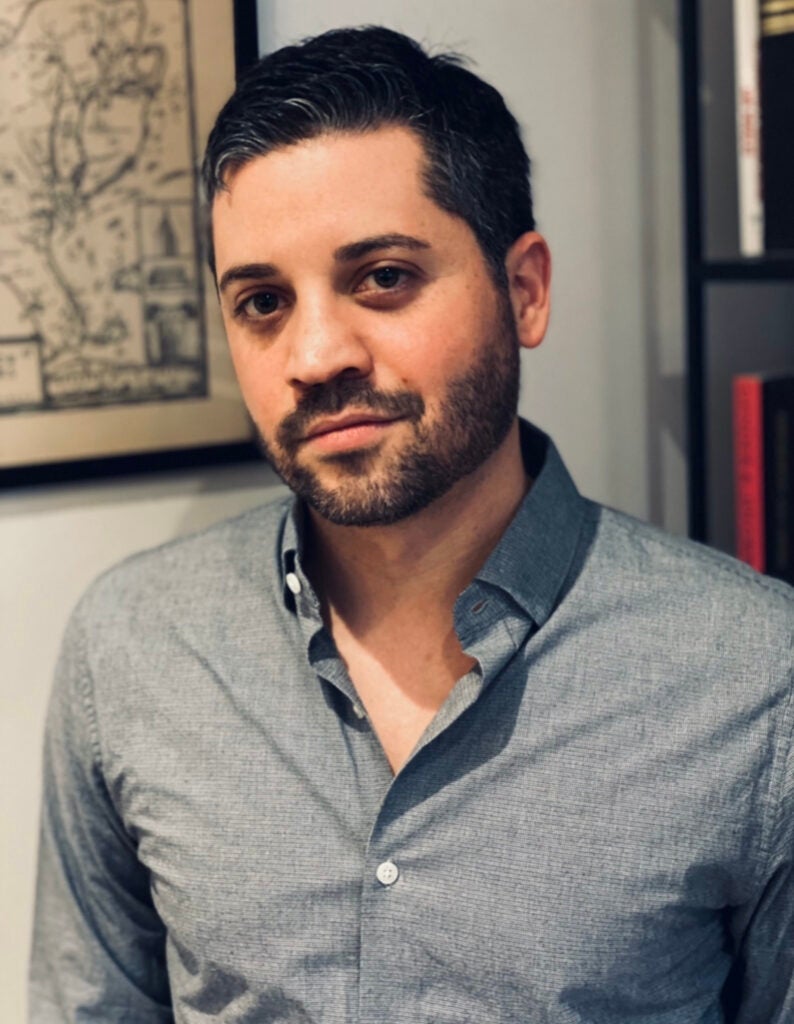
Brian Hochman, the Hubert J. Cloke director of American Studies and professor of American Studies and English
Matthew Guariglia, a senior policy analyst for surveillance and technology at the Electronic Frontier Foundation, and Brian Hochman, the Hubert J. Cloke director of American Studies and professor of American Studies and English for the College of Arts & Sciences, co-edited the book, a re-issue of the initial report released in 1976.
Convened in 1975, the Church Committee was a Senate investigation into allegations of illegal activity at the CIA, FBI and NSA. The final report, published in 1976, “confirmed the nation’s worst fears about the secret doings of its government,” Hochman said. It revealed the CIA’s plots to assassinate or support the assassinations of Fidel Castro, Patrice Lumumba and Rafael Trujillo; the FBI’s COINTELPRO operations against the anti-war movement and Black nationalist leaders; and efforts to surveil and harass Martin Luther King, Jr.
“This [was] a really important moment, a turning point in American understanding of the workings of government,” Hochman said. The Church Committee “comes after Watergate, and really puts the nail in the coffin of ordinary citizens’ trust of the American state.”
‘Almost Reads Like a Spy Novel’
Guariglia and Hochman edited approximately 3,000 pages and six volumes of the original report into a single edition which highlights the findings that matter the most to Americans then and now.
“We’ve attempted to curate things so that you could actually sit down and read the report through, and, quite frankly, enjoy yourself,” Hochman said. “Some of these stories that our edition highlights are really, truly harrowing, really truly disturbing, and in some cases, it almost reads like science fiction or like a spy novel offhand.”
Georgetown’s American Studies Program, in partnership with the Galsworthy Fellowship and the GU Americas Forum, hosted a panel, “Executive Power and the Fate of Democracy: Lessons from the Church Committee at 50,” last month in Copley Formal Lounge on the legacy of the report.
Hochman, Guariglia, Beverly Gage, a Pulitzer Prize-winning Yale University history professor, Loch K. Johnson, Regents Professor Emeritus of Public and International Affairs at the University of Georgia and a former aide to Sen. Church, Mark Mazzetti, a New York Times investigative reporter, and Hina Shamsi, the director of ACLU National Security Project, shared insights on the legacy of the Church Committee and the current state of national security.
Panelists discussed where the Church Committee succeeded and where it fell short, abuses committed by American intelligence, accumulation of power, public perception of these institutions and the tense relationship between security and freedom in the U.S.
“While the committee recognized that security is critical to liberty — it’s hard to argue that it’s not — it made a very strong claim that the balance by the late 1960s had fallen out of whack, and their hope was to rebalance the scales,” Hochman said. “Did they achieve that? I mean, look around you. I say not. But we’re better for trying.”
‘The Gold Standard’
For civil rights or anti-war activists, much of the report would have simply verified what they had already suspected. Some of the details, however, were explosive and “bombshell stories” to the American public, said Hochman.
The report uncovered efforts to blackmail Martin Luther King Jr. into dying by suicide; the use of wiretapping and surveillance to monitor American citizens, including King; plans to assassinate Fidel Castro using everything from poison pens and cigars to exploding seashells; and the CIA’s efforts to experiment with illegal drugs on non-consenting human subjects under project MKUltra.
No government investigation before or since has gone into as much detail and exposed as much information.
Brian Hochman
The Church Committee “is still held up as the gold standard of bipartisan investigative work,” Hochman said.
The committee put these atrocities on the public, official record, which has been beneficial for our understanding of the complex relationship between citizens and state. For historians, “it’s the Holy Grail,” said Hochman.
In the aftermath of the initial Church Committee, the White House banned foreign assassinations and covert action. Congress convened new subcommittees to oversee the CIA, FBI and NSA. In 1978, the Foreign Intelligence Surveillance Act was passed, establishing guidelines for intelligence work in the U.S.
The report also “helped sow further seeds of distrust” across the political spectrum after Watergate, Hochman said.
The Report’s Legacy
Despite its importance in U.S. history, many Americans today remain unaware of the Church Committee and its impact.
“Many educated readers are entirely ignorant of these astonishing stories of illegality,” said Hochman.
Americans in the early 1970s were increasingly distrustful of the government, and suspicions were intensified by Watergate. However, “while this is a distrustful audience, I don’t think even the most skeptical of Americans in the 1970s could quite have anticipated the levels of distrust and division that we now see today,” said Hochman.
For modern readers, it’s “impossible,” Hochman said, to hear about the committee and not think about current examples of federal government overreach and abuse. It was these scenarios that the Church Committee hoped to avoid.
With this new publication, Hochman said that he and Guariglia hope “to give readers a fuller, more historically rich understanding of the playbook that the U.S. government has long used to maintain the political status quo at home and project its dominance abroad.”
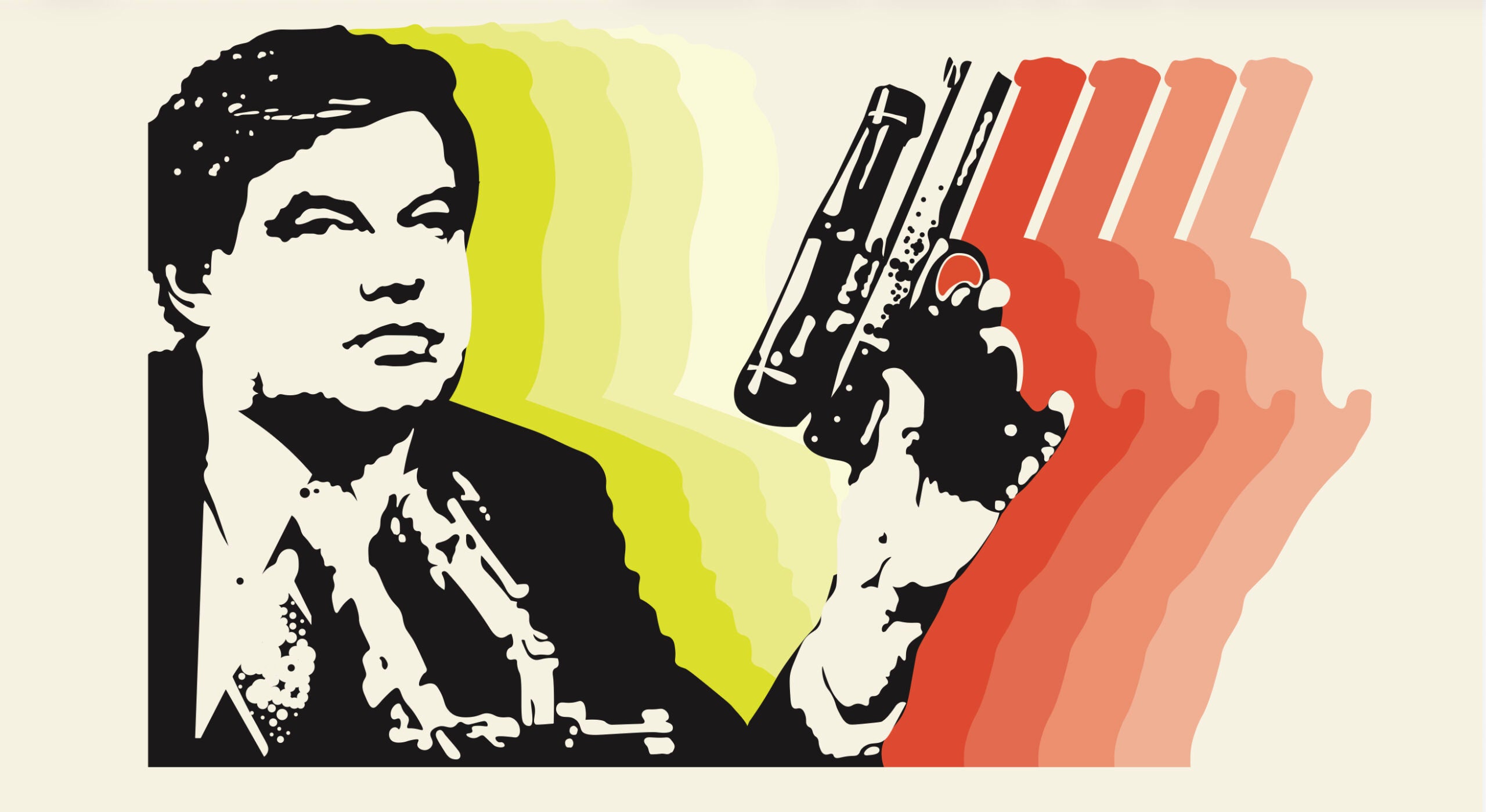
Illustration in top image by Hana Nakamura and photograph by Everett Collection Historical/Alamy.