America’s 250th: The Best U.S. History Books, According to College Faculty
America turns 250 this summer, and the semiquincentennial presents plenty of opportunities to explore the country’s rich and complex history, whether by participating in a community event, visiting a historical site — or reading one of the many books that examine life in the United States.
The College of Arts & Sciences asked faculty members for recommendations on the best books they’ve read on U.S. history, and Georgetown professors of history, government, English, performing arts, psychology and other fields offered their suggestions for readers of all kinds as America commemorates the 250th anniversary of the signing of the Declaration of Independence.
The list of 20 recommended books includes a modern classic novel; a memoir written by an Indigenous spiritual leader; an examination of music in the United States by a music historian; a Pulitzer Prize for History-winning book on Harriet Tubman; and even a book that blends history and psychology about the way American emotional norms have changed over time.
Read on about the books below, arranged alphabetically by title, to get inspired for your summer reading.
All That She Carried: The Journey of Ashley’s Sack, a Black Family Keepsake by Tiya Miles
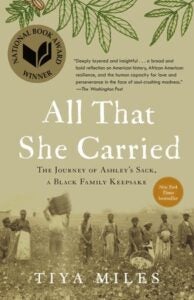
It’s a gorgeous book about an enslaved mother’s love, the tragedy of slavery and the resilience of family. But it is also evidence of how historians bring their feelings and lives to their work, and testament to the irreplaceable importance of museums for preserving American heritage, even that which is troubling or hidden. I’ve assigned this book several times and students love it.
—Katie Benton-Cohen, professor in the Department of History
American Cool: Constructing a Twentieth-Century Emotional Style by Peter N. Stearns
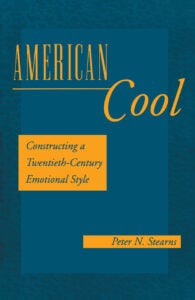
When I came to the United States as an exchange student from the USSR, I often heard the well-intentioned phrase, “All children smile in the same language.” I wondered whether this could be true, as the Americans I encountered seemed different, especially when it came to emotions. To what extent are emotions universal or shaped by our environment? This book addresses that question and places the seemingly private world of emotions at center stage, tracing the evolution of American emotional norms over time.
—Yulia Chentsova Dutton, associate professor in the Department of Psychology
American Crucible: Race and Nation in the Twentieth Century by Gary Gerstle
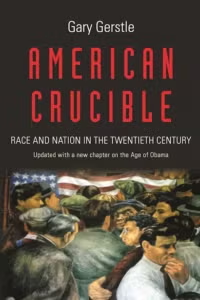
Is one defined by one’s “tribe” or by allegiance to a more encompassing national identity? That crucial question of how Americans think of themselves is at the center of Gary Gerstle’s engrossing history, American Crucible (originally published in 2001 and updated in 2017). Starting with Teddy Roosevelt’s presidency and proceeding through the harsh immigration legislation of the 1920s, FDR’s New Deal, the Civil Rights movement, the Reagan era, the rise of multiculturalism and into War on Terror and the Obama presidency, Gerstle explores how our country has contended with two contradictory ideas of itself: a racial nationalism that conceived of America as “a people held together by common blood and skin color and by an inherited fitness for self-government,” versus a far more inclusive “civic nationalism” in which the melting-pot promise of full citizenship is open to all.
—Maureen Corrigan, the Nicky and Jamie Grant Distinguished Professor of the Practice in Literary Criticism in the Department of English
America’s Musical Life: A History by Richard Crawford
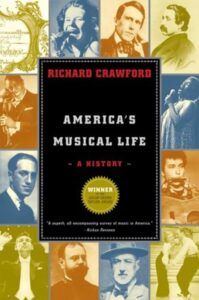
While primarily focused on American music, the stories in this book offer visceral perspectives on the history of demographic changes, technologies, media and cultural events in the United States. It does this by contextualizing the many musical practices that have developed here. Notably, since the book centers on music, it provides insights into the emotions and expressions that Americans have developed and conveyed throughout history, spanning from the Indigenous population to the close of the 20th century. What sets this book apart is its argument that “American music” is a distinct music, yet it’s a highly varied and continuously evolving set of practices that have sounded through the centuries in unexpected and remarkable ways.
—Benjamin Harbert, professor of music and chair of the Department of Performing Arts
Battle Cry of Freedom: The Civil War Era by James M. McPherson
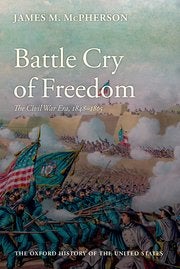
This is the best single-volume history of the American Civil War, and it illuminates some of the politics that continue to shape our country today. What makes it especially good, in addition to being well-written and fast-paced, is that it integrates so many topics: the politics leading up to and during the war, the military campaigns, the human drama. It is informed by many other historical studies and embodies the best of their insights. McPherson’s talent for storytelling weaves mountains of information together into a fluid narrative.
—Andrew Bennett, professor and chair in the Department of Government
Catch-22 by Joseph Heller
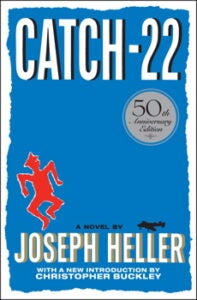
This irreverent 1961 novel about U.S. Army airmen during World War II is both hilarious and a brilliant dissection of the official lies and bureaucratic foolishness intrinsic to every military conflict.
—Michael Kazin, professor in the Department of History
Chain-Gang All Stars by Nana Kwame Adjei-Brenyah
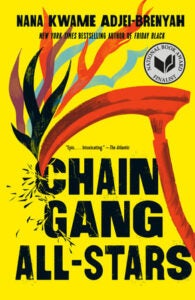
This dystopian novel is set in the near-future United States, where incarcerated people fight for their freedom in death matches sponsored by the “Criminal Action Penal Entertainment” program, which commercializes and televises gladiator-style contests along with the intimate lives of those on the chains in an accompanying reality TV show. The novel offers a trenchant indictment of the United States’ central paradoxes: its persistent promotion of freedom contrasted with enduring practices of confinement, its celebration of violence in the name of security, and the destruction of Black bodies, which are feared yet commodified for profit and entertainment.
—Danielle Wiggins, assistant professor in the Department of History
Combee: Harriet Tubman, the Combahee River Raid, and Black Freedom During the Civil War by Edda L. Fields-Black
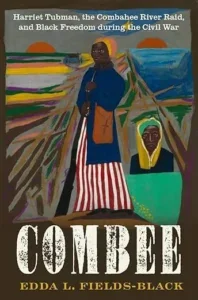
In prose as beautiful as the landscapes it evokes, Combee recounts how Harriet Tubman grew from an enslaved girl determined to keep her family together on Maryland’s Eastern Shore to a warrior leading a Union Army raid deep into South Carolina during the Civil War. Tubman’s raid furthered Union military aims, achieved the liberation of hundreds of enslaved people and moved the U.S. closer to realizing the aspirational ideals of its founding.
—Chandra Manning, professor in the Department of History and director of the Georgetown Institute for Global History
Disabled Upon Arrival: Eugenics, Immigration, and the Construction of Race and Disability by Jay Timothy Dolmage
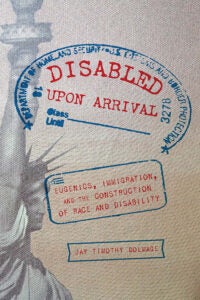
This is an especially important book to understand our current political moment wherein being a “real American” is regularly invoked as if that category were ever stable. It is also an important read to appreciate how and why disability is central to what it means to be a citizen.
—Joel Michael Reynolds, Provost’s Distinguished Associate Professor in the Department of Philosophy and director of the Disability Studies Program
How the Word Is Passed by Clint Smith
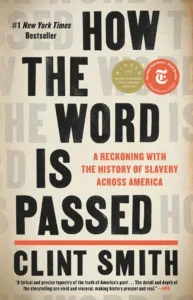
Every nation has an official story, behind which stands the haunting figure of the shadow narrative. In the U.S. that narrative is not found in books and libraries, but inscribed in place names, city maps, monuments and buildings. This book excavates America’s shadow narrative by visiting Monticello, Jefferson’s celebrated home, which doubles as a site of mass enslavement. Angola prison sits on former plantation land, its name borrowed from the African homeland of the people once enslaved there. New York’s African Burial Ground, literally paved over until its rediscovery in 1991, exposes the North’s complicity in the enslavement of Africans. Through these and other stories, Clint Smith retrieves the shadow narrative and brings it into the light.
—Aminatta Forna, director of the Lannan Center for Poetics and Social Practice
An Indigenous Peoples’ History of the United States by Roxanne Dunbar-Ortiz
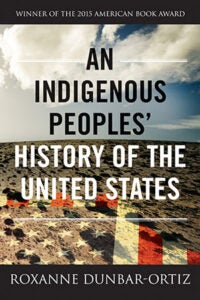
This book offers a powerful and necessary reinterpretation of American history through the experiences of Indigenous peoples, foregrounding issues of colonialism, displacement, resistance and historical memory. As a scholar of justice, peace and memory studies, I appreciate how Dunbar-Ortiz challenges dominant master narratives and encourages readers to confront the historical roots of contemporary inequalities. The book demonstrates how understanding our history requires engaging with multiple perspectives and acknowledging voices that have often been marginalized or excluded from historical accounts.
—Elham Atashi, director and teaching professor of the Justice and Peace Studies Program (JUPS)
The Known World by Edward P. Jones
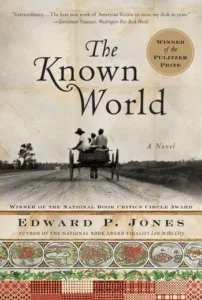
This sprawling 2003 novel tells the story of a community of Black slaveholders in 19th-century Virginia. The book isn’t a work of history, or even a work of historical fiction, traditionally defined, since almost every narrative detail is an invention. But I can’t think of a more powerful account of how history and memory intersect in the American context. On a whim, I assigned Jones’ novel in a seminar this past semester. The whole class was blown away.
—Brian Hochman, professor in the Department of English and Hubert J. Cloke Director of American Studies
The Metaphysical Club: A Story of Ideas in America by Louis Menand
I first picked up this book as a young journalist in a pre-9/11 world, and have come back to it regularly — as a political beat reporter, as an editor and more often than ever now that I’m back on the Hilltop as a journalism professor. It’s among the best source material I’ve found to help relay the historical and intellectual origins of one of the pillars of traditional news reporting in the United States in the postwar era: the ideal of journalistic objectivity, part and parcel of the continuing challenge of deciding on shared narratives in a polarized society. It’s literary nonfiction and a riveting intellectual history that recounts how the country reinvented itself after the Civil War and developed new ways of thinking about truth, debate and democracy. It’s smart, engaging and just as relevant as ever to many of the questions U.S. reporters — and the news consumers they serve — are still wrestling with today.
—Rebecca Sinderbrand (C’99), professor of the practice and director of the Journalism Program
Party Government: American Government in Action by E.E. Schattschneider
Schattschneider was probably the most influential thinker on American political parties. This book, more than a half-century old, goes a long way in explaining why political parties exist, and why we should center them in our understanding of American democracy. Political scientists feel contractually obligated to quote his line on page 1 of Party Government, “that the political parties created democracy and that modern democracy is unthinkable save in terms of the parties.” His writing still resonates, as one Georgetown student said in class, “he’s low-key eating here.”
—Hans Noel, associate professor in the Department of Government
The Souls of Black Folk by W.E.B. Du Bois and Blues People: Negro Music in White America by LeRoi Jones (Amira Bakara)
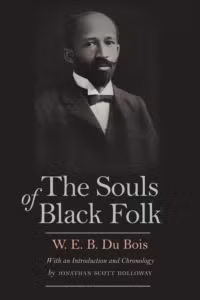
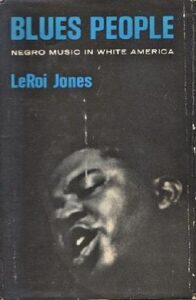
These two books, for me, represent the hardships and the hopes of Black people in the U.S. I read both decades ago and re-read every year. W.E.B. Du Bois, a founder of the NAACP and of Pan-Africanism, published The Souls of Black Folk in 1903. He challenges America to live up to its promises and its debt to the descendants of America’s greatest sin — slavery. His famous line was, “the problem of the twentieth century is the problem of the color line.” That rings as true today in the 21st century. Amira Baraka wrote Blues People: Negro Music in White America in 1963. One of the world’s greatest poets, he takes us on a survey: musical, political, historical and social of Black people’s greatest gift to America, and indeed to the world.
—Maurice Jackson, professor in the Department of History and affiliate professor in the Department of Black Studies and the Department of Performing Arts
Tom Paine and Revolutionary America by Eric Foner
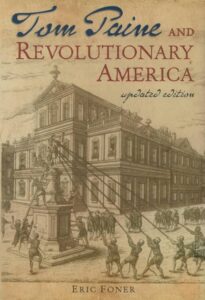
Although this classic biography of the revolution’s most influential anti-monarchical propagandist appeared 50 years ago, it feels timely in this era of “No Kings” agitation. Paine’s “Common Sense” anticipated and shaped the Declaration of Independence, yet his combative style and radically democratic vision led to his marginalization in the new republic. Although few attended Paine’s 1809 funeral, Foner shows how his ideas lived on to inspire future generations to build a more perfect union — work obviously still very much unfinished.
—Joseph A. McCartin, professor in the Department of History and co-director of Georgetown’s Kalmanovitz Initiative for Labor and the Working Poor (KI)
Unbecoming British: How Revolutionary America Became a Postcolonial Nation by Kariann Akemi Yokota
Although published over a decade ago, it holds enduring value as a reminder of the unique challenge Americans faced upon independence: how to differentiate themselves socially and culturally from the British. As a U.S. diplomatic historian, I frequently use this book to highlight the importance of foreign relations in shaping the United States as a nation. It is exceptionally well-written and engaging, featuring many amusing, insightful anecdotes that demonstrate how 1776 was merely the starting point of a long process of forging a unique national identity in a postcolonial setting.
—Toshi Higuchi (G’11), associate professor in the Department of History and School of Foreign Service
Until I Am Free by Keisha N. Blain
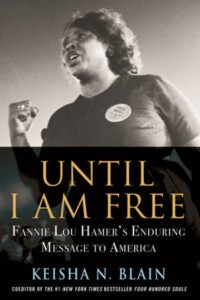
This biography of Fannie Lou Hamer demonstrates how ordinary citizens can become extraordinary political leaders. Blain situates Hamer’s activism within broader struggles for voting rights, economic justice and human dignity, offering a powerful account of grassroots democracy in the United States.
—Nadia E. Brown, professor in the Department of Government and the director of the Women’s and Gender Studies Program
The Wind Is My Mother: The Life and Teachings of a Native American Shaman by Bear Heart with Molly Larkin
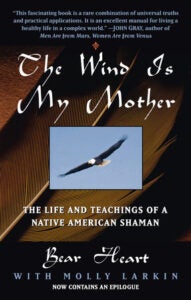
This is one of my all-time favorite books, not just about U.S. history, but about how to approach life. Born in 1918, the author — Marcellus “Bear Heart” Williams — was one of the last traditionally-trained healers from the Muscogee Creek Nation. He was also a minister in the American Baptist Church. I recommend this book to anyone seeking to understand a portion of U.S. history from the perspective of a Native American healer and to anyone seeking inspiration on how to live a full and complete life with love, compassion and presence.
—Yoshi Kohno, professor in the Department of Computer Science and the McDevitt Chair in Computer Science, Ethics, and Society