
The Importance of Learning to View Failure as Opportunity
Several resources at Georgetown University include College of Arts & Sciences staff and faculty members that help students cope with setbacks, tackle their relationship with perfectionism and unpack their perceptions of failure.
Illustration by Chiara Vercesi
Hanging on a wall outside of Vanessa Corcoran’s office is an engraved wooden plaque with a quote from the Irish poet, playwright and author Samuel Beckett, that reads:
“Ever tried. Ever failed. No matter. Try again. Fail again. Fail better.”
Corcoran, an advising dean in the College of Arts & Sciences, made the plaque in the Maker Hub using a laser cutter, as part of her one-credit course for seniors, Defining Ourselves: Failure as Opportunity, in collaboration with the Red House. The quote acts as a reminder to Corcoran and encapsulates what she wants her students to take away from the course as they prepare for life after Georgetown.
“We are neither defined solely by either our failures or successes,” Corcoran said. “So much of the class was an exploration of getting out of the success-failure binary and thinking of ourselves not just as a cumulative resume.”
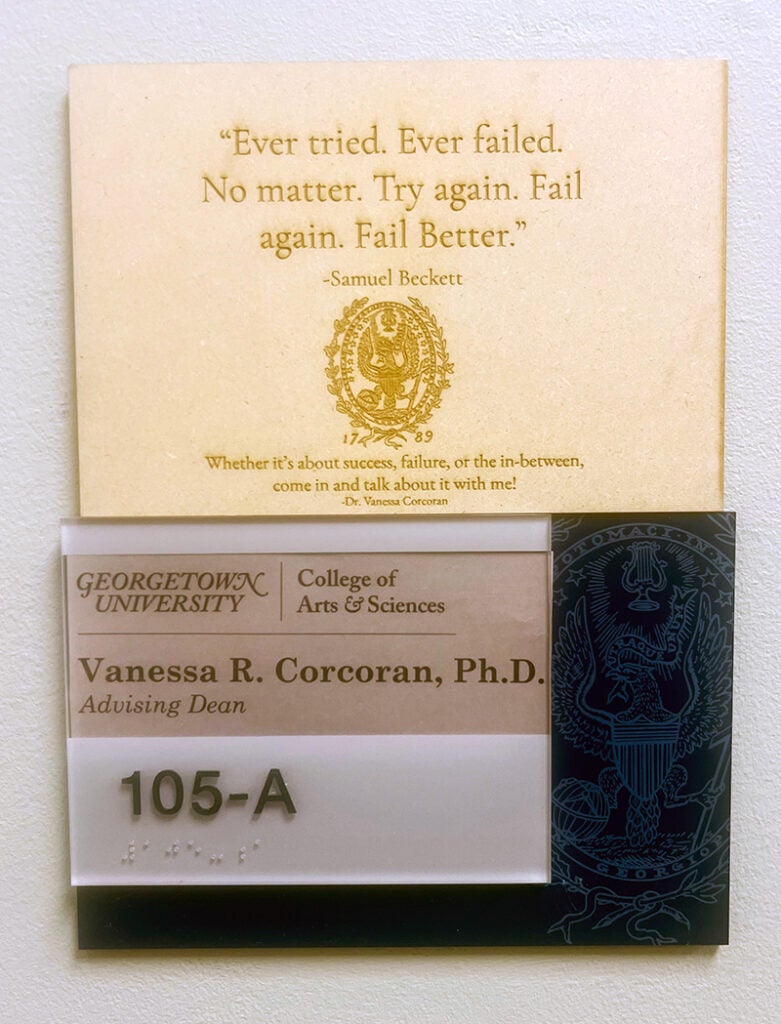
An engraved wooden plaque with a quote from the Irish poet, playwright and author Samuel Beckett hangs outside Advising Dean Vanessa Corcoran’s office. (Kelyn Soong)
The course is just one of several resources at Georgetown University that includes College staff and faculty members that help students cope with setbacks, tackle their relationship with perfectionism and unpack their perceptions of failure.
Jennifer Woolard, a professor of psychology and the College’s vice dean for faculty affairs, teaches a course, Confronting Perfection, with Eleanor JB Daugherty, the university’s vice president for student affairs, that addresses themes like perfectionism, authenticity and conflict. Nikki Harris, who helps run the College’s First Fellows Program for first-generation students, also integrates discussions and assignments about “productive failure” into her classes to normalize failure as part of the learning process.
“If you have your mind set on a goal, you’re eventually going to get there,” Harris said. “It might not always look like how you initially planned it, but success looks different for everybody, and you’re going to get there.”
Failure as Opportunity
When Corcoran joined Georgetown in 2018, she noticed that the prospect of failure often immobilized her students.
They were familiar and comfortable with success and achievement, Corcoran said, but lacked skills to thrive in the face of challenging obstacles or unexpected detours. Around that time, Corcoran read a New York Times article titled, “On Campus, Failure Is on the Syllabus,” that discussed how universities were developing programs to help high achievers cope with basic setbacks like not getting the room assignment they wanted or being rejected by clubs.
With that in mind, the first Failure as Opportunity course launched in the fall of 2024.
“Our students at Georgetown are incredibly driven,” Corcoran said. “We as faculty need to show them failure is not just an inevitable part of life, but an opportunity to pivot and be introspective about that transformative moment.”
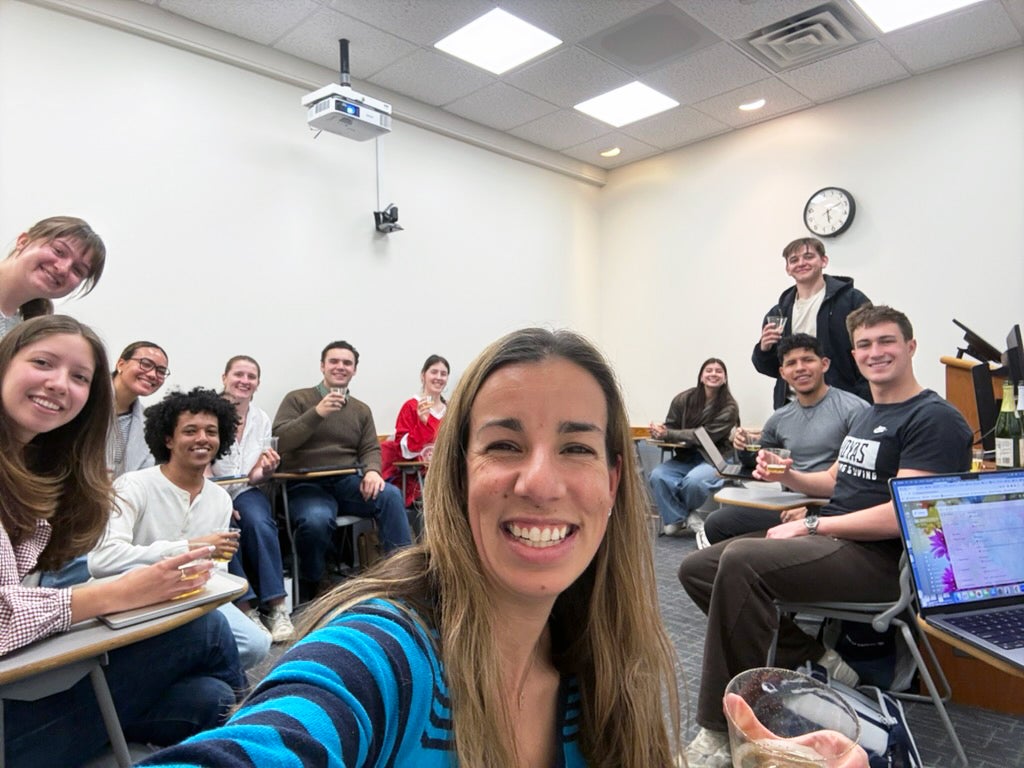
In the Failure as Opportunity course, taught by Vanessa Corcoran, center, students learn about famous failures from entrepreneurs, researchers, politicians, artists and other leading world figures. (Vanessa Corcoran)
In the course, which is available to any Georgetown undergraduate, students learn about famous failures from entrepreneurs, researchers, politicians, artists and other leading world figures. They discuss their own failures, and by doing so, it normalizes the experience and reality that no one, no matter how it seems from the outside, is perfect or has gone through life without experiencing disappointments.
Corcoran’s course helped Vaughan Anoa’i (C’26) realize that it’s okay for things to not go according to plan.
The American studies major is a self-described “consummate perfectionist,” someone accustomed to excelling in academics and sports. She came to Georgetown as a standout volleyball player, and started her own charitable organization, Vaughan’s Block Back Pledge, when she was in high school, to help make volleyball clubs more inclusive and accessible.
Anoa’i often struggled to slow down or accept mistakes, especially in academic settings.
“Even throughout my time in high school, we’re constantly praised for continuing to push ourselves past the point of burnout,” she said. “I think in this day and age, it’s not sustainable.”
The course also helped validate many of the feelings Anoa’i had heading into her senior year, she said. This past summer, she decided that she did not want to go straight to law school after graduation, as Anoa’i had originally planned. And in the fall, she stepped away from the women’s varsity volleyball team, a decision she said she made in part because the sport “wasn’t something that I needed to hold on to anymore.”
“This class has allowed me to reflect that sometimes it’s okay for plans and expectations to change, and that doesn’t necessarily mean that I’m behind in my journey,” Anoa’i said.
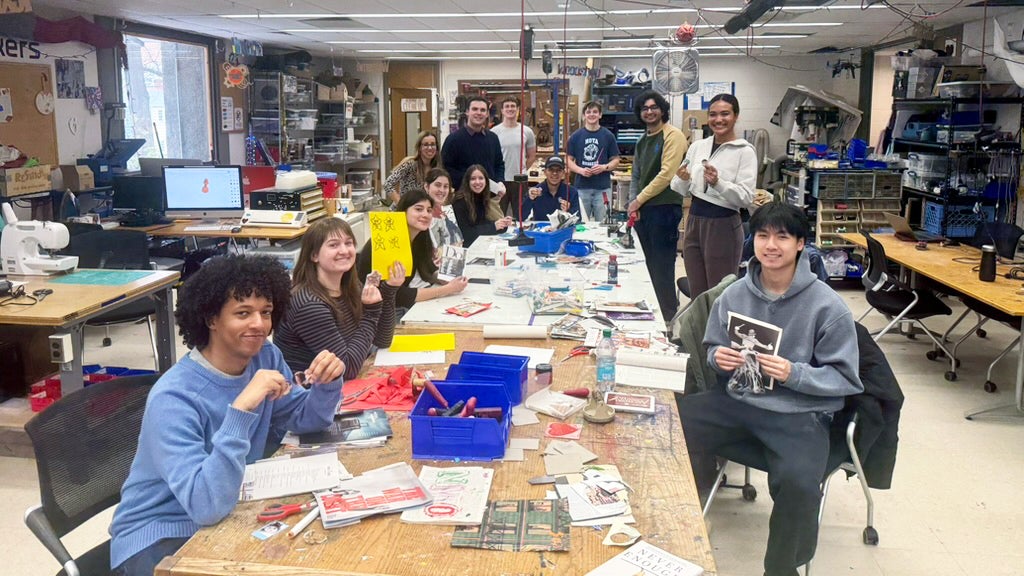
As part of the Failure as Opportunity course, students visited the Maker Hub and were challenged to use a medium outside of their comfort zone. (Vanessa Corcoran)
Jefferson Gonzalez-Flores (C’26), another student in the class, said he grew up viewing the word, “failure,” as a definitive end point. Failing meant that he wasn’t cut out for something.
Now, failure or the act of failing to him is a “necessary mechanism for growth and self-definition,” said Gonzalez-Flores, a government major who is minoring in psychology. “Setbacks are not indictments of my character, but just another obstacle that can help redefine my plan and reveal my true capabilities.”
As he prepares to leave Georgetown and start his job as an investment banker at JPMorgan Chase & Co. in New York City, Gonzalez-Flores plans to use the lessons from the course’s assignments and guest speakers to see his future opportunities with a sense of curiosity and opportunity, rather than fear.
“Everyone has a uniquely distinct and beautiful journey that they must go through,” he said. “But at the end of the day If you have patience with your own progress and feel empathy toward the struggles of others, anything is possible.”
Productive Failure
Harris, who leads the First Fellows Program, feels that students at Georgetown are really afraid to fail. Any grade below an A can sometimes elicit panic, she said.
In that sense, Harris said, the first-generation students she teaches are not all that different from continuing-generation students. The First Fellows Program, which launched in the fall of 2024, is a cohort-based, holistic program that provides first-generation students in the College of Arts & Sciences with critical academic resources, faculty mentors, financial support and a community of peers.
“Everybody’s hyper focused on GPA,” Harris said. “We want to unpack that perception that GPA equals worth.”
When she was in her doctorate program at George Mason University, one of Harris’ professors assigned a project called, “productive failure.” The students had to pick something from their final project that semester that did not work well and reflect on it.
“That was the first time that I ever really had a professor confront failure head on or make us think about it proactively,” Harris said.
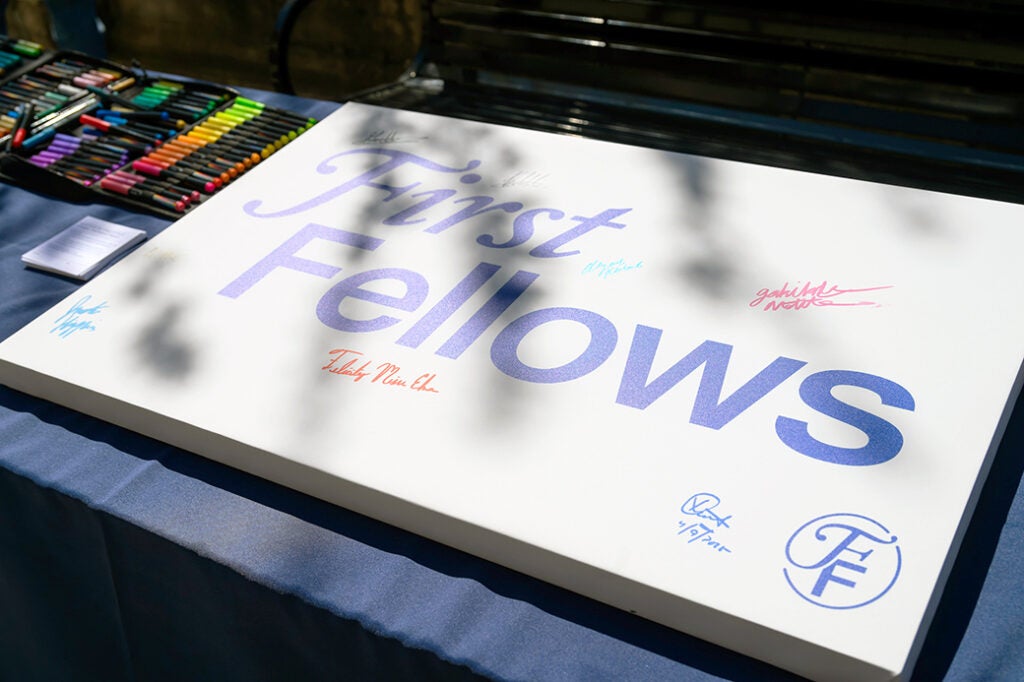
The First Fellows Program is a cohort-based, holistic program that provides first-generation students in the College of Arts & Sciences with critical academic resources, faculty mentors, financial support and a community of peers. (Photo by RCS Photography)
This spring, the First Fellows students did something similar. Harris placed them in accountability groups based on their post-graduation plans and asked the students to address the ways that they struggled.
Throughout the semester, Rylie Hannon (C’27) stayed connected with her group through regular check-ins. She and her classmates, Hannon said, quickly realized they were all facing similar struggles.
“That shared experience helped us create realistic plans and support each other in a meaningful way,” said Hannon, a government major with a minor in law, justice and society. “I think creating space to talk openly about failure, especially at Georgetown, is incredibly valuable. It’s easy to get caught up in presenting success, whether through LinkedIn or other ways, but these honest conversations reminded me that many of us are navigating the same challenges.”
In her presentation, Hannon said that this year, her goals were to get ahead on her LSAT preparation and law school planning and improve her GPA. Those goals, she said, took much longer than expected. For the assignment, Hannon instead decided to focus on her successes from the year.
“For me, that has been my experience living at the CALL and rediscovering my love for learning and for Georgetown,” she said. “Being able to celebrate each other’s growth while also acknowledging setbacks is what I value most about First Fellows. It was really special to reflect on both the challenges and accomplishments of the year.”
Harris, for her part, wants to be intentional about modeling and sharing her own failures. She told her students that once, when she didn’t get a job she thought she would get, she went home for a week and cried.
“I think sharing my own failures in hopes of normalizing it to show that the people in power or the people in the head of the classroom experience it too,” Harris said. “Everyone has their own struggles.”
Confronting Perfection
Woolard and Daugherty, who co-teach the Confront Perfection course, like to introduce themselves to the students by reading their resumes.
“We tend to start by being ridiculously perfect,” Daugherty said. “We wear suits, and we read three pages of how fabulous we are.”
Then, they rip up the resumes, and share who they really are.
The two are friends. When Daugherty joined Georgetown in 2023, “everything was going wrong for me,” she said. She contracted COVID-19 twice and had a concussion. Woolard was her first friend on campus. Instead of giving just their “Georgetown intro,” Woolard said, they talk about their interests and share how they’re feeling that day.
“We try to get folks to settle into being authentic,” Woolard said.
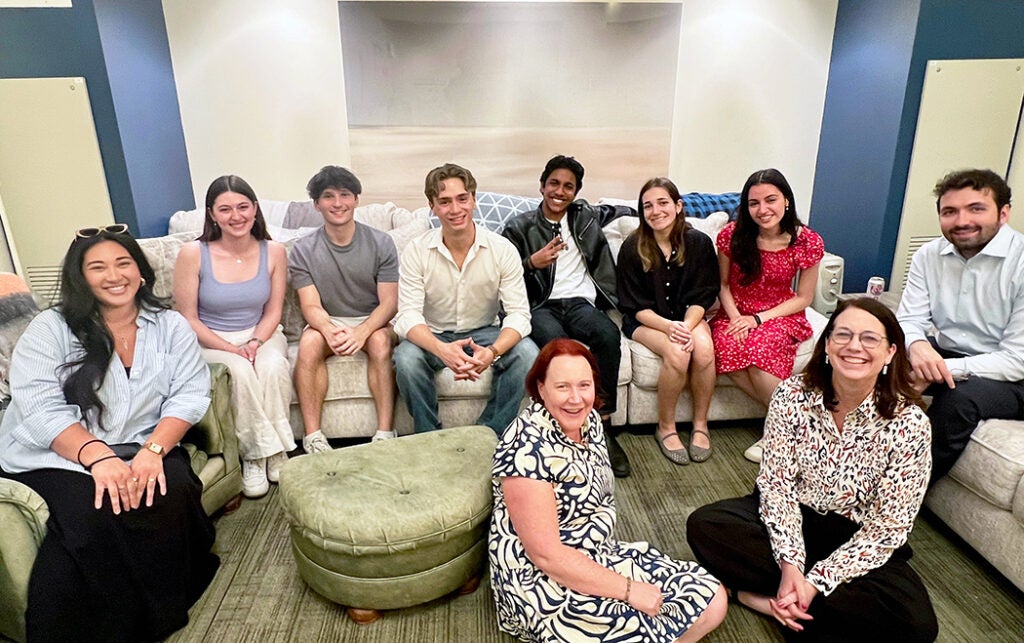
Confront Perfection, co-taught by Eleanor JB Daugherty and Jennifer Woolard, seated, invites students to discuss concepts of vulnerability, conflict, tension and connection. (Kelyn Soong)
The one-credit course, first launched in the Spring 2024 semester, is a partnership between the College and the Division of Student Affairs and is open to all Georgetown students. Some take it for credit, but it’s not required. The program, which consists of five sessions throughout the semester, is designed to bring together undergraduate and graduate students in a space where they can learn skills that will help them develop into caring leaders.
“We take concepts of vulnerability, conflict, tension and connection and really unpack them and what they mean to allow students to make their own meaning from them,” Daugherty said. “And we do that by blowing up perfect people.”
The course is inspired by the Hoyas Connected project in the College’s Department of Psychology and supported by a gift from the Ortus Foundation. That initiative began at Georgetown in the Fall 2023 semester and is based on the Connection Project, an empirically-based program established at the University of Virginia, which was designed to help foster belonging and connection, said Woolard, a professor of psychology.
Similarly, Confronting Perfection is a place where students can practice their skills in dialogue and reflection. As a senior, Ellie-Rose Wallach (C’26) wanted to take a small, seminar-style course where she could talk to people and exchange perspectives.
“It’s been really helpful and nice and a good way for me to just meet people and engage in the community here at Georgetown in a different way,” said Wallach, an English major who is minoring in psychology.
One of the learning goals for the students is to develop a mindset that views failure as part of the growth process.
Harry Morelli (C’27), an English major and film and media studies minor, said he signed up for the course because he wanted to better understand the concept of perfection.
“I think at Georgetown, there is this sort of expectation of perfection,” he said. “I think the conversational discussion aspects of the class made me sort of realize that I’m not the only person going through this, and that it’s sort of this false image that everybody at Georgetown seems to project. We’re all sharing the same internal thoughts about perfection.”
Sarah Shahine (C’29) said listening to the guest speakers, which included Georgetown University leaders and alums, reinforced to her that everyone has insecurities, including people who are highly accomplished.
“I think a huge part of the class has been building community,” said Shahine, who is majoring in environment and sustainability.
Post-graduate success, Daugherty said, is not about being perfect or being the smartest. It’s about being humble and not knowing all the answers.
“Our Jesuit institutions are invested in a hope-filled future,” she said. “They don’t impose answers upon youth. They allow for formation with youth.”
Related Content
CAS Magazine: Students
Baker Scholars Program’s DC Day Helps Shape and Inspire Career Paths