Gold Medalist Soccer Star and Professor Empowers Storytelling in Disability Studies
An hour had elapsed in the women’s soccer championship match at the 2009 Summer Deaflympics in Taipei, Taiwan, and the United States and Germany were still tied, 0-0. Then, in the 61st minute, Liza Offreda, who was a senior at Montclair State University in New Jersey at the time, kicked the ball over the goalkeeper’s reach and into the corner of the net.
“The stadium exploded,” she said in American Sign Language through an interpreter. “The stadium went wild, and everything else just disappeared.”
Team USA won the match, 4-0, and took home gold – the first of four gold medals that Offreda would win with the U.S. Women’s Deaf National Team, which has not lost a match since it was founded in 2005. Offreda also won gold at the 2013 Deaflympics and at the Deaf World Cup in 2012 and 2016. She officially retired from competitive soccer in 2016.
Offreda was “born with a soccer ball” at her feet and started playing soccer around age 3, she said. Sports have always been a part of her story.
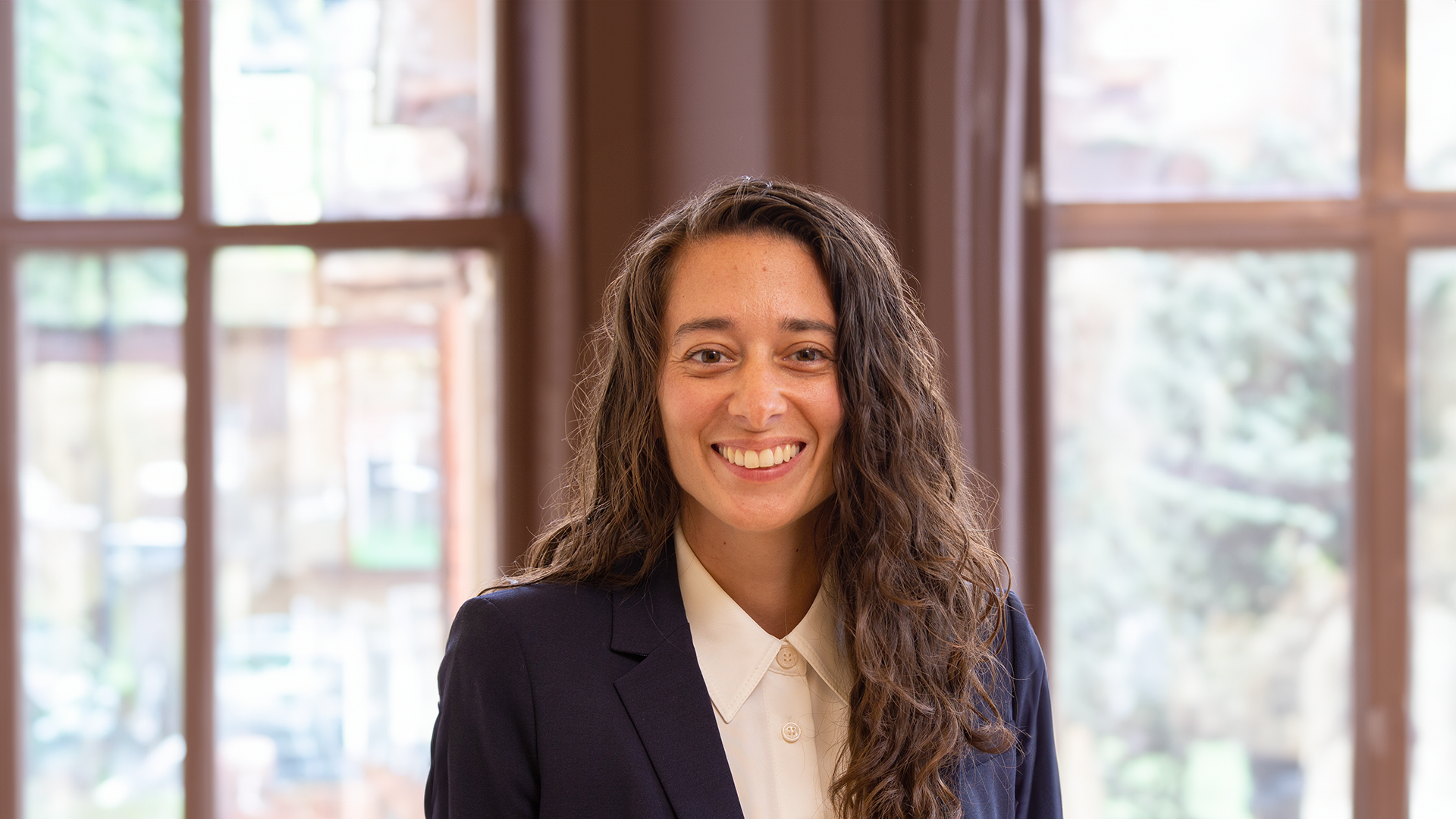
This fall, Offreda joined the College of Arts & Sciences as an assistant teaching professor in the disability studies program. She currently teaches Introduction to Disability Studies and Deaf Culture and Literature. Next semester, she will be teaching Disability in Sports, which will “challenge traditional narratives of ability” and explore how access and representation transforms communities, she said.
Prior to Georgetown, Offreda served as the head women’s soccer coach, senior woman administrator and Title IX coordinator for Gallaudet University’s athletic department, as well as an adjunct professor of English and a middle school English teacher.
“We are extremely lucky to have Professor Offreda join Georgetown and the disability studies program,” said Joel Michael Reynolds, who is the director of the program. “She brings a wealth of not only scholarly and lived knowledge, but also leadership.”
Creating an Accessible Space
The disability studies program at Georgetown is one of the first of its kind.
The program was launched in 2017 by English professor Libbie Rifkin and has grown to include a minor, a graduate certificate and now a major. This fall marks the first opportunity for students to declare a major in disability studies.
In addition to the program, Georgetown’s Disability Cultural Center (DCC) opened on the ground floor of the New South building in 2023, which is an accessible space for disability cultural events and meetings.

Liza Offreda, center, at the 2016 Deaf World Football Championships in Italy, after the U.S. Deaf Women’s National Team beat Russia in the final. (Courtesy of USA Deaf Soccer Association)
Georgetown’s commitment to the community and investment in disability studies attracted Offreda to the university, she said.
“I was drawn to the opportunity to contribute to a space where disability is approached as a form of knowledge and culture, not simply as a medical condition,” she said.
Disability studies is an interdisciplinary field, as much connected to the humanities as it is to sports. The discipline also greatly overlaps with the Jesuit commitment to cura personalis, meaning “care of the whole person,” and faith that does justice, said Reynolds.
“At the core of disability studies is an appreciation that we are complex, embodied creatures that rely upon one another to flourish,” Reynolds said. “Without education, faith and justice, it’s hard to see how one could flourish. In so many ways, [disability studies] and Georgetown are a perfect fit.”
A Love of Storytelling
Offreda is a storyteller, and she incorporates this love for storytelling into her classes.
Going from teaching, to coaching and then to working within athletic administration, Offreda sees athletics and teaching as being connected. For Offreda, athletics are simply an extension of the art of storytelling.

Offreda, pictured here after a game at the 2013 Deaflympics in Sofia, Bulgaria, started playing soccer around age 3. (Courtesy of USA Deaf Soccer Association)
Sports are a “language, a form of expression and an expression of identity,” she said. “When I’m on the field, when I’m coaching on the field, I feel like I’m bringing my true self.”
Offreda’s father was born in Italy and introduced soccer to her at a young age. He told The Montclarion student newspaper in 2010 that he saw her potential in the sport by the time Offreda was 5 or 6 years old.
“The way she ran, the way she moved, anybody that knew soccer, you could tell, she had the potential to be something, to be somebody,” he said.
Soccer allowed Offreda to travel internationally, and in 2016, Offreda was named one of the top deaf soccer players in the world. She was “thrilled,” but the moment was bittersweet, as she knew she was about to retire. When she got the news, the first thing she thought about was her gratitude for the people she had met on her athletic journey. She also thought of her dad, who taught Offreda “so much about resilience and never giving up.”
Offreda encourages students to consider the power of narrative and how language shapes our understanding of the world and of each other. In her classes, students explore the narratives and perspectives of people who have disabilities and come from a wide range of backgrounds.
Her students consider how their definition of disability changes over time, and many credit these narratives for expanding and shifting their perspective. Storytelling becomes a way to “redefine disability,” Offreda said. She believes sharing stories is a way of bridging the gap to understanding.
It connects people and brings them together, Offreda said.