New Book Explores What Psychology Can Teach Us About Immigration
The number of migrants globally has nearly doubled over the past three decades, from an estimated 154 million in 1990 to 304 million in 2024, and the percentage of migrants has increased from 2.9 to 3.7 % during this timeframe, according to the United Nations. More people now than ever before inhabit their non-native countries.
Immigrant groups are also increasingly dissimilar to the host society, contributing to feelings of distrust and the rise of authoritarianism within these host countries, said Fathali Moghaddam, a professor of psychology in Georgetown University College of Arts & Sciences.
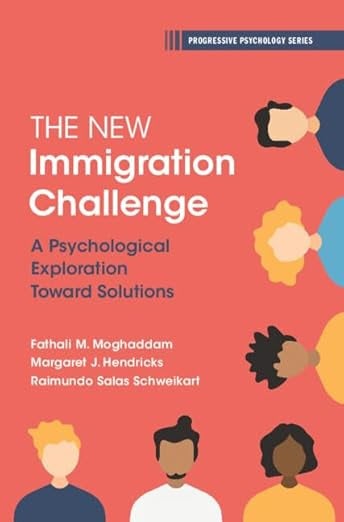
The New Immigration Challenge, published in January 2026 by Cambridge University Press, focuses on questions raised by the current immigration landscape. Moghaddam wrote the book with co-authors Margaret Hendricks (MPP’19, G’22), who received her Ph.D. in psychology from Georgetown in 2022, and Fr. Raimundo Salas-Schweikart, S.J. (MPP’22, G’25), a Ph.D. graduate from the Department of Psychology and Jesuit priest who received the 2025 Dr. Karen Gale Exceptional Ph.D. Student Award.
From a purely fiscal perspective, most economists agree that immigration boosts economic growth. “But people are not rational,” said Moghaddam. “People are driven by irrationality, emotions. Often, they are driven by fears, hatred, anger.”
Studying and researching the issue of immigration from the perspective of psychology opens the door to examine the emotional and behavioral aspects to modern immigration.
“Why are we seeing immigration as a threat? This is a perception. It’s a psychological experience,” Moghaddam said. “On the immigration side, what are the perceptions and aspirations and hopes of immigrants as they arrive in America? That’s a psychological feeling as well. So on both sides, both the immigrants and the hosts, the key to their relationship is psychological.”
Advocating for Omniculturalism
“Immigration is inevitable, so the question is, how do we manage it?” Moghaddam said. The new book aims to answer this question.
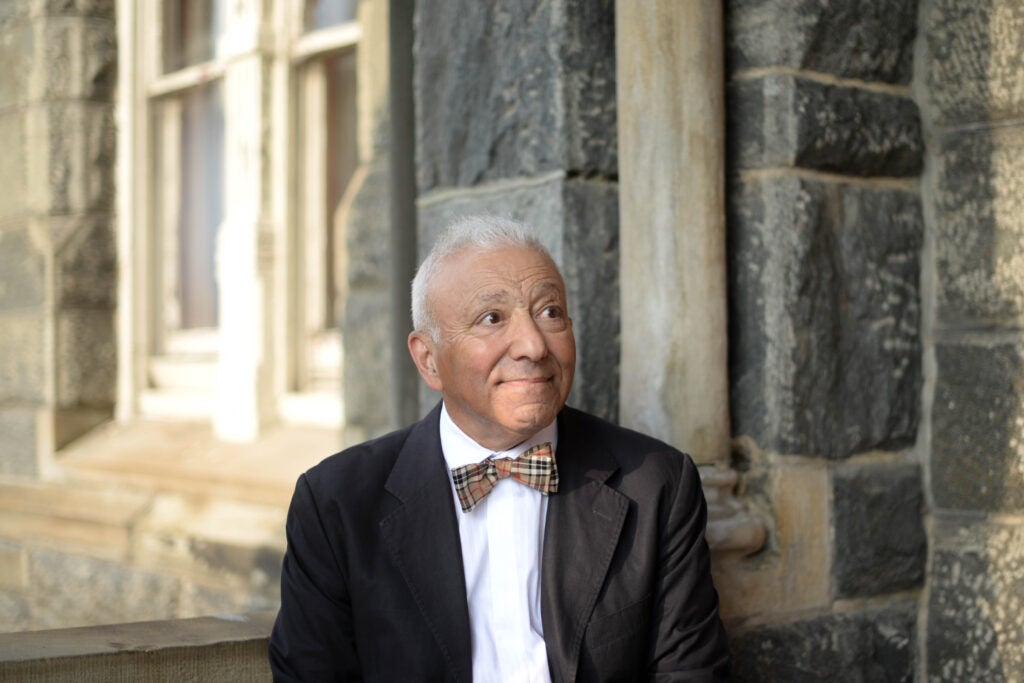
Fathali Moghaddam, a professor of psychology in the College of Arts & Sciences, has been researching immigration since the 1980s. (Photo by Hayden Frye)
Approaching the issue from a global perspective, The New Immigration Challenge explores challenges of managing this inevitable migration while immigrants are increasingly dissimilar from the host society.
“It’s this dissimilarity that creates threats or feelings of threats in the host population and creates this backlash against immigrants,” Moghaddam said. “In the United States and in Europe, this backlash is the foundation for the rise of authoritarian political movements and leaders.”
The book is based on Moghaddam’s research into immigration, which he has been examining since the 1980s, and on the Ph.D. theses completed by co-authors Hendricks and Salas-Schweikart. Hendricks’ research focuses on American identity and immigration, and Salas-Schweikart’s focuses on diversity and trust.
“We often hear about immigration in the news and how much people are against it — and of course others speaking out against those who are against it,” Hendricks said. “I think the book’s focus on the psychological perspective is important because it helps to explain why this is and also maybe more importantly, highlights that it’s not just the U.S. and it’s not just ‘western’ countries. These feelings or attitudes are global.”
In The New Immigration Challenge, the authors advocate for omniculturalism.
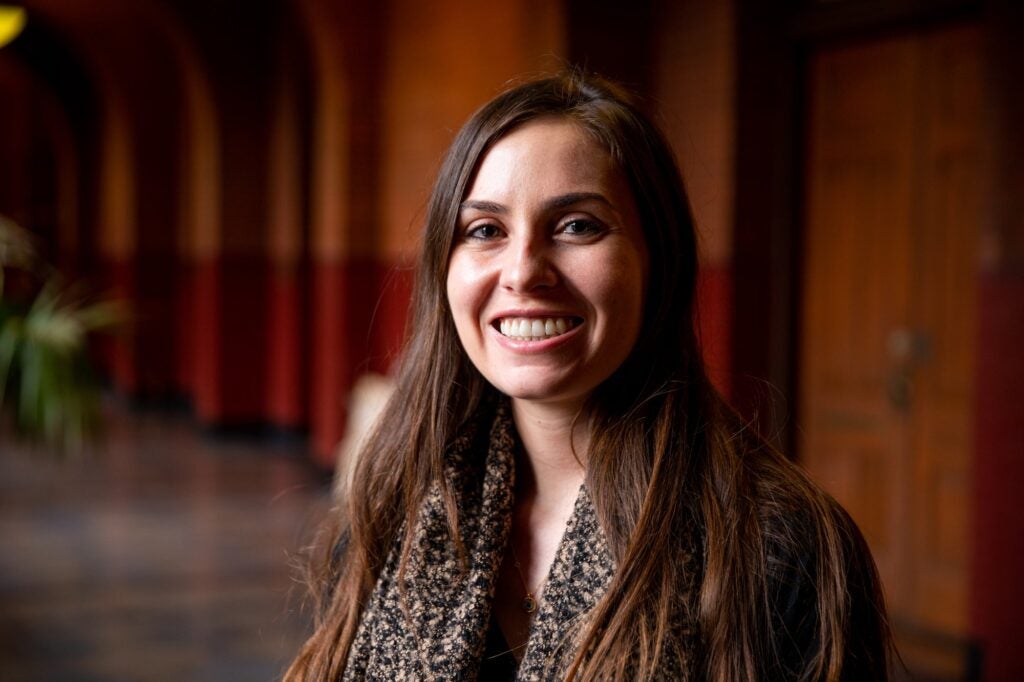
Margaret Hendricks (MPP’19, G’22) has studied the psychology of attitudes toward undocumented immigrants.
“Omniculturalism is the celebration of similarities,” Moghaddam said. “Based on scientific evidence, human beings are much more similar than they are different, and our focus should be on how we are similar so that we can meet challenges of nuclear proliferation, human-induced global warming and more.”
The authors argue for the idea of omniculturalism so that societies can celebrate commonalities and focus on common challenges.
“That’s how psychology can help us: by acknowledging the challenges that we face when relating with immigrants, and how we can navigate these challenges by highlighting the commonalities,” Salas-Schweikart said.
Impacts of Inequality on the Human Mind
The book was published as part of the Progressive Psychology Book Series, edited by Moghaddam for Cambridge University Press. The series highlights research on the impacts of inequality on the human mind, a blindspot in the field of psychology.
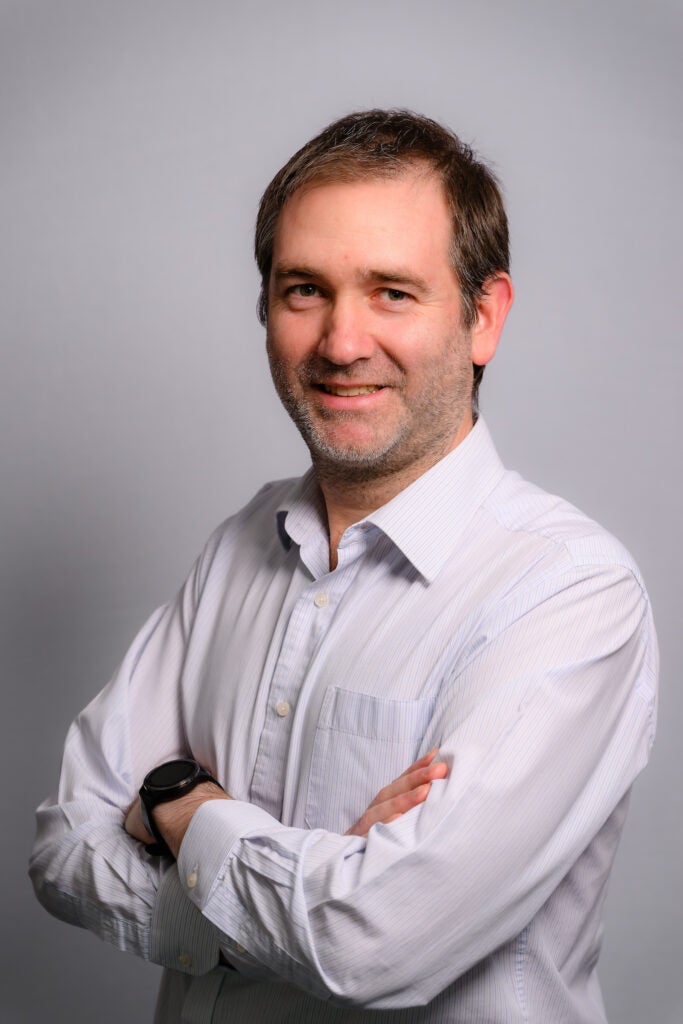
Fr. Raimundo Salas-Schweikart, S.J. (MPP’22, G’25) is a Ph.D. graduate in psychology and Jesuit priest who received the 2025 Dr. Karen Gale Exceptional Ph.D. Student Award. (Art Pittman/Georgetown University)
Poverty and food insecurity shape psychological processes such as intelligence and decision making. However, mainstream psychology “completely neglects” these impacts, Moghaddam said.
“If we look at any introductory psychology text, there’s a lot of discussion about the impact of different group memberships, including gender and ethnicity and even religion, but there’s almost nothing about poverty and social class,” he said.
Moghaddam started the series to draw attention to the impacts of poverty and class inequality on psychology and how these forces shape the brains of almost 700 million people around the world who live in poverty. There are 11 books published in the series and one more is set to be published this February. Moghaddam is the author of three other books in the series: How Psychologists Failed:, Political Plasticity and The Psychology of Revolution.
As the latest book of the series, The New Immigration Challenge contributes to the collection through its analysis of immigrants and poor populations of the host nation, Moghaddam said.
“The common plight of working-class whites and working-class immigrants, that’s something that needs to be taken up,” he said. “The common theme has to be poverty and dealing with poverty, not the color of your skin.”