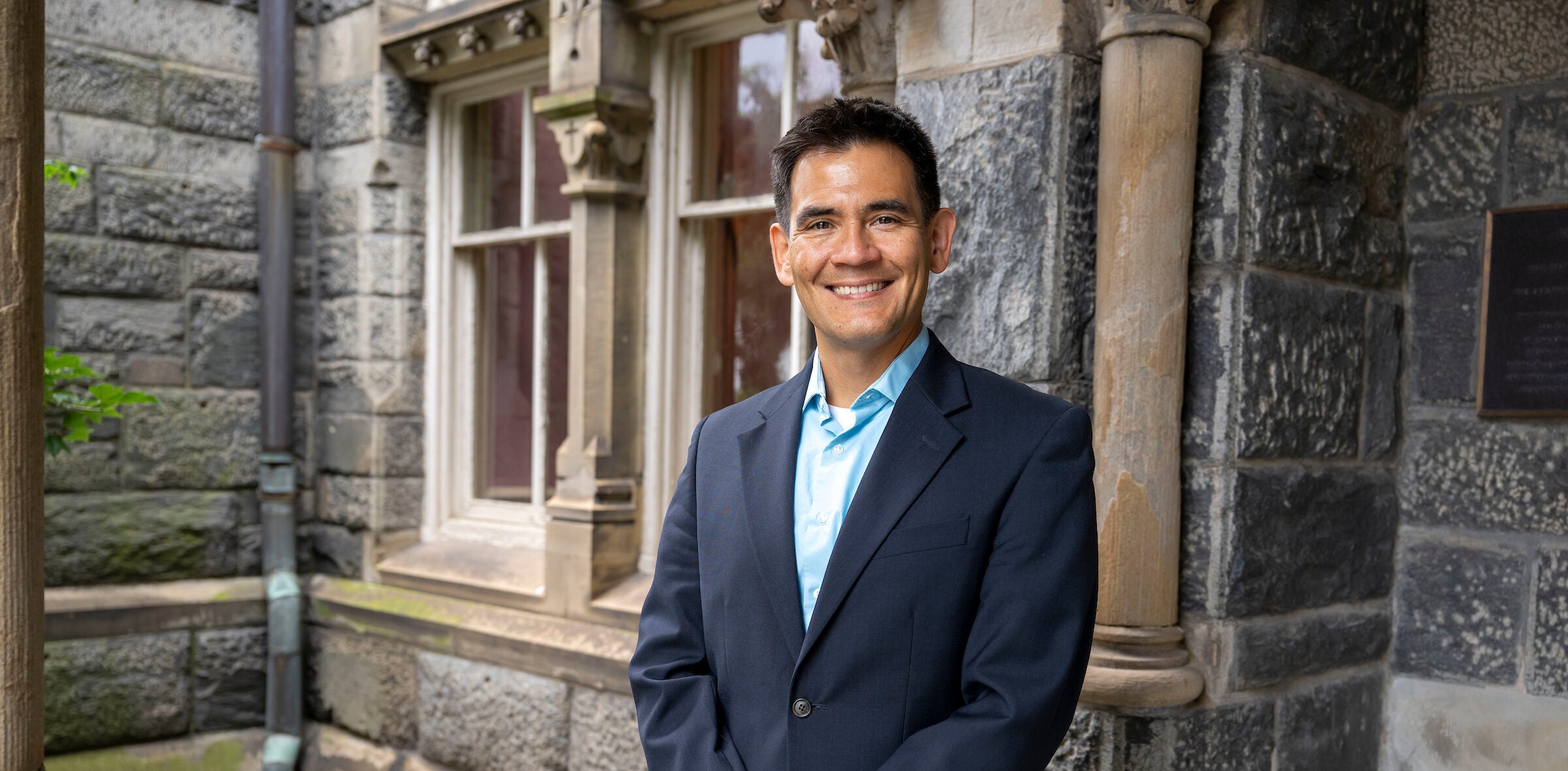
Trailblazing Computer Scientist and Educator Yoshi Kohno Joins Georgetown
Yoshi Kohno, a celebrated computer scientist and passionate educator working at the intersection of computer science and ethics, has joined the College of Arts & Sciences as the Robert L. McDevitt, K.S.G., K.C.H.S and Catherine H. McDevitt L.C.H.S. Chair in the Department of Computer Science. In the role, he will serve as a research professor in the Center for Digital Ethics.
“I am an educator at heart,” said Kohno, whose first day was August 1. “I have been an educator throughout my adult life, and I am deeply impressed by Georgetown University’s commitment to the education of the undergraduate and graduate students.”
Prior to Georgetown, Kohno taught at the University of Washington as a professor in the Paul G. Allen School of Computer Science & Engineering. He was also the associate dean for faculty success for the university’s College of Engineering and held adjunct professor positions in the Department of Electrical & Computer Engineering, the School of Information and the School of Law.
Kohno’s research spans different areas of security and privacy and has had a wide range of real-world impact. His areas of study have included electronic voting security, wireless medical device security, automotive computer security and artificial intelligence bias, ethics and safety.
At Georgetown, Kohno plans to continue exploring computer security and emerging technologies while building on his appetite for interdisciplinary research.
David Edelstein, the dean of the College of Arts & Sciences, called Kohno the “ideal scholar and teacher” for the McDevitt Chair position.
“Through his research and teaching, Professor Kohno is committed to understanding both the underlying technology driving change in our society and the effect that it is having on our society,” Edelstein said. “In addition to his deep commitment to appreciating the ethical dimensions of the technology he studies, Professor Kohno’s passion for not just researching but also teaching our students about how to understand this technology and its implications exemplifies our own commitments as a Catholic and Jesuit institution.”
An Early Passion
Kohno has always been interested in math and science.
His grandfather, an electrical engineer, inspired Kohno to pursue computing and he spent many hours in front of a computer learning how to program while growing up in a small town just outside of Boulder, Colorado. His parents gave him an introduction to computer programming book as a present before he was in first grade.
Kohno said he also had a strong desire to become a biologist as a child, but computer science ultimately called to him.
“One of the things that drew me to computer science was the ability to experiment and innovate on my own. I found that when I tried to do anything with respect to biology or chemistry, I always either did not have the resources or was afraid of, like, blowing something up accidentally. But on computers, I could experiment.”
Yoshi Kohno
Kohno graduated from the University of Colorado with a Bachelor of Science in computer science and received his master’s and Ph.D. in computer science from the University of California at San Diego.
After two brief stints as a computer security consultant, he moved to Seattle to start his faculty career at the University of Washington in 2006 and has won multiple research and teaching awards. Once he became a professor, Kohno couldn’t imagine doing anything else.
“I take great joy in helping students uncover, embrace and grow in directions that support and align with their passions,” he said.
Kohno also believes in the value of a strong liberal arts education and the essential role it plays for computer scientists in understanding the broader world in which computing technologies exist.
“I am deeply, deeply excited to be at an institution that prioritizes not just strong and rigorous computer science as a discipline but the interplay between computer science and society,” he said.
Identifying Future Problems
One of Kohno’s expertise areas as a researcher is identifying cybersecurity risks with future technologies and mitigating them before they happen.
Kohno explained it another way: If his research is successful, the general public will likely never hear about it.
“Because we would have done our job at identifying and then mitigating those threats,” he said. “I really do try to think five, 10, 15 years into the future, and understand what the next generation of technologies might be, and then try to proactively develop security solutions before those technologies become widespread.”
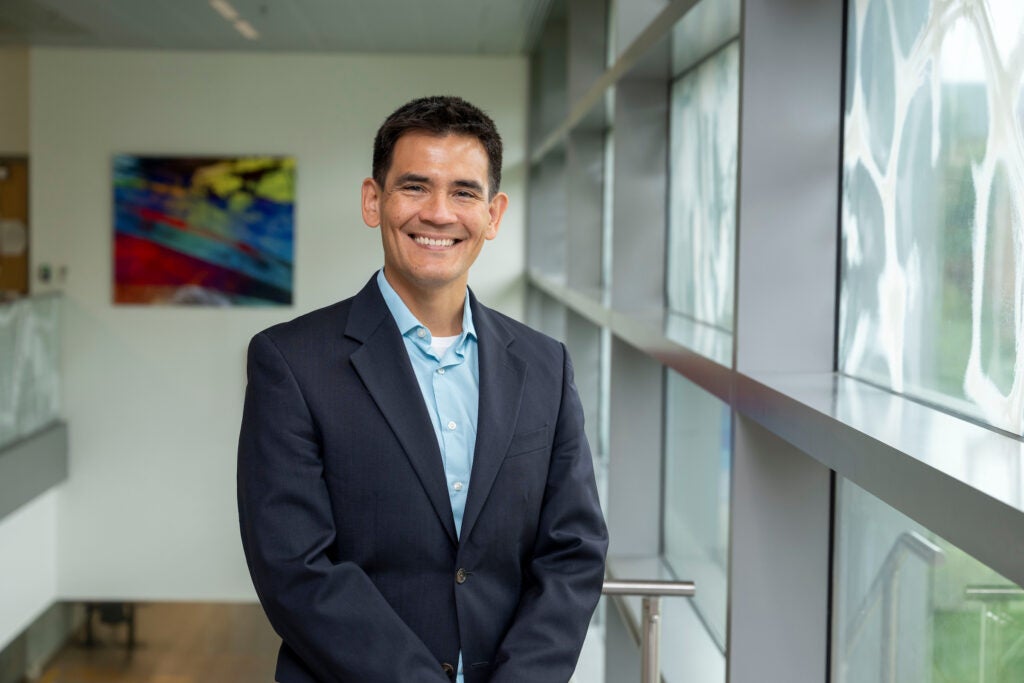
“I take great joy in helping students uncover, embrace and grow in directions that support and align with their passions,” Kohno said. (Lisa Helfert)
Laura DeNardis, the inaugural endowed chair in Technology, Ethics and Society and the director of the Center for Digital Ethics, said that Kohno is ideally positioned to advance the center’s mission to bring about a more ethical digital future for the good of humanity through teaching, research and public engagement.
DeNardis, who is also a professor in the Department of Communication, Culture and Technology, praised Kohno’s cutting-edge research on cybersecurity.
“Cybersecurity is a human concern as much as a technical one, shaping the future of human rights, the economy and national security,” she said. “Dr. Kohno’s research on cybersecurity, privacy and human safety resides at the cutting-edge ethical frontiers of emerging technologies.”
Kohno said that ideally those who create new technologies put the considerations of people and society first. That includes technological advances with artificial intelligence.
“In the modern AI space, companies seem to be asking, ‘What can we do?’” Kohno said. “The most important questions in my mind are: ‘What are the negative consequences if we do what we can do?’ ‘What should we not do?’”
A Way of Life
Georgetown’s tradition of cura personalis or care of the whole person, resonates with Kohno, a sixth-degree black belt, karate and aikido instructor and former yoga teacher who infuses martial arts philosophy and creative writing into his academic lessons.
For Kohno, martial arts are a way of life. They inform his teaching and philosophy.
“Some people think that martial arts are about fighting,” Kohno said. “To me, martial arts is a philosophy and an approach to interacting in the world. …Martial arts, as I train them, begin by observing and understanding our environment and the people around us. In martial arts, the ultimate goal is to never have to fight at all in the first place.”
Creative writing and science fiction also shape Kohno’s approach to academia.
In his former Seattle office, Kohno hung a vintage poster of Yoda from Star Wars with various famous quotes from the films that he plans to bring to DC. He believes that fiction can help people think more deeply about the relationships between society and technology and has incorporated creative writing into his courses as a method of active learning.
“Creative writing has the potential to reach a broad audience of people that might not engage with scholarly work but that could still benefit from the conversation created through fiction.”
Yoshi Kohno
Outside of work, Kohno enjoys open water swimming, biking and running, and has already registered to run the Marine Corps Marathon in DC this October.
Asked about his proudest achievements, Kohno points to his students.
“There are research projects I’ve done, but my absolute greatest accomplishments are the lives that I have impacted and the careers that I’ve helped enable,” he said.
(Photos by Lisa Helfert for Georgetown University)